Archive

June 19, 2026

Browsing

Amazon has announced that it has become water positive in India, achieving a key sustainability target ahead of schedule as scrutiny grows over the environmental impact of expanding data centre infrastructure worldwide.

The company said it now returns more water to communities than it uses across its direct operations in India, including corporate offices, fulfilment centres, and data centres.

Amazon had previously set a target of becoming water positive in India by 2027, but has now reached the milestone earlier than planned.

The announcement comes at a time when major technology companies, including Amazon, Microsoft, and Google, face increasing pressure from shareholders and environmental groups regarding the resource demands associated with data centre expansion, particularly as investments in artificial intelligence continue to accelerate.

Water positive milestone achieved early

According to Amazon, the achievement was driven by a combination of reduced water consumption across facilities and investments in community-focused water replenishment projects.

The company said its initiatives enabled it to return 120% of the water it used in its direct operations during 2025.

Progress is measured by comparing the volume of water replenished through conservation and restoration projects against the volume withdrawn for operational use.

Amazon added that its performance is verified through regular internal and third-party audits.

“Water is fundamental to the communities where we operate, and we recognise both the scale of India’s water challenge and the opportunity to make a meaningful difference,” said Abhinav Singh, Vice President, Operations, Amazon India, APAC, Middle East, and Türkiye.

“Achieving water positive in India is a significant milestone. It reflects years of our consistent work to improve water efficiency across our operations while investing in large-scale community projects, from lake restoration to watershed development. We remain committed to improving water quality and helping build more water-resilient communities across the country,” he added.

Focus on water-stressed regions

Amazon highlighted India’s water challenges, noting that the country is home to 18% of the world’s population but only 4% of global freshwater resources.

The company said its water stewardship strategy is built around three pillars: reducing water use, reusing water through treatment and harvesting systems, and replenishing water in communities facing water stress.

Amazon stated that it has committed more than ₹62 crore towards water stewardship initiatives across Maharashtra, Karnataka, Telangana, Delhi NCR, Andhra Pradesh, and Tamil Nadu.

These projects are expected to replenish more than 4 billion litres of water annually through watershed restoration, lake rejuvenation, groundwater recharge, efficient irrigation, and water quality improvement programmes.

Among the projects is a Yamuna River watershed initiative in Delhi that is expected to replenish more than 400 million litres of water annually through groundwater recharge infrastructure and water quality improvement measures.

The company is also supporting initiatives in Chennai’s Adyar River watershed.

Reducing and reusing water across operations

Amazon said its data centres in India do not use water for cooling.

Water consumption across its other facilities, including fulfilment centres and offices, is primarily associated with employee needs such as drinking water, kitchens, and restrooms.

To reduce usage, the company has implemented measures including low-flow fixtures and smart water meters designed to monitor consumption, identify leaks, and improve operational efficiency.

The company also continues to expand wastewater recycling efforts.

As of 2025, on-site sewage treatment plants at Amazon facilities recycle wastewater, providing an estimated 298 million litres annually for uses such as irrigation and toilet flushing.

Additionally, rainwater harvesting systems across Amazon facilities collected approximately 178 million litres of water in 2025, helping replenish groundwater reserves.

AWS advances global water goals

Amazon’s cloud computing arm, Amazon Web Services, has set a separate global goal of becoming water positive by 2030.

According to the company, AWS has already reached 75% of that target.

In 2025, AWS returned three litres of water for every four litres it used in its direct data centre operations.

In India, AWS has supported water replenishment initiatives through partnerships with organisations including WaterAid, Water.org, and SEARCH.

These projects focus on improving water access, supporting groundwater recharge, and helping communities and farmers around Hyderabad, Mumbai, and other regions with water security challenges.

Globally, Amazon said it has announced more than 50 water replenishment projects that are expected to return over 24 billion litres of water annually through watershed restoration, improved water access and quality, leak reduction efforts, and measures aimed at addressing water scarcity.

The milestone comes as Amazon continues to expand its presence in India.

The company has previously outlined plans to invest more than $35 billion in the country by 2030, including investments aimed at strengthening artificial intelligence capabilities, cloud infrastructure, and exports.

The post Amazon achieves water positive status in India amid data centre scrutiny appeared first on Invezz
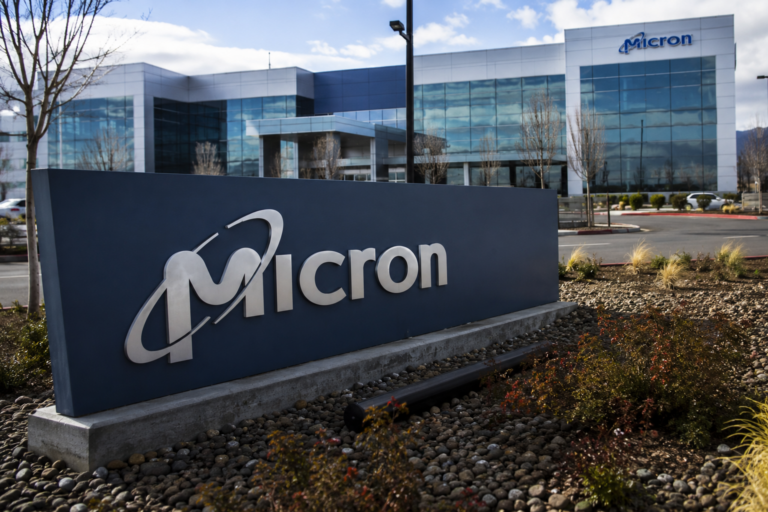

Investors are turning their attention to Micron Technology’s upcoming earnings report for clues on whether the artificial intelligence-driven rally in the US stocks can sustain its momentum.

While major US stock indexes remain close to record highs despite a sharp mid-week selloff, markets have continued to draw support from strong corporate earnings linked to the artificial intelligence investment boom, alongside easing concerns surrounding the Iran conflict.

Micron’s quarterly earnings report, scheduled for June 24, is expected to provide fresh insight into demand trends across the semiconductor industry.

The memory chip maker’s shares have risen 298% this year, making its results an important indicator of whether spending on data centres and AI infrastructure continues to accelerate.

Semiconductor sector gains momentum

The broader semiconductor sector has continued to benefit from optimism surrounding artificial intelligence.

Apple’s agreement with Intel to design and manufacture chips in the United States has been viewed as a potential boost for Intel’s turnaround efforts.

The development helped support broader market sentiment, with the S&P 500 rising nearly 1% so far this week and remaining on track for a second consecutive weekly gain.

Meanwhile, the Philadelphia Semiconductor Index reached a record high and was last up 7% for the week, reflecting investor confidence in chip-related companies.

High stakes for Micron Technology’s earnings

Micron’s results arrive at a time when market valuations remain elevated, and investors are increasingly debating whether the rally has become stretched.

Any indication that demand remains robust and AI-related spending continues to strengthen could reinforce confidence in the current market trend.

According to market expectations, spending by major technology companies on artificial intelligence is projected to exceed $700 billion this year, up from $400 billion in 2025.

Those projections have strengthened investor belief that demand for chips and supporting infrastructure remains intact.

Macro risks remain in the background

Despite continued enthusiasm around artificial intelligence, investors remain cautious about broader economic risks and the outlook for monetary policy.

The Federal Reserve this week left interest rates unchanged at 3.5% to 3.75%, marking a fourth consecutive meeting without a policy move.

However, updated projections signalled a more hawkish outlook, with nine policymakers now expecting at least one rate increase before the end of 2026, compared with expectations for rate cuts earlier this year.

Investors will closely watch next week’s release of the Federal Reserve’s preferred inflation gauge and the final estimate of first-quarter US GDP for fresh clues on the health of the economy.

The data could shape expectations for future monetary policy and determine whether the broader market rally has enough momentum to continue through the second half of the year.

The post Micron earnings to test AI chip demand as investors eye market rally appeared first on Invezz

UK equities were largely unchanged on Friday as the cancellation of US-Iran peace talks in Switzerland dampened investor sentiment and kept risk appetite subdued.

Gains in energy and healthcare stocks, however, helped limit broader market losses.

The benchmark FTSE 100 index slipped 5.40 points, or 0.05%, to 10,394.30 by 0948 GMT.

The domestically focused FTSE 250 index declined 0.5% to 23,210.43 and remained on course for a weekly loss.

Geopolitical concerns pressure markets

Investor caution increased after Washington and Tehran called off peace talks that had been expected to ease concerns surrounding energy supplies through the Strait of Hormuz.

The development weighed on global equity markets, while oil prices moved higher as traders reassessed supply risks.

The rise in crude prices provided support to energy companies listed in London.

Mining stocks lead declines

Mining shares were among the biggest drags on the FTSE 100.

Anglo American fell 2.2%, while Glencore declined 1.5%.

Rio Tinto also traded lower, shedding 1.1%.

The weakness in mining stocks contributed to the subdued performance of the broader market, offsetting gains elsewhere.

Political developments add to uncertainty

Markets were also digesting political developments in the UK after Labour mayor Andy Burnham cleared a path on Friday to potentially challenge British Prime Minister Keir Starmer.

The political developments added another layer of uncertainty for investors already navigating geopolitical tensions and economic concerns.

Bond yields rise

British government bond yields climbed to their highest level in a week. The increase slightly outpaced moves in German government debt yields.

The rise followed higher-than-expected government borrowing figures and Burnham’s election victory, both of which appeared to influence investor expectations.

Energy and healthcare stocks provide support

Despite broader market caution, energy shares emerged as the strongest source of support for the FTSE 100.

BP gained 1.7%, while Shell advanced 1.0% as Brent crude traded near $79.50 per barrel.

Healthcare stocks also performed well.

AstraZeneca rose 1.3%, leading gains within the sector, while GSK added 0.9%.

The strength in these sectors helped counterbalance losses in mining stocks and kept the benchmark index close to flat territory.

Company-specific moves

Shares of Admiral Group fell 5% after RBC downgraded the insurer’s stock to “sector perform” ahead of its upcoming results.

Homebuilder Barratt Redrow announced the appointment of former British Airways finance chief Rebecca Napier as its new chief financial officer.

The company’s shares edged 0.5% lower following the announcement.

Meanwhile, shares in Entain moved modestly higher after Reuters reported that the Ladbrokes owner had started exploring options for its joint venture operations in Central and Eastern Europe, including a potential sale.

As trading progressed, investors continued to balance geopolitical risks, domestic political developments, and sector-specific movements, leaving the UK’s main stock index little changed while the FTSE 250 remained on track for a weekly decline.

The post UK markets cautious as political and geopolitical risks mount appeared first on Invezz

Cathie Wood’s ARK Invest increased its exposure to Tesla and Snowflake on Thursday while continuing to trim its position in Roku, according to the firm’s latest daily trading disclosures.

The moves underscore ARK’s continued focus on artificial intelligence, cloud software, and long-term technology themes even as market volatility persists around some of its biggest holdings.

ARK’s purchases came as TSLA shares remained under pressure following the market debut of Elon Musk’s SpaceX and as Snowflake continued to attract investor interest as a beneficiary of growing demand for data and artificial intelligence applications.

ARK rebuilds Tesla position after SpaceX-related selling

ARK’s exchange-traded funds purchased 54,815 Tesla shares valued at approximately $21.9 million.

The purchases were spread across the ARK Innovation ETF and the ARK Next Generation Internet ETF.

Tesla remains the largest holding in the ARK Innovation ETF, representing 9.7% of the fund’s assets, and the second-largest position in the ARK Next Generation Internet ETF, accounting for 8.6% of the portfolio.

The latest purchases mark a reversal from last week, when ARK sold portions of its Tesla holdings as SpaceX went public.

By June 12, ARK held approximately 3.29 million SpaceX shares across several exchange-traded funds.

It remains unclear whether those shares were acquired through an initial public offering allocation or purchased in the open market after trading began.

Wood has long viewed both Tesla and SpaceX as investments tied to transformative technologies rather than traditional business models.

ARK’s research has argued that Tesla’s future opportunities extend beyond electric vehicles into areas including robotaxis, robotics, and energy storage. The investment firm expects Tesla shares to reach $2,600 by 2029.

ARK has also highlighted SpaceX’s potential role in artificial intelligence infrastructure.

“SpaceXAI will be able to monetize its infrastructure as it pushes toward AI’s competitive frontier. Ultimately, the compute capacity from orbital AI servers, and their lower costs, should differentiate SpaceXAI from its earth-centric competitors,” wrote ARK Chief Futurist Brett Winton in the firm’s Innovation Newsletter earlier this week.

Snowflake and healthcare buys offset Roku reduction

Beyond Tesla, ARK purchased approximately 149,700 shares of Snowflake valued at roughly $34.8 million.

The fund also acquired additional shares of the pharmaceutical company Eli Lilly.

At the same time, ARK sharply reduced its Roku position.

The firm’s funds sold a combined 721,279 Roku shares worth approximately $99.6 million on Thursday, following earlier sales totaling more than $93 million this week and an additional disposal of 239,267 shares on Wednesday.

ARK also sold positions in Strata Critical Medical and Twist Bioscience.

The portfolio rotation suggests increasing conviction in artificial intelligence, cloud computing, and Tesla-related growth opportunities while reducing exposure to streaming and media-related businesses.

Musk transactions and SpaceX volatility remain in focus

Tesla’s latest gains also coincided with news that Musk exercised stock options tied to approximately 303.96 million shares at a strike price of $23.34 and surrendered 17.53 million shares to cover a tax bill of approximately $7.09 billion.

Meanwhile, SpaceX has given up some of its initial post-IPO gains after rising as much as 67% above its $135 offering price.

Despite the recent pullback, ARK’s latest moves suggest Wood remains committed to Musk’s long-term vision and continues positioning her funds around technologies she believes will shape the future economy.

The post Cathie Wood buys more Tesla, cuts Roku as ARK doubles down on AI appeared first on Invezz

Amazon has announced that it has become water positive in India, achieving a key sustainability target ahead of schedule as scrutiny grows over the environmental impact of expanding data centre infrastructure worldwide.

The company said it now returns more water to communities than it uses across its direct operations in India, including corporate offices, fulfilment centres, and data centres.

Amazon had previously set a target of becoming water positive in India by 2027, but has now reached the milestone earlier than planned.

The announcement comes at a time when major technology companies, including Amazon, Microsoft, and Google, face increasing pressure from shareholders and environmental groups regarding the resource demands associated with data centre expansion, particularly as investments in artificial intelligence continue to accelerate.

Water positive milestone achieved early

According to Amazon, the achievement was driven by a combination of reduced water consumption across facilities and investments in community-focused water replenishment projects.

The company said its initiatives enabled it to return 120% of the water it used in its direct operations during 2025.

Progress is measured by comparing the volume of water replenished through conservation and restoration projects against the volume withdrawn for operational use.

Amazon added that its performance is verified through regular internal and third-party audits.

“Water is fundamental to the communities where we operate, and we recognise both the scale of India’s water challenge and the opportunity to make a meaningful difference,” said Abhinav Singh, Vice President, Operations, Amazon India, APAC, Middle East, and Türkiye.

“Achieving water positive in India is a significant milestone. It reflects years of our consistent work to improve water efficiency across our operations while investing in large-scale community projects, from lake restoration to watershed development. We remain committed to improving water quality and helping build more water-resilient communities across the country,” he added.

Focus on water-stressed regions

Amazon highlighted India’s water challenges, noting that the country is home to 18% of the world’s population but only 4% of global freshwater resources.

The company said its water stewardship strategy is built around three pillars: reducing water use, reusing water through treatment and harvesting systems, and replenishing water in communities facing water stress.

Amazon stated that it has committed more than ₹62 crore towards water stewardship initiatives across Maharashtra, Karnataka, Telangana, Delhi NCR, Andhra Pradesh, and Tamil Nadu.

These projects are expected to replenish more than 4 billion litres of water annually through watershed restoration, lake rejuvenation, groundwater recharge, efficient irrigation, and water quality improvement programmes.

Among the projects is a Yamuna River watershed initiative in Delhi that is expected to replenish more than 400 million litres of water annually through groundwater recharge infrastructure and water quality improvement measures.

The company is also supporting initiatives in Chennai’s Adyar River watershed.

Reducing and reusing water across operations

Amazon said its data centres in India do not use water for cooling.

Water consumption across its other facilities, including fulfilment centres and offices, is primarily associated with employee needs such as drinking water, kitchens, and restrooms.

To reduce usage, the company has implemented measures including low-flow fixtures and smart water meters designed to monitor consumption, identify leaks, and improve operational efficiency.

The company also continues to expand wastewater recycling efforts.

As of 2025, on-site sewage treatment plants at Amazon facilities recycle wastewater, providing an estimated 298 million litres annually for uses such as irrigation and toilet flushing.

Additionally, rainwater harvesting systems across Amazon facilities collected approximately 178 million litres of water in 2025, helping replenish groundwater reserves.

AWS advances global water goals

Amazon’s cloud computing arm, Amazon Web Services, has set a separate global goal of becoming water positive by 2030.

According to the company, AWS has already reached 75% of that target.

In 2025, AWS returned three litres of water for every four litres it used in its direct data centre operations.

In India, AWS has supported water replenishment initiatives through partnerships with organisations including WaterAid, Water.org, and SEARCH.

These projects focus on improving water access, supporting groundwater recharge, and helping communities and farmers around Hyderabad, Mumbai, and other regions with water security challenges.

Globally, Amazon said it has announced more than 50 water replenishment projects that are expected to return over 24 billion litres of water annually through watershed restoration, improved water access and quality, leak reduction efforts, and measures aimed at addressing water scarcity.

The milestone comes as Amazon continues to expand its presence in India.

The company has previously outlined plans to invest more than $35 billion in the country by 2030, including investments aimed at strengthening artificial intelligence capabilities, cloud infrastructure, and exports.

The post Amazon achieves water positive status in India amid data centre scrutiny appeared first on Invezz

WB-Shield Innovations GmbH, operating as WhiteBIT EU, announced today that it has obtained authorization under the Markets in Crypto-Assets Regulation (MiCA) in Austria.

The authorization was granted by the Austrian Financial Market Authority (FMA). 

The Austrian authorization marks a key step in WhiteBIT’s European growth strategy and underscores WhiteBIT EU’s commitment to operating within a transparent, secure, and harmonized regulatory framework.

Under MiCAR, WhiteBIT EU will be able to provide regulated crypto-asset services to eligible users across the EEA.

The authorization marks an important step in WhiteBIT’s broader strategy to build a regulated European presence and contribute to the continued development of the digital asset ecosystem in the EEA.

“WhiteBIT was originally founded as a European exchange, and Europe remains at the core of our long-term vision,” said Volodymyr Nosov, Founder and President of W Group, which WhiteBIT is part of.

“With MiCA setting a global benchmark for digital asset regulation, this authorization reinforces our commitment to building a transparent, secure, and compliant crypto ecosystem for users across the region.”

Strengthening WhiteBIT EU’s regulatory position in Europe

MiCAR establishes a harmonized EU framework for crypto-asset service providers, including requirements relating to governance, transparency, client protection, and market integrity.

By obtaining authorization in Austria, WhiteBIT EU has completed a substantive regulatory assessment in a jurisdiction recognized for its well-established financial supervisory standards.

This strengthens WhiteBIT EU’s regulated European presence and supports the planned provision of crypto-asset services across the EEA within the scope of its MiCAR authorization and in accordance with applicable passporting, onboarding, and regulatory requirements.

With the MiCA license in Austria, these efforts are now consolidated under a single regulatory framework, enabling WhiteBIT to serve millions of European retail and institutional clients with compliant, secure, and accessible crypto services.

Launch of WhiteBIT.EU for European users

As part of its transition to the MiCA framework, WhiteBIT is preparing to launch whitebit.eu — a dedicated platform designed specifically for users across the European Economic Area (EEA).

This new platform will serve as WhiteBIT’s regulated hub for the European market, operating under the MiCA framework and offering compliant access to the company’s products and services across the EEA.

New users interested in joining whitebit.eu can already register their interest through a dedicated form on the website and will be among the first to receive updates when the platform becomes available.

The post WhiteBIT EU secures MiCA license in Austria appeared first on Invezz

Investors are turning their attention to Micron Technology’s upcoming earnings report for clues on whether the artificial intelligence-driven rally in the US stocks can sustain its momentum.

While major US stock indexes remain close to record highs despite a sharp mid-week selloff, markets have continued to draw support from strong corporate earnings linked to the artificial intelligence investment boom, alongside easing concerns surrounding the Iran conflict.

Micron’s quarterly earnings report, scheduled for June 24, is expected to provide fresh insight into demand trends across the semiconductor industry.

The memory chip maker’s shares have risen 298% this year, making its results an important indicator of whether spending on data centres and AI infrastructure continues to accelerate.

Semiconductor sector gains momentum

The broader semiconductor sector has continued to benefit from optimism surrounding artificial intelligence.

Apple’s agreement with Intel to design and manufacture chips in the United States has been viewed as a potential boost for Intel’s turnaround efforts.

The development helped support broader market sentiment, with the S&P 500 rising nearly 1% so far this week and remaining on track for a second consecutive weekly gain.

Meanwhile, the Philadelphia Semiconductor Index reached a record high and was last up 7% for the week, reflecting investor confidence in chip-related companies.

High stakes for Micron Technology’s earnings

Micron’s results arrive at a time when market valuations remain elevated, and investors are increasingly debating whether the rally has become stretched.

Any indication that demand remains robust and AI-related spending continues to strengthen could reinforce confidence in the current market trend.

According to market expectations, spending by major technology companies on artificial intelligence is projected to exceed $700 billion this year, up from $400 billion in 2025.

Those projections have strengthened investor belief that demand for chips and supporting infrastructure remains intact.

Macro risks remain in the background

Despite continued enthusiasm around artificial intelligence, investors remain cautious about broader economic risks and the outlook for monetary policy.

The Federal Reserve this week left interest rates unchanged at 3.5% to 3.75%, marking a fourth consecutive meeting without a policy move.

However, updated projections signalled a more hawkish outlook, with nine policymakers now expecting at least one rate increase before the end of 2026, compared with expectations for rate cuts earlier this year.

Investors will closely watch next week’s release of the Federal Reserve’s preferred inflation gauge and the final estimate of first-quarter US GDP for fresh clues on the health of the economy.

The data could shape expectations for future monetary policy and determine whether the broader market rally has enough momentum to continue through the second half of the year.

The post Micron earnings to test AI chip demand as investors eye market rally appeared first on Invezz

UK equities were largely unchanged on Friday as the cancellation of US-Iran peace talks in Switzerland dampened investor sentiment and kept risk appetite subdued.

Gains in energy and healthcare stocks, however, helped limit broader market losses.

The benchmark FTSE 100 index slipped 5.40 points, or 0.05%, to 10,394.30 by 0948 GMT.

The domestically focused FTSE 250 index declined 0.5% to 23,210.43 and remained on course for a weekly loss.

Geopolitical concerns pressure markets

Investor caution increased after Washington and Tehran called off peace talks that had been expected to ease concerns surrounding energy supplies through the Strait of Hormuz.

The development weighed on global equity markets, while oil prices moved higher as traders reassessed supply risks.

The rise in crude prices provided support to energy companies listed in London.

Mining stocks lead declines

Mining shares were among the biggest drags on the FTSE 100.

Anglo American fell 2.2%, while Glencore declined 1.5%.

Rio Tinto also traded lower, shedding 1.1%.

The weakness in mining stocks contributed to the subdued performance of the broader market, offsetting gains elsewhere.

Political developments add to uncertainty

Markets were also digesting political developments in the UK after Labour mayor Andy Burnham cleared a path on Friday to potentially challenge British Prime Minister Keir Starmer.

The political developments added another layer of uncertainty for investors already navigating geopolitical tensions and economic concerns.

Bond yields rise

British government bond yields climbed to their highest level in a week. The increase slightly outpaced moves in German government debt yields.

The rise followed higher-than-expected government borrowing figures and Burnham’s election victory, both of which appeared to influence investor expectations.

Energy and healthcare stocks provide support

Despite broader market caution, energy shares emerged as the strongest source of support for the FTSE 100.

BP gained 1.7%, while Shell advanced 1.0% as Brent crude traded near $79.50 per barrel.

Healthcare stocks also performed well.

AstraZeneca rose 1.3%, leading gains within the sector, while GSK added 0.9%.

The strength in these sectors helped counterbalance losses in mining stocks and kept the benchmark index close to flat territory.

Company-specific moves

Shares of Admiral Group fell 5% after RBC downgraded the insurer’s stock to “sector perform” ahead of its upcoming results.

Homebuilder Barratt Redrow announced the appointment of former British Airways finance chief Rebecca Napier as its new chief financial officer.

The company’s shares edged 0.5% lower following the announcement.

Meanwhile, shares in Entain moved modestly higher after Reuters reported that the Ladbrokes owner had started exploring options for its joint venture operations in Central and Eastern Europe, including a potential sale.

As trading progressed, investors continued to balance geopolitical risks, domestic political developments, and sector-specific movements, leaving the UK’s main stock index little changed while the FTSE 250 remained on track for a weekly decline.

The post UK markets cautious as political and geopolitical risks mount appeared first on Invezz

Cathie Wood’s ARK Invest increased its exposure to Tesla and Snowflake on Thursday while continuing to trim its position in Roku, according to the firm’s latest daily trading disclosures.

The moves underscore ARK’s continued focus on artificial intelligence, cloud software, and long-term technology themes even as market volatility persists around some of its biggest holdings.

ARK’s purchases came as TSLA shares remained under pressure following the market debut of Elon Musk’s SpaceX and as Snowflake continued to attract investor interest as a beneficiary of growing demand for data and artificial intelligence applications.

ARK rebuilds Tesla position after SpaceX-related selling

ARK’s exchange-traded funds purchased 54,815 Tesla shares valued at approximately $21.9 million.

The purchases were spread across the ARK Innovation ETF and the ARK Next Generation Internet ETF.

Tesla remains the largest holding in the ARK Innovation ETF, representing 9.7% of the fund’s assets, and the second-largest position in the ARK Next Generation Internet ETF, accounting for 8.6% of the portfolio.

The latest purchases mark a reversal from last week, when ARK sold portions of its Tesla holdings as SpaceX went public.

By June 12, ARK held approximately 3.29 million SpaceX shares across several exchange-traded funds.

It remains unclear whether those shares were acquired through an initial public offering allocation or purchased in the open market after trading began.

Wood has long viewed both Tesla and SpaceX as investments tied to transformative technologies rather than traditional business models.

ARK’s research has argued that Tesla’s future opportunities extend beyond electric vehicles into areas including robotaxis, robotics, and energy storage. The investment firm expects Tesla shares to reach $2,600 by 2029.

ARK has also highlighted SpaceX’s potential role in artificial intelligence infrastructure.

“SpaceXAI will be able to monetize its infrastructure as it pushes toward AI’s competitive frontier. Ultimately, the compute capacity from orbital AI servers, and their lower costs, should differentiate SpaceXAI from its earth-centric competitors,” wrote ARK Chief Futurist Brett Winton in the firm’s Innovation Newsletter earlier this week.

Snowflake and healthcare buys offset Roku reduction

Beyond Tesla, ARK purchased approximately 149,700 shares of Snowflake valued at roughly $34.8 million.

The fund also acquired additional shares of the pharmaceutical company Eli Lilly.

At the same time, ARK sharply reduced its Roku position.

The firm’s funds sold a combined 721,279 Roku shares worth approximately $99.6 million on Thursday, following earlier sales totaling more than $93 million this week and an additional disposal of 239,267 shares on Wednesday.

ARK also sold positions in Strata Critical Medical and Twist Bioscience.

The portfolio rotation suggests increasing conviction in artificial intelligence, cloud computing, and Tesla-related growth opportunities while reducing exposure to streaming and media-related businesses.

Musk transactions and SpaceX volatility remain in focus

Tesla’s latest gains also coincided with news that Musk exercised stock options tied to approximately 303.96 million shares at a strike price of $23.34 and surrendered 17.53 million shares to cover a tax bill of approximately $7.09 billion.

Meanwhile, SpaceX has given up some of its initial post-IPO gains after rising as much as 67% above its $135 offering price.

Despite the recent pullback, ARK’s latest moves suggest Wood remains committed to Musk’s long-term vision and continues positioning her funds around technologies she believes will shape the future economy.

The post Cathie Wood buys more Tesla, cuts Roku as ARK doubles down on AI appeared first on Invezz