
Archive

July 3, 2026

Browsing

Investor Michael Burry, best known for his successful bet against the US housing market portrayed in The Big Short, has reportedly opened a short position in Micron Technology (MU), arguing that the memory chip maker’s recent rally has been driven by speculative enthusiasm rather than fundamentals.

According to a post published on his Substack, Burry shorted Micron shares at $1,051.87 on July 1 while simultaneously adding to five existing long positions.

The move comes as Micron remains one of the best-performing semiconductor stocks of 2026 despite a recent pullback.

Micron shares have gained more than 240% since the start of the year, although the stock has declined around 10% over the past month after reaching a high of $1,255 following its June 25 earnings report.

Burry questions Micron’s valuation and cyclical history

In his Substack post, Burry argued that Micron’s rally reflects investor psychology rather than long-term business fundamentals.

Burry said he shorted the stock because of “fear of missing out, greater fool theory, [and] public commitment bias.”

He also highlighted the company’s long history of volatility.

“Micron defines cyclical like no other,” Burry wrote, noting that the company has experienced 34 drawdowns of more than 30% over the past 42 years.

He added that Micron shares are now trading further above their 200-day moving average than at any time since 1984, “not even during the dot-com peak.”

Burry also criticized the company’s historical profitability, stating that Micron’s median return on invested capital of 4% and median return on equity of 7% are “frankly terrible.”

He further argued that “one quarter in every three, Micron is a destroyer of capital,” pointing to decades of uneven returns and periods of negative free cash flow.

Although options could have provided another way to express a bearish view, Burry said, “the puts seemed expensive,” adding that he “will look to add puts should the stock settle down and bring volatility down.”

Bearish view extends across semiconductor sector

The Micron position forms part of Burry’s broader negative outlook on artificial intelligence-related semiconductor stocks.

Earlier this week, he disclosed short positions in Nvidia, Applied Materials and the iShares Semiconductor ETF (SOXX), saying AI-related chip stocks could face a 30% correction.

In a separate June 30 Substack post, Burry expressed concern over plans by Samsung Electronics and SK Hynix to invest more than $500 billion in a new semiconductor hub.

“The proximate cause of today’s rally is big spending announced out of Korea,” Burry wrote. “Well, I see that as the beginning of the end.”

Market sentiment toward memory stocks has also weakened more broadly.

Micron shares fell 5% on Thursday after falling nearly 11% on Wednesday alongside sharp losses in SanDisk.

Some market participants linked the decline to reports that Meta is considering selling excess cloud capacity, while another report indicated that Apple is seeking additional memory supply from China.

Commenting on the industry, Swissquote senior analyst Ipek Ozkardeskaya said, “China makes up around 15% of Apple’s sales and other companies could follow these steps as they also see their profits being squeezed by an unreasonable jump in memory chip prices.”

Burry adds to long positions

While increasing his bearish exposure to semiconductors, Burry also disclosed that he added to several existing investments.

According to his Substack post, he increased holdings in PayPal, Sprouts Farmers Market, Zoetis, Fannie Mae and Freddie Mac.

Summarizing his latest positioning, Burry wrote: “Yesterday I shorted one stock even though it was down a good amount because I think I have a pretty good idea how this resolves. I also added to five positions. This time may be different, but not nearly different enough.”

The post Michael Burry shorts Micron stock, warns AI chip rally has gone too far appeared first on Invezz
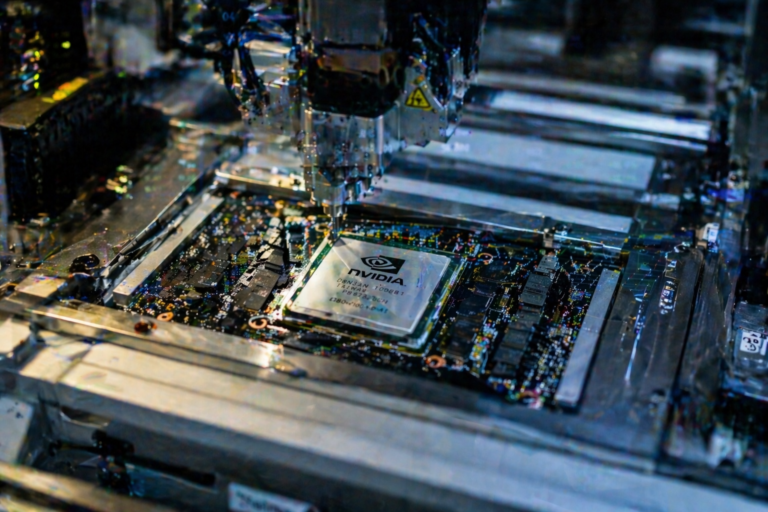

Nvidia enters the second half of 2026 facing growing pressure to defend both its market leadership and investor confidence.

While the company remains the world’s largest by market capitalisation, its stock has lagged several semiconductor peers this year as investors broaden their focus across the artificial intelligence (AI) supply chain.

The company continues to benefit from strong demand for AI processors.

However, questions are emerging over whether Nvidia can sustain its dominance as its largest customers increasingly develop competing technologies and as Apple closes the gap in market value.

Apple closes the gap in market value

Nvidia has remained the world’s most valuable listed company by market capitalisation for 258 consecutive days after reclaiming the top position from Microsoft in late June last year.

Although the streak is among the longest this century, it remains well behind Apple’s longest run as the market leader.

Apple held the top position for 1,344 consecutive days between 2013 and 2018.

Furthermore, Apple is closing the gap with a $4.53 trillion valuation after a 13% gain in 2026.

Nvidia currently has a market capitalization of $4.72 trillion, after a paltry 3% gain in the year so far.

Nvidia continues to strengthen its core business

Nvidia has maintained a consistent pace of technological innovation through annual upgrades to its AI processors.

The company expects to ship its latest Vera Rubin hardware in volume during the second half of the year.

It is also expanding beyond data centre chips with a recently announced processor aimed at the consumer PC market.

Over the longer term, Nvidia is looking towards emerging opportunities such as robotics, although faster commercial adoption could help address investor concerns about the longevity of the AI investment cycle.

On the manufacturing front, Nvidia has largely avoided significant production disruptions.

The company continues investing in key suppliers while securing long-term agreements for critical components, including memory chips.

Chief Executive Officer Jensen Huang has also balanced political demands for greater investment in the United States while securing manufacturing capacity from Taiwan Semiconductor Manufacturing.

Shareholder returns mirror Apple’s strategy

Nvidia has increasingly adopted a shareholder return strategy similar to Apple’s.

Apple returns nearly all of its free cash flow through share buybacks.

Nvidia plans to return around 50% of its free cash flow through dividends and buybacks this year, with management indicating that this proportion could increase over time.

The approach reflects growing confidence in the company’s cash-generating ability while rewarding long-term shareholders.

Software ecosystem remains a competitive advantage

Beyond hardware, Nvidia continues to benefit from its CUDA software platform, which has helped establish a strong competitive position in AI model training.

The next challenge will be proving that CUDA remains equally effective in AI inference, the process of running trained AI models.

Competition is increasing in this area.

Cerebras Systems claims its integrated hardware and software platform delivers faster inference performance than Nvidia.

At the same time, Alphabet and Amazon are developing custom AI chips for external customers while continuing to purchase Nvidia processors for their own AI infrastructure.

The trend highlights an increasingly complex competitive landscape in which some of Nvidia’s biggest customers are simultaneously becoming rivals.

Consumer expansion could become the next growth driver

For Nvidia to replicate Apple’s long-term durability, the company may need to extend its ecosystem beyond enterprise AI infrastructure.

Its expansion into consumer PCs and, eventually, robotics could help build a more integrated hardware and software ecosystem that encourages customer loyalty, similar to Apple’s tightly connected product portfolio.

Successfully creating such an ecosystem could reduce customer switching while opening additional revenue streams beyond data centres.

Shares face near-term pressure

Nvidia shares extended recent weakness on Thursday.

The stock briefly traded above the $200 level after opening higher before reversing direction.

Despite remaining one of the primary beneficiaries of AI-related investment, Nvidia has underperformed several semiconductor companies in 2026.

The semiconductor sector has delivered strong gains during the first half of the year.

The VanEck Semiconductor ETF advanced more than 70% during the first six months of 2026, marking its strongest first-half performance since the fund launched in 2000.

Following the rally, several leading semiconductor stocks experienced profit-taking.

Investor interest has also shifted across different segments of the AI supply chain.

Memory chip manufacturers have benefited from supply constraints and rising demand, while companies specialising in central processing units (CPUs) have attracted increased attention amid expectations that next-generation agentic AI systems will require significantly greater computing resources.

Micron has emerged as one of the biggest beneficiaries of the memory cycle.

Advanced Micro Devices and Intel have also gained as investors anticipate stronger CPU demand alongside continued AI infrastructure expansion.

This broader investor interest has created a more competitive investment landscape for Nvidia despite sustained demand for its graphics processors.

Despite its modest 3% gain in 2026, some investors believe Nvidia could deliver a significantly stronger performance during the second half of the year if AI spending continues to accelerate into 2027.

NVDA currently trades at approximately 21.5 times forward earnings, broadly in line with the S&P 500.

In the previous two years, however, the company’s valuation reached more than 40 times forward earnings by year-end.

Supporters of the stock argue that continued AI infrastructure investment could justify a higher valuation once investors begin pricing in expected spending beyond 2026.

Whether Nvidia can regain stronger momentum will likely depend on its ability to maintain technological leadership, defend its software ecosystem, expand into new consumer markets, and demonstrate that long-term AI demand remains intact amid intensifying competition across the semiconductor industry.

The post Can Nvidia regain its momentum in the second half of 2026? appeared first on Invezz

US stocks moved higher on Thursday after a weaker-than-expected June employment report tempered expectations for further Federal Reserve interest rate hikes, while investors continued to assess the outlook for inflation and economic growth.

The Dow Jones Industrial Average gained 256 points, or 0.49%. The S&P 500 rose 0.39%, while Nasdaq Composite added 0.24%.

The closely watched nonfarm payrolls report showed the US economy added 57,000 jobs in June, well below economists’ expectations.

Reuters cited estimates of 110,000 jobs, while economists surveyed by Dow Jones had forecast 115,000.

The unemployment rate came in at 4.2%, compared with expectations of 4.3%.

The softer labor market data pushed Treasury yields lower, with the two-year Treasury note yield declining as investors increased expectations that the Federal Reserve may delay further rate hikes.

Jobs data shifts Fed expectations

Following the employment report, market expectations for additional monetary tightening eased.

According to data compiled by LSEG, the odds of at least one Federal Reserve rate hike this year fell to 75.6%, down from around 84% before the payrolls data was released.

Before the jobs report, Julien Lafargue, chief market strategist at Barclays Private Bank, noted that employment data could be influenced by temporary hiring related to the FIFA World Cup.

“As a result, markets are likely to place greater weight on the June CPI (consumer price index) report due on July 14, as inflation data will offer a cleaner read on the economy,” said Lafargue in a Reuters report.

The employment figures followed Wednesday’s remarks from Federal Reserve Chair Kevin Warsh, who said inflation risks had eased while reaffirming the central bank’s commitment to its 2% inflation target.

Chip stocks mixed after Wednesday’s selloff

Some of the technology stocks recovered in trading after leading the previous session’s declines.

Micron Technology gained roughly 2%. Arm Holdings advanced 0.46%.

Intel and AMD however fell 0.92% and 1.83%.

Meanwhile, Bending Spoons fell 3% in trading, a day after the Vimeo owner surged 40% during its Nasdaq debut.

Global markets mixed as investors monitor risks

Global equity markets delivered mixed performances on Thursday.

In Asia, South Korea’s Kospi dropped 7.89% to its lowest closing level since June 8, while the small-cap Kosdaq fell 6.74%. Samsung declined 9.06%, and SK Hynix plunged 14.57%.

Japan’s Nikkei 225 lost 2.47%, while the broader Topix edged up 0.09%. Australia’s S&P/ASX 200 finished little changed.

European markets recovered from early weakness, with the pan-European Stoxx 600 rising 0.6% in morning trading as investors rotated into defensive sectors including utilities, healthcare and consumer staples.

Markets also continued to monitor geopolitical developments after the United States and Iran concluded another round of indirect talks on Wednesday without any indication of progress toward a lasting peace, adding another source of uncertainty for investors.

The post Dow rises as weak US jobs data eases Fed rate hike expectations appeared first on Invezz

Bitget, the world’s largest Universal Exchange (UEX), has launched US stock options, giving users direct access to trade options on leading US-listed companies.

This makes Bitget the only major crypto exchange currently offering US stock options alongside crypto and CFD markets covering gold, forex, commodities, and indices.

Active features include long call and long put strategies for eligible users. Calls allow traders to take a bullish position on a stock, while puts can be used to express a bearish view or manage downside exposure.

Risk for buyers is limited to the premium paid, although an option may expire without value if the expected price movement does not occur.

The launch expands Bitget’s stock product line, following the introduction of tokenized stocks, its position as a leading venue for tokenized-stock trading, and pre-IPO access to private market opportunities.

Stock options add another widely used Wall Street instrument to the Stock+ offering, giving active traders more ways to approach market movements, earnings cycles, and portfolio risk.

Stock options expand the platform’s Stock+ product, with direct-access venue for traditional US equities, built for traders familiar with established stock market products and regulated market infrastructure.

The addition aligns with Bitget’s wider goal of bringing crypto, stocks, commodities, and other global assets into one multi-asset trading environment for users worldwide.

Demand for listed options has reached record levels. The US options market processed more than 15.2 billion contracts in 2025, an average of roughly 60 million contracts per trading day.

The growth indicates wider use of options by retail and institutional participants for directional trading, hedging, and capital management.

“We have consistently moved first to connect stock opportunities with our users,” said Gracy Chen, CEO at Bitget.

“This has been rewarding to us and users alike. From tokenized stocks to now options, we are executing on convergence. This is innovation crypto was born to push, our products are way ahead of its time in providing advanced trading access to stocks, gold, crypto, and worldwide assets.”

The initial release focuses on single-leg options buying to provide a clear entry point for users.

Additional functionality, including more advanced multi-leg strategies, is planned as the Stock+ options product develops.

To mark the launch, eligible users completing their first US stock options trade may receive $15 worth of NVIDIA stock, subject to the campaign terms and regional availability.

Options trading involves significant risk and may not be suitable for all users. Product availability, supported securities, and promotional rewards may vary by jurisdiction. Users should review the relevant product disclosures and understand the potential loss of the full premium before trading.

The post Bitget launches crypto industry's first-ever US stock options trading appeared first on Invezz

Tesla (TSLA) reported second-quarter vehicle deliveries that comfortably exceeded Wall Street expectations on Thursday, signaling a significant rebound in demand as the electric-vehicle maker navigates an increasingly competitive global market.

The company delivered 480,126 vehicles worldwide during the second quarter, according to a statement released Thursday.

The result came in well above analyst expectations. FactSet estimates had pointed to deliveries of approximately 409,000 vehicles, while Tesla’s company-compiled consensus forecast stood at roughly 406,000 units.

The stronger-than-expected performance marks a notable recovery for Tesla after a challenging period.

Vehicle sales came under pressure from slowing electric-vehicle demand, rising competition, and political controversies surrounding Chief Executive Officer Elon Musk.

Deliveries increased 25% from a year earlier, when Tesla faced consumer backlash linked to Musk’s work with the Trump administration.

Why is the Tesla stock tanking today?

Despite the stronger-than-expected deliveries, Tesla shares fell nearly 3% in Thursday morning trading as investors took profits following a sharp rally in recent sessions.

The stock remains up roughly 11% over the past five trading days, suggesting much of the delivery upside had already been anticipated.

Morningstar noted that the company’s vehicle mix continued to shift toward its mass-market offerings, with Tesla delivering 467,762 Model 3 and Model Y vehicles during the quarter.

The firm also pointed to Tesla’s energy storage business, where deployments reached 13.5 gigawatt-hours, up from both a year ago and the previous quarter but slightly below analyst expectations of 13.8 GWh.

Investors are now awaiting Tesla’s full second-quarter results on July 22 for additional details on profitability and business performance.

China made EV sales also remain strong

Fresh data also showed continued momentum at its Shanghai manufacturing hub, which supplies both the Chinese market and export destinations across Europe.

Data released Thursday by the China Passenger Car Association showed that deliveries of Model 3 and Model Y vehicles produced at Tesla’s Shanghai factory rose 24.4% year over year in June to 89,091 units.

The increase followed a 39.4% gain recorded in May.

For the second quarter as a whole, Tesla’s combined China sales and exports from the Shanghai facility increased 32.8% compared with the same period last year.

The results suggest Tesla’s recovery in Europe also continued during the quarter, helping offset broader concerns about slowing growth in the global electric-vehicle market.

Investors focus on AI and robotics

Despite the strong delivery performance, investor attention has increasingly shifted beyond Tesla’s traditional automotive business.

Many shareholders are focused on Musk’s longer-term strategy centered on artificial intelligence, autonomous driving, and robotics.

Tesla is investing heavily in projects including its Cybercab autonomous vehicle platform and Optimus humanoid robots, initiatives that many investors view as potentially more important to the company’s long-term valuation than vehicle sales alone.

Speculation has also grown around the possibility of a future combination between Tesla and SpaceX following the rocket company’s blockbuster initial public offering last month.

Even as investors look toward those future opportunities, Tesla’s vehicle business remains a critical source of cash generation.

Maintaining strong delivery growth is particularly important as the company significantly increases spending on new initiatives.

Tesla plans to invest more than $25 billion this year, roughly three times the amount spent last year, as it expands manufacturing capacity and accelerates development of autonomous vehicles, robotics, and related technologies.

Regulatory wins add to positive news flow

Tesla also received favorable regulatory news on Thursday.

The US National Highway Traffic Safety Administration said it had closed a preliminary evaluation launched in 2022 involving approximately 695,000 Tesla vehicles over reports of unexpected deceleration.

The investigation covered Model 3 and Model Y vehicles.

According to the agency, the decision was based on a low demonstrated hazard to drivers and a substantial decline in incident reports following software updates introduced by Tesla in early 2022.

NHTSA said reported incidents fell from roughly 300 cases when the investigation began to 45 reports in 2024, 19 in 2025, and just three so far in 2026.

The regulator added that the reported conditions did not alter vehicle lane positioning or create significant reductions in following distance that could lead to collisions.

The development follows another recent regulatory decision.

Last week, NHTSA separately closed an expanded investigation involving an estimated 376,241 Model 3 and Model Y vehicles over concerns related to loss of steering control.

Together, the strong delivery numbers and regulatory developments provided Tesla with a series of positive headlines as the company continues balancing a recovering automotive business with ambitious investments in artificial intelligence, autonomy, and robotics.

The post Why Tesla stock is tanking 3% even after crushing delivery estimates appeared first on Invezz

Fhenix has acquired Sunscreen, one of the earliest teams focused on fully homomorphic encryption (FHE) for Web3, as the company expands its privacy infrastructure for blockchain ecosystems.

As part of the deal, Sunscreen founder Ravital Solomon has joined Fhenix to lead the company’s research efforts.

The acquisition brings together expertise in TFHE, BFV, encrypted computation and post-quantum cryptography as Fhenix seeks to strengthen its quantum-safe privacy stack across Ethereum, Arbitrum and Base.

The company said the move reflects the growing importance of encrypted computation as stablecoins, tokenized assets, artificial intelligence applications and institutional capital continue to move on-chain.

Acquisition strengthens Fhenix’s cryptography expertise

Sunscreen launched publicly in 2022 with an open-source FHE compiler and grants program before expanding into zero-knowledge tooling, threshold-encrypted systems, developer tools and privacy-preserving application architectures.

Ravital Solomon has been an early contributor to the development of FHE for blockchain systems.

Her work includes lattice-based post-quantum cryptography, privacy-preserving smart contracts, encrypted computation frameworks and production-focused cryptographic applications.

The acquisition also expands Fhenix’s existing research efforts around CoFHE, the company’s encrypted computation infrastructure for Ethereum Virtual Machine (EVM) applications.

Fhenix said it has recently advanced research in threshold FHE decryption, DBFV exact arithmetic and scalable encrypted computation designed for blockchain workloads.

The combined organization will bring together research and engineering capabilities spanning BFV, TFHE, threshold cryptography, compiler design and confidential application architecture.

Focus on scalable encrypted computation

Fhenix said the combined research team will focus on developing scalable FHE systems, quantum-resistant infrastructure and cryptographic foundations for confidential blockchain applications.

The company said these technologies are intended to support privacy-sensitive use cases across finance, payments, digital identity, artificial intelligence and other onchain applications.

“FHE is entering a new phase,” said Guy Zyskind, Founder of Fhenix. “The conversation is no longer about whether encrypted computation works. It’s about making it scalable, practical, and available across the ecosystems where developers are building today. Sunscreen has been one of the most respected teams pushing this field forward from the very beginning. Bringing Ravital and Sunscreen’s assets into Fhenix allows us to move faster toward our goal of building the quantum-safe privacy layer for Ethereum, Arbitrum, Base, and beyond.”

Solomon said the combination of research and deployment capabilities influenced her decision to join the company.

“I started Sunscreen because I believed advanced cryptography should shift from theoretical to usable,” said Ravital Solomon. “What excited me about joining Fhenix is the combination of ambitious research and a clear path to deployment. Fhenix has already built meaningful infrastructure across live blockchain ecosystems, and I’m excited to help lead the next chapter of research as encrypted computation moves closer to mainstream adoption.”

Expansion supports long-term privacy strategy

Fhenix said the acquisition reflects its long-term strategy of assembling research talent focused on fully homomorphic encryption and privacy technologies.

According to the company, future leadership in encrypted computation will depend on solving the technical challenges required to make privacy solutions scalable and practical for developers building blockchain applications.

Fhenix develops privacy infrastructure powered by fully homomorphic encryption, enabling encrypted smart contracts while maintaining blockchain composability. The platform currently focuses on decentralized finance applications across Ethereum, Arbitrum and Base.

Sunscreen specializes in applied cryptography and develops compiler technology, encrypted application architectures, and developer tools designed to accelerate the adoption of fully homomorphic encryption in production environments.

The post Fhenix acquires Sunscreen, appoints founder to lead privacy research appeared first on Invezz

Super Micro Computer Inc. (SMCI) sought to reassure customers and partners after four employees at its Taiwan unit were questioned as part of an investigation into the alleged illegal export of advanced AI servers containing Nvidia chips.

The AI server maker issued an open letter on Wednesday stating that it is not a target of the Taiwanese investigation and has been cooperating with authorities for several months.

Shares rose 5% in trading on Thursday to reach an intraday high of $29.22 following the report.

However, the stock reversed those gains and was trading down 0.11% at the time of writing.

The gain came after a sharp selloff that saw the stock fall 6% on Wednesday and decline 22% over the past seven trading sessions, with losses recorded in six of the last seven trading days.

Company says operations remain unaffected

According to Super Micro, four employees were questioned on June 29 in connection with a Taiwanese investigation regarding the company’s sale of products to a technology company in Taiwan.

The company said two employees were detained pending a hearing, while the other two were released on bail. All four have been placed on administrative leave during the investigation.

Super Micro added that investigators were given access to the employees’ desks and electronic devices as part of the inquiry.

Chief Revenue Officer Matthew Thauberger addressed customers and business partners directly in the company’s open letter.

“We do not have full visibility of the investigation as it is ongoing. Most importantly, I want to assure you this has absolutely no impact on our ability to serve and support you,” he wrote.

Thauberger also emphasized the company’s commitment to export compliance.

“Supermicro remains committed to protect US interests and to safeguarding our advanced technologies and intellectual property for the benefit of our customers, our partners, our company and our industry,” Thauberger added.

Investigation centers on Nvidia-powered AI servers

The investigation involves Super Micro servers equipped with Nvidia chips, which are subject to US export controls restricting shipments to China.

Taiwanese prosecutors began the first phase of the investigation in May, detaining three individuals suspected of illegally exporting the company’s high-end AI servers powered by Nvidia chips. Those three individuals remain in custody.

Super Micro said in an earlier statement that Taiwanese authorities arrested three people and seized 50 servers in May as part of a collaboration with the company to “prevent illicit diversion of server technology.”

The company has maintained that it is cooperating with investigators and is not the subject of the probe.

Export control scrutiny continues

The latest developments follow legal action taken earlier this year by US authorities.

In March, the US government charged Super Micro co-founder Yih-Shyan “Wally” Liaw and two other individuals over an alleged scheme to divert US-assembled servers to China in violation of US export-control laws.

Following the charges, Liaw resigned from the company.

Although Super Micro has distanced itself from the allegations involving its former co-founder, the issue weighed on investor sentiment, raising concerns that some customers could delay or cancel orders.

The company said it has taken steps to cooperate with investigators while continuing normal business operations.

The post Super Micro stock falls even after letter addresses Taiwan probe concerns appeared first on Invezz