
Archive

November 13, 2026

Browsing

Broadcom shares AVGO rose 4.6% on Thursday as investors assessed the potential impact of Nvidia’s leadership turmoil on the broader artificial intelligence sector.

The stock’s gains came after Nvidia’s board confirmed the resignation of chief executive Jensen Huang.

The development has raised questions about whether hyperscalers that design their own chips could rely more heavily on alternative suppliers, including Broadcom, while Nvidia navigates a leadership transition.

However, market participants have so far appeared to distinguish between company-specific concerns at Nvidia and the broader outlook for AI-related stocks.

Broadcom could benefit as investors assess Nvidia turmoil

Broadcom is among the semiconductor companies that investors may consider as they assess potential alternatives to Nvidia.

Hyperscalers developing their own chips could lean more heavily on Broadcom, particularly as Nvidia works through its leadership transition.

The company also features in Anthropic’s amended S-1 filing as a buyer in a $26 billion share placement.

According to the filing, Broadcom is taking 13,513,513 Class N shares, worth approximately $1 billion at the $74 midpoint.

The placement also includes Google, Nvidia, AMD, Micron, Microsoft and TSMC.

Pepperstone analyst Chris Weston said the market appeared to be treating Nvidia’s problems as separate from the broader AI investment theme.

“The market appears to be distinguishing between a problem for Nvidia and a problem for AI. That’s an important distinction for the broader technology trade,” Weston said.

He added that, despite the interconnected nature of the AI ecosystem, market movements suggested investors were viewing the situation primarily as a company-specific risk for Nvidia.

Tom Lee maintains technology stocks have bottomed

Fundstrat’s Tom Lee also reiterated his view that technology stocks had already reached a bottom following last week’s market selloff.

“We are sticking with the thesis that Technology stocks bottomed last week,” Lee said on Thursday, in a CNBC interview. He added that Huang’s exit “does not change our view.”

Last week, Lee had identified memory, semiconductor, data centre and neocloud stocks as potential beneficiaries of a rebound following the midterm election results.

He argued that the previous week’s selloff marked a low point, pointing to heavy losses at several prominent hedge funds as evidence that an internal market bottom had formed.

Lee described the episode as a wave of selling and forced liquidations.

He also said the sharp decline was unusual because hedge funds generally operate with beta-neutral strategies and should not necessarily experience substantial losses when technology stocks fall.

According to Lee, the market’s response to negative developments is an important indicator of whether a bottom has formed.

“History shows markets bottom on bad news,” he wrote, arguing that stocks ceasing to fall despite negative headlines can signal that selling pressure has been exhausted.

Wall Street analysts maintain positive Broadcom ratings

Broadcom has also retained support from several Wall Street analysts.

Bank of America and JPMorgan maintained their Buy ratings on the stock on Wednesday.

D.A. Davidson upgraded Broadcom to Buy in a report issued on October 27, setting a price target of $400.

Barclays analyst Thomas O’Malley also maintained a Buy rating on Broadcom last week and set a price target of $500.

The combination of analyst support and potential demand from hyperscalers developing custom chips has kept Broadcom in focus as investors assess the implications of Nvidia’s leadership change.

AI disclosure: AI tools assisted with research and drafting of this piece. An Invezz editor reviewed the facts, sources and wording before publication. Any opinions or analysis are Invezz’s, not those of an automated system.

The post Broadcom stock surges 4%: is there more upside to the stock? appeared first on Invezz
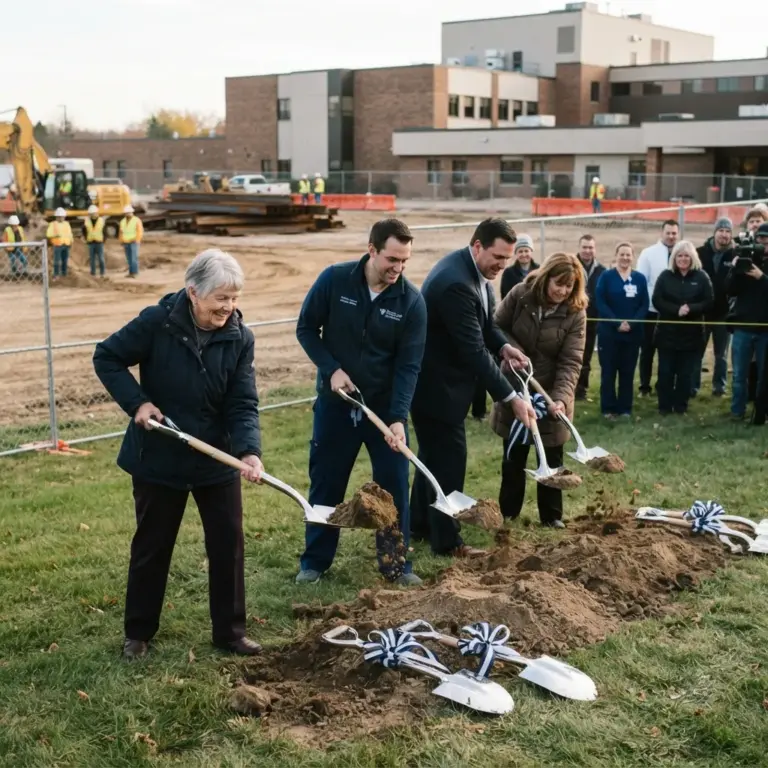
ThedaCare has officially broken ground on a sixteen million dollar expansion of its emergency room at the Medical Center in Waupaca, signaling a strong commitment to rural healthcare. While many small town hospitals across the country are currently struggling to keep their doors open, this investment aims to meet the demands of a growing local community and an increasing number of seasonal visitors. With an aging population relying more heavily on urgent medical services, officials say the upgrade is essential for maintaining public safety and accessibility.

Lynn Detterman, President of the North Region of Froedtert ThedaCare, noted that the current facility often reaches maximum capacity during the summer months, forcing staff to treat patients in waiting areas and other makeshift spaces. To solve this congestion, the new emergency wing will add ten thousand square feet to the building, marking a thirty percent increase in total size. This growth will allow the center to expand from eight treatment rooms up to twelve, ensuring there is ample space for patients along with their families and caregivers.

Beyond just adding beds, the renovation focuses on operational efficiency and comfort. A new ambulance bay will be constructed to handle larger modern vehicles while shielding arriving patients from harsh weather conditions. According to Jenny Derks, Vice President of ThedaCare Medical Centers for New London and Waupaca, these changes are designed to improve the overall flow of care through the department. Hospital staff also believe that creating a less cramped environment will boost morale among nurses and technicians, which directly correlates to higher quality patient outcomes.

This project represents only one part of a broader strategy by ThedaCare to modernize its presence in Waupaca over recent years. The organization has already introduced robotic surgery options, expanded behavioral health facilities, and recruited more primary care physicians into the region. Once construction is complete, residents can expect the upgraded emergency department to begin serving the community in early 2028.

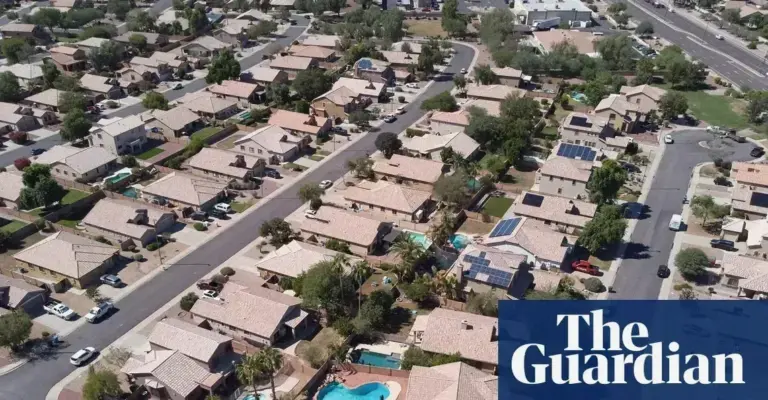
Prospective homebuyers are retreating from the market in droves as a combination of soaring mortgage rates and stubborn inflation pushes home sales to their lowest point in sixteen years. New data from the National Association of Realtors shows that existing home sales plummeted to 3.75 million units in October, marking an 8.8 percent drop compared to last year. While prices remained relatively resilient with a median sale price of 416,700 dollars, the volume of transactions cratered across the Midwest, South, and West.

The sudden chill in the market comes after a brief window of optimism where rates had dipped below six percent earlier in 2026. However, geopolitical instability surrounding the war in Iran and spiking inflation have sent those numbers climbing once again. The standard 30 year fixed mortgage rate is now hovering around 7.18 percent, creating a financial barrier for many who remember the era of three percent loans during the pandemic. Lawrence Yun, chief economist at the NAR, noted that buying a home has become incredibly difficult given these historic highs.

This downturn is closely tied to recent moves by the Federal Reserve, which raised interest rates in September for the first time since 2023 to fight overheating inflation. With another hike likely next month, analysts worry that affordability will continue to slide further into crisis mode. This economic pressure was felt deeply during the recent midterm elections, contributing to a Democratic victory in Congress as voters expressed frustration over stagnant home ownership and rents that are growing faster than general inflation.

Despite the grim statistics and record lows in pending contracts, some experts believe this slump is temporary rather than a permanent shift in behavior. Danielle Hale of Realtor.com suggests that current figures reflect a perfect storm involving seasonal slowdowns and political uncertainty leading up to an election cycle. For now, however, millions of Americans remain locked out of the dream of home ownership as they wait for a more stable financial horizon.