Archive

June 22, 2026

Browsing

The S&P 500 Index remained under pressure last week after the Federal Reserve delivered a highly hawkish interest rate decision. It also wavered as investors reacted to the new ceasefire between the US and Iran, which drove energy prices lower. This article looks at some of the key catalysts for S&P 500 and the key ETFs like VOO and SPY.

S&P 500 Index to react to the US-Iran crisis

One of the top catalysts for the S&P 500 Index is the ongoing US-Iran crisis, which faded last week as the two sides reached an agreement to end the war for 60 days. 

This agreement has been viewed widely as a major victory for Iran as it largely gave them all they asked for. They received sanctions relief, allowing them to sell their crude oil internationally at market prices.

At the same time, the US committed to unfreezing some of its assets, giving them access to billions of dollars. Iran will also receive over $300 billion in investments from Gulf countries over time.

Most notably, Iran also received a commitment that Israel will stop its bombing campaign against Lebanon. It received all this in exchange of reopening the Strait of Hormuz, which was open before the war started. This deal led to a plunge in crude oil prices, with Brent and the West Texas Intermediate (WTI) falling below $80.

With the deal signed now, the question is whether each side will implement their part. In a statement on Friday, Iran said that its delegation would not travel to have talks with the US, citing the Lebanon issue. The country also closed the Strait of Hormuz, pushing oil prices higher. 

Micron earnings 

The S&P 500 Index has been highly sensitive to individual earnings. For example, it recently retreated sharply after the Broadcom earnings, which sent shivers in the stock market.

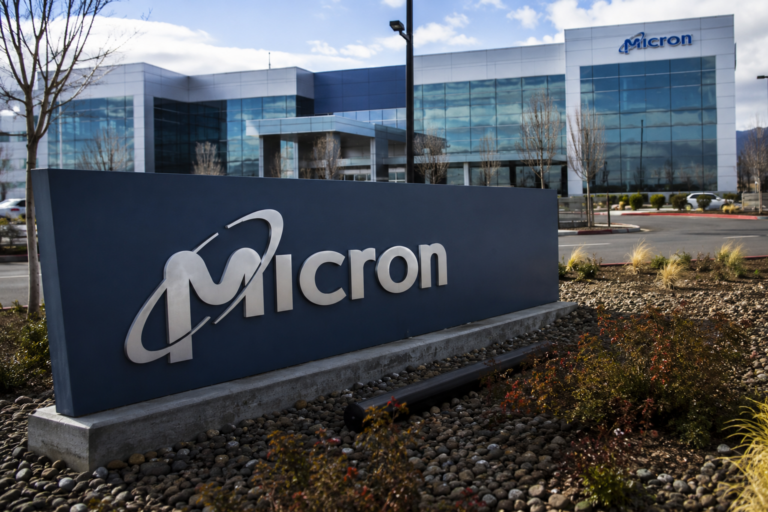
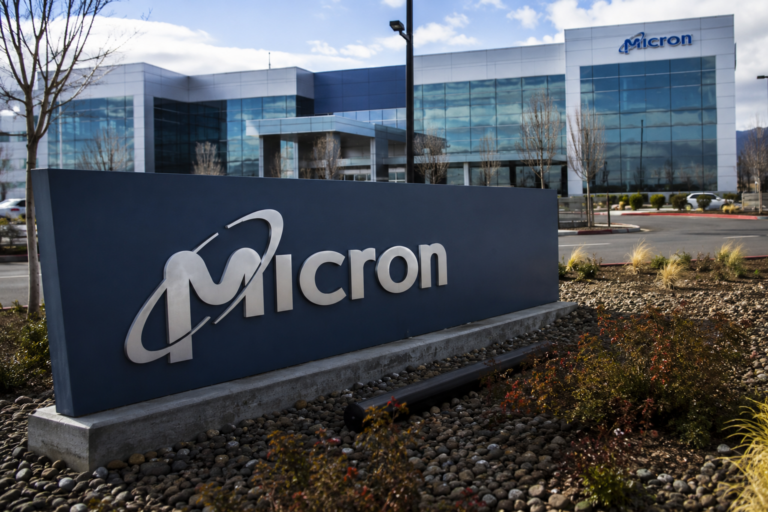
This week, focus will be on Micron, a company that has recently entered the $1 trillion club. It will publish its financial results on Wednesday, providing more color on its performance.

Micron’s earnings are important because of its size and the fact that it is in the hottest area in the stock market: memory. Indeed, the top gainers in the S&P 500 Index are all firms in the industry, including players like Sandisk, Western Digital, and Seagate. As such, if Micron’s earnings come short of expectations, chances are that it will have a major implication in the stock market.

The other S&P 500 companies that will publish their financial results this week are Paychex, Darden Restaurants, and FedEx.

US PCE report

The S&P 500 Index wavered last week after the hawkish Federal Reserve decision. In the aftermath, US bond yields continued rising, with the rate-sensitive two-year reaching its highest level in years. 

There will be several macro data from the US this week, with the most important one being the PCE report that comes out on Thursday. Economists expect this data to show that the PCE jumped 4.0% in May from 3.8% a month earlier. Core PCE, which excludes the volatile food and energy prices, is expected to remain at 3.3%. 

PCE is an important number because it is broader than the Consumer Price Index (CPI). It looks at the change in prices across the country, while the CPI focuses on the urban areas. Still, this data will likely not have a major impact on the stock market since it comes a week after the Fed delivered its interest rate decision.

The post Top 3 catalysts for the S&P 500 Index this week appeared first on Invezz

Shares of Reliance Industries Ltd rose on Monday after the conglomerate’s annual general meeting (AGM) unveiled a series of growth initiatives, including the proposed listing of Jio Platforms, artificial intelligence investments, and new energy projects.

The stock rose more than 2% during the session, making it one of the top gainers on the Nifty 50.

By 2:40 pm IST, however, it had pared some gains and was trading 1.6% higher at Rs 1,330.50.

The filing of Jio Platforms’ draft red herring prospectus (DRHP) has brought Reliance one step closer to unlocking value from what analysts consider the group’s most important growth engine.

Nearly a decade after its commercial launch in September 2016, Reliance Jio is preparing to enter public markets, marking a major milestone in one of India’s most significant corporate transformations.

Over the years, Jio Platforms attracted more than $20 billion from global investors, including Meta, Google, Silver Lake, KKR, and General Atlantic.

Valuations during those fundraising rounds ranged between $58 billion and $65 billion, while market expectations now peg its value at roughly $110 billion to $120 billion.

From a telecom disruptor, Jio has evolved into India’s largest digital platform with more than 525 million subscribers.

IPO proceeds expected to strengthen balance sheet

The proposed initial public offering will comprise a fresh issue of up to 27 crore shares, resulting in an equity dilution of around 3%.

The proceeds are expected to be used primarily to reduce debt at Jio Platforms.

Brokerages estimate Jio’s valuation in the range of $115 billion to $128 billion, broadly placing it on par with Bharti Airtel.

Nomura noted that Airtel’s valuation includes stakes in Airtel Africa and Indus Towers.

“Adjusted for these investments, the implied equity valuation for Bharti Airtel’s India telecom business is Rs 10.6 lakh crore or $113 billion,” the brokerage said, suggesting that Jio could potentially seek a modest premium to its closest rival.

Nomura retained its buy rating on Reliance Industries with a target price of Rs 1,640 per share and estimated Jio’s implied valuation at $117 billion to $127 billion.

Analysts see digital business driving earnings growth

Brokerages expect Jio to remain the biggest contributor to Reliance’s future earnings expansion.

Motilal Oswal Financial Services reiterated a buy rating on Reliance Industries with a target price of Rs 1,655 after the AGM.

The brokerage expects Reliance Jio to remain the company’s largest growth driver, with digital businesses contributing 80% of incremental EBITDA and posting an 18% EBITDA compound annual growth rate between FY26 and FY28.

The expected growth is likely to be supported by a planned 15% wireless tariff hike in the second quarter, market share gains, and continued expansion of home broadband and enterprise services.

Systematix Institutional Research said Reliance’s growth profile is broadening beyond its traditional businesses.

“The Jio IPO process has formally commenced, while Reliance Intelligence (AI) is emerging as a fourth growth pillar alongside Telecom, Retail, and Energy. The New Energy business is set to enter commercialization in FY27 with initial solar revenues and battery commissioning, and RCPL is targeting ₹1 trillion revenues by FY30 as it scales into a leading FMCG platform,” analysts at Systematix Institutional Research said.

AI and digital ecosystems offer long-term opportunities

Piyush Pandey, Senior Vice President at Centrum India, values Jio at around $130 billion and expects the IPO to be priced at a modest discount.

He believes investors should maintain exposure to both Bharti Airtel and Jio once the latter gets listed.

According to Pandey, the next phase of growth for Reliance Industries will depend on how effectively it monetises its large customer base and rising data consumption.

Apart from telecom services, businesses such as JioSaavn, JioTV, and other digital offerings could provide additional growth opportunities over time.

Nitin Soni, Senior Director and Head of Natural Resources for South and South East Asia at Fitch Ratings, said the proposed issue is a positive development as the proceeds will be used to pare debt and improve financial flexibility.

“We do expect ARPU to improve 10 to 15% each year, and at the same time, data consumption per user per month will also increase,” Soni said.

Soni added that Jio’s positioning extends beyond conventional telecom services, with investments in AI, digital platforms, and content ecosystems giving it a broader platform strategy than pure-play telecom operators.

Nuvama, however, cautioned that even if Jio commands a premium valuation in public markets, gains for Reliance shareholders could be tempered by the holding company discount that investors typically apply to diversified conglomerates with complex ownership structures.

The post Jio IPO could unlock value and drive next growth phase, analysts say appeared first on Invezz

China’s low Earth orbit satellite company SpaceSail has launched a new fundraising round, according to a report by state media outlet Securities Times on Monday, as the Shanghai government-backed firm pushes ahead with its satellite deployment plans and overseas expansion.

The report said the new financing round would result in a combined equity stake of no more than 20%.

SpaceSail plans to bring in no more than three new investors, while existing shareholders are also expected to take part in the capital increase.

According to Securities Times, the proceeds from the fundraising will be used mainly for satellite constellation construction, technology research and development, market expansion, and daily operating expenses.

Capital raise tied to constellation buildout

SpaceSail is positioning itself as a low Earth orbit satellite network operator with ambitious expansion plans.

The company aims to deploy as many as 15,000 low Earth orbit satellites by 2030, according to the report.

The fundraising comes as SpaceSail seeks to strengthen its network infrastructure and broaden its presence outside China.

The company has already secured overseas contracts in markets including Brazil, where it is seeking to compete directly with Starlink, the satellite internet business associated with Elon Musk.

Low Earth orbit, satellites operate at altitudes ranging from about 160 to 2,000 kilometres above the Earth’s surface.

Brazil approval marks overseas milestone

Earlier this year, Brazil’s telecommunications regulator Anatel officially authorised SpaceSail’s satellite constellation to begin commercial communication services in the country.

That approval made Brazil the first Latin American country to open its market to the Chinese low-orbit satellite network.

SpaceSail’s entry into Brazil is tied to a memorandum of understanding signed in November 2024 between the company and Brazilian state-owned telecommunications firm Telebras.

The agreement focuses on providing broadband internet access to remote and underserved regions of Brazil, with particular emphasis on schools and hospitals.

According to the report, the initiative is expected to support Brazil’s public policies on digital inclusion by improving connectivity in areas that have historically lacked reliable access to telecommunications services.

Fundraising follows major sector developments

SpaceSail’s new fundraising round comes only days after a major development involving its US rival, SpaceX, which owns Starlink, completed the world’s largest initial public offering earlier this month, raising  $75 billion in its stock market debut, which later grew to $85.7 billion.

This listing gave investors public access to a business spanning AI, satellite internet, and space infrastructure, while also reshaping competitive dynamics in the sector.

SpaceSail’s fundraising effort aimed at giving the Chinese satellite company additional financial firepower as competition in the low Earth orbit market intensifies.

The latest capital raise, if completed, would provide SpaceSail with fresh funding for its long-term constellation rollout, technology development, and international expansion strategy.

The post China’s SpaceSail starts fundraising push amid global satellite expansion plans appeared first on Invezz

Getty Images has entered into a “display agreement” with OpenAI, marking a significant step toward integrating licensed visual content into artificial intelligence-driven search experiences.

In a brief announcement on Sunday, Getty said its licensed image libraries will appear in “OpenAI search and discovery experiences within ChatGPT.”

The agreement is expected to allow ChatGPT to use Getty’s images in generating visual responses.

However, the companies have not clarified whether the AI system will be permitted to modify or alter these images in any way.

Getty also did not disclose the financial terms of the deal.

It remains unclear whether OpenAI will be allowed to use Getty’s image libraries to train its generative AI models.

Scope of image usage and contributor rights still unclear

Several critical details of the partnership remain unresolved.

The announcement did not specify whether all content submitted to Getty Images, including both editorial and stock photography, would fall under the agreement.

It is also unclear whether individual photographers and content contributors will be given the option to opt out of having their work included in the AI-related use cases covered by the deal.

Getty Images CEO Craig Peters said, “High-quality, licensed visual content makes AI-powered search and discovery more useful and more trustworthy. This partnership with OpenAI reflects a shared recognition of that, and together we will deliver richer visual experiences to ChatGPT users.”

The statement highlights Getty’s positioning of licensed content as a foundation for more reliable AI-generated visual outputs, although operational details remain limited.

Stock surges sharply following announcement

Market reaction to the announcement was immediate and highly volatile.

Early on Monday, Getty Images shares briefly surged more than 200% before giving up some of those gains later in the session.

The stock ultimately closed at $1.35 per share, marking a 123% increase from Friday’s closing price.

The move comes after a prolonged period of weakness in Getty’s valuation.

The stock had declined about 55% earlier in the year, closing at 61 cents on Friday before the announcement.

From legal battles to licensing partnerships in the AI era

The agreement comes against the backdrop of Getty Images’ evolving relationship with artificial intelligence technology, which has included both legal disputes and licensing efforts.

In January 2023, Getty Images announced it was suing Stability AI, the creators of Stable Diffusion, alleging copyright infringement.

At the time, Getty said: “It is Getty Images’ position that Stability AI unlawfully copied and processed millions of images protected by copyright.”

Getty also noted its broader stance on AI, stating it believes the technology has the “potential to stimulate creative endeavors,” while also highlighting that it has provided “licenses to leading technology innovators for purposes related to training artificial intelligence systems.”

The company had previously expressed resistance to generative AI image tools and explored its own AI image generation capabilities.

Concerns over watermark replication in AI-generated outputs were among the issues that contributed to its legal action against Stability AI.

Growing trend of AI licensing across the media industry

The OpenAI partnership reflects a wider shift in the media and technology landscape, where AI developers are increasingly entering licensing agreements with publishers and content platforms.

OpenAI has been expanding its network of media partnerships as it develops new features across ChatGPT, including tools for visual content generation and advertising-related applications.

Despite the deal, significant uncertainty remains regarding how Getty’s licensed content will be used within AI systems, particularly in relation to training data usage and image manipulation permissions.

Further clarity is expected as implementation details of the agreement are revealed in the coming period.

The post Why is Getty Images stock rocketing 120% today? appeared first on Invezz

Sandisk, Western Digital, and Seagate stocks have been in a strong rally this year and are the top gainers in the S&P 500 and Nasdaq 100 indices. SNDK jumped by 800% this year, while Western Digital, Micron, and Seagate have soared by 320%, 285%, and 280%, respectively. 

Sandisk, Western Digital, and Seagate face a major test this week

SNDK, WDC, STX, and MU stocks have been in a strong bull run in the past few years. This surge has also coincided with their international peers like Japan’s Kioxia,and South Korea’s SK Hynix and Samsung.

The surge is happening because of the ongoing artificial intelligence supercycle that has led to a surge in memory demand. Some of these companies have said that they are now operating at full capacity, with hyperscalers entering multi-year contracts.

This week will be important for companies in the memory industry as Micron will publish its earnings on Wednesday. These will be important earnings as they will shed color on whether the growth in the industry is accelerating or not. 

Micron is a major player in the memory industry, which explains why its market capitalization has jumped to over $1.2 trillion. It is the third-biggest name in the high-bandwidth memory industry after SK Hynix and Samsung.

Micron’s products are different from those made by Sandisk, Seagate, and Western Digital

To be clear: Micron makes different types of products from companies like Sandisk, Seagate, and Western Digital. Sandisk is a specialist in storage for consumers and enterprise customers, and is known for its SSDs and memory cards. 

Western Digital also makes consumer SSDs, hard drives, and external drives. Seagate makes hard drives and SSDs. Micron, on the other hand, makes memory chips known as DRAM and NAND. 

Despite this difference, its earnings will provide more information about the storage and memory industry as it is widely seen as a bellwether for the sector. If its earnings are stronger than expected, chances are that its stock will continue doing well, which will lead to a similar performance for these other companies.

On the other hand, a strong earnings report and weak guidance will lead to a major reversal not only among companies like Sandisk and Western Digital, but also in the broader indices like the Nasdaq 100 and S&P 500 Index. 

A good example of this is what happened a few weeks ago when Broadcom published its earnings. While its top-line numbers were strong, its guidance was weaker than expected, dragging its stock and that of the broader stock market.

Analysts are upbeat about Micron earnings

Most analysts are upbeat about Micron’s earnings as its earnings near. The average estimate is that its revenue jumped by 276% in the last quarter to $35 billion. This surge is driven by the growing demand for its products and the higher prices. 

This growth is expected to continue going on in the next quarters. The estimate among analysts is that revenue in the current quarter will soar by 270% to $41.8 billion. As a result, the annual figure is expected to be $113 billion this year, followed by $190 billion next year.

Micron’s revenue and earnings will likely be stronger than expected, as it has done in the past few quarters. 

Most notably, Micron and other firms like Seagate, Western Digital, and Sandisk are not overvalued. Still, the main challenge their stocks face is technicals as they are now getting overbought. That is a sign that they will retreat in the near future as investors start booking profits.

The post Western Digital, Seagate, Sandisk stocks are bracing for a major Micron event appeared first on Invezz

US stocks opened slightly higher on Monday as investors reacted to signs of progress in the latest round of US-Iran negotiations and looked ahead to a key inflation report that could shape the Federal Reserve’s next policy move.

Officials from the United States and Iran made what mediators described as “encouraging progress” during the first round of talks in Switzerland, which concluded early Monday.

The two sides agreed on a roadmap aimed at reaching a final deal within 60 days, although tensions persisted over Lebanon and the Strait of Hormuz.

The Dow Jones Industrial Average rose 204 points. The Nasdaq Composite fell 0.27% while the S&P 500 was up 0.11%.

Oil retreats as diplomatic hopes improve

Oil prices fell sharply after the developments in the US-Iran talks eased some concerns about potential supply disruptions.

Brent crude futures initially gained during early Asian trading before turning lower and falling 1.6% to $79.30 a barrel.

US West Texas Intermediate futures also reversed earlier gains, trading about 0.8% lower at $76 after previously rising as much as 3%.

The easing in oil prices came after mediators Qatar and Pakistan said US and Iranian officials had agreed on a framework for a final agreement within 60 days.

Chip stocks lead gains

Technology shares continued to support broader market sentiment. Memory chipmakers advanced in trading, with Micron Technology and Sandisk gaining about 5% each. Intel rose 4.8%.

Micron’s quarterly results, scheduled for release on Wednesday after the market close, are expected to provide the next major test for the technology rally. Shares of the memory chipmaker have surged nearly 300% this year.

Meanwhile, SpaceX shares fell 6% to $173 and were on track for a third consecutive decline following the company’s strong market debut.

Another notable mover was Apogee Therapeutics, whose shares jumped 46% after AbbVie announced plans to acquire the biotech company for $10.9 billion in cash. AbbVie shares rose 4.3%.

Inflation data and Fed signals in focus

Investors are now turning their attention to Thursday’s release of the personal consumption expenditures (PCE) price index, the Federal Reserve’s preferred measure of inflation.

Economists expect core PCE, which excludes food and energy prices, to increase from April levels.

Following last week’s hawkish Federal Reserve meeting, markets have brought forward expectations for another interest rate increase to as early as September, according to LSEG data, while some investors are pricing in a possible move by October.

The yield on the two-year Treasury note, which is sensitive to near-term rate expectations, climbed to 4.230%, its highest level since early 2025.

Investors will also monitor comments from Federal Reserve officials, including New York Fed President John Williams and Chicago Fed President Austan Goolsbee, for further clues on the path of monetary policy.

The post Dow rises as US-Iran talks progress; investors await key inflation data appeared first on Invezz

China’s low Earth orbit satellite company SpaceSail has launched a new fundraising round, according to a report by state media outlet Securities Times on Monday, as the Shanghai government-backed firm pushes ahead with its satellite deployment plans and overseas expansion.

The report said the new financing round would result in a combined equity stake of no more than 20%.

SpaceSail plans to bring in no more than three new investors, while existing shareholders are also expected to take part in the capital increase.

According to Securities Times, the proceeds from the fundraising will be used mainly for satellite constellation construction, technology research and development, market expansion, and daily operating expenses.

Capital raise tied to constellation buildout

SpaceSail is positioning itself as a low Earth orbit satellite network operator with ambitious expansion plans.

The company aims to deploy as many as 15,000 low Earth orbit satellites by 2030, according to the report.

The fundraising comes as SpaceSail seeks to strengthen its network infrastructure and broaden its presence outside China.

The company has already secured overseas contracts in markets including Brazil, where it is seeking to compete directly with Starlink, the satellite internet business associated with Elon Musk.

Low Earth orbit, satellites operate at altitudes ranging from about 160 to 2,000 kilometres above the Earth’s surface.

Brazil approval marks overseas milestone

Earlier this year, Brazil’s telecommunications regulator Anatel officially authorised SpaceSail’s satellite constellation to begin commercial communication services in the country.

That approval made Brazil the first Latin American country to open its market to the Chinese low-orbit satellite network.

SpaceSail’s entry into Brazil is tied to a memorandum of understanding signed in November 2024 between the company and Brazilian state-owned telecommunications firm Telebras.

The agreement focuses on providing broadband internet access to remote and underserved regions of Brazil, with particular emphasis on schools and hospitals.

According to the report, the initiative is expected to support Brazil’s public policies on digital inclusion by improving connectivity in areas that have historically lacked reliable access to telecommunications services.

Fundraising follows major sector developments

SpaceSail’s new fundraising round comes only days after a major development involving its US rival, SpaceX, which owns Starlink, completed the world’s largest initial public offering earlier this month, raising  $75 billion in its stock market debut, which later grew to $85.7 billion.

This listing gave investors public access to a business spanning AI, satellite internet, and space infrastructure, while also reshaping competitive dynamics in the sector.

SpaceSail’s fundraising effort aimed at giving the Chinese satellite company additional financial firepower as competition in the low Earth orbit market intensifies.

The latest capital raise, if completed, would provide SpaceSail with fresh funding for its long-term constellation rollout, technology development, and international expansion strategy.

The post China’s SpaceSail starts fundraising push amid global satellite expansion plans appeared first on Invezz

UK Prime Minister Keir Starmer said on Monday that he would step down as Labour leader and prime minister, ending months of political turmoil and setting in motion a leadership contest that is increasingly expected to deliver Andy Burnham to Downing Street.

The announcement comes less than two years after Starmer led Labour to one of its largest parliamentary majorities in the 2024 general election.

However, his government has struggled with growing dissatisfaction over fiscal policy, welfare reforms, and internal disputes, including criticism surrounding the appointment of Peter Mandelson, an associate of the late sex offender Jeffrey Epstein, as US ambassador.

Public sentiment had also turned increasingly negative.

An Ipsos poll published on Friday showed that 52% of Britons believed Starmer should resign as prime minister, up five percentage points from May, while only 35% thought he should remain in office.

Burnham emerges as overwhelming favourite

Andy Burnham confirmed on Monday that he would seek to replace Starmer, saying he would offer Britain “stability, seriousness and a continued focus on the issues that matter most”.

The contest appears increasingly one-sided after former health secretary Wes Streeting ruled himself out of the race.

No other senior Labour figures have publicly indicated plans to stand, making Burnham the overwhelming favourite to succeed Starmer.

Users on online prediction platform Polymarket currently assign a 96% probability to Burnham becoming Britain’s next prime minister.

Burnham has also spoken of a “final chance to change” Britain and has outlined a broader vision for the economy that includes lowering water and energy bills, reducing rail fares, and promoting the “re-industrialisation” of northern England.

Markets remain calm but questions linger

Financial markets reacted calmly to the political upheaval.

The pound edged down to around $1.32, while yields on benchmark 10-year gilts held near 4.82%.

The FTSE 100 was broadly flat initially and later traded around 0.5% higher.

The domestically focused FTSE 250 initially dropped 0.6% to one-week lows before recovering some losses to trade down around 0.27%.

Investors appear to be taking comfort from expectations of policy continuity, particularly if Burnham adheres to Labour’s existing fiscal rules.

However, markets are also mindful that Burnham has previously advocated looser spending policies.

In September, he said the government should not be “in hock” to bond markets, remarks that raised concerns among investors.

More recently, however, he has adopted a more market-friendly tone and enlisted a former Bank of England chief economist as an adviser.

Burnham has also pledged not to increase income tax or national insurance contributions for working people.

Fiscal policy becomes the key market focus

Analysts say the biggest test for financial markets will be whether a Burnham government remains committed to fiscal discipline.

Michael Pfister and Hauke Siemßen, strategists at Commerzbank, said investors will closely scrutinise Burnham’s policy intentions.

“We think the main topics will now be whether Burnham will face competition in his leadership challenge (although he is probably the favourite) and, if he is elected, whether he will adhere to the fiscal rules (as he has suggested over the last couple of weeks) or be more open to increased spending (in line with his previous views).”

The strategists added: “We believe that the market is not fully pricing in the prospect of an even more loose fiscal policy; the recent gilt movements are better explained by global factors. Therefore, we still see potential for a steeper yield curve and a weaker pound over the next couple of weeks.”

Choice of chancellor the most important near-term decision for markets

Analysts broadly agree that the most important near-term decision will be the choice of chancellor.

“Incumbent Chancellor Rachel Reeves has successfully mitigated market concerns via a strong commitment to the fiscal rule — markets will search for similar reassurances from her successor,” ING analyst Francesco Pesole wrote.

Dan Coatsworth, head of markets at AJ Bell, said: “Burnham’s choice of chancellor if he becomes prime minister could have a major impact on bond markets.”

“Bond investors like boring and dull – they want someone who has a plan where the maths stacks up, and they stick to it.”

Russ Mould, investment director at AJ Bell, echoed those concerns.

“Bond markets already rate the UK as higher risk, as illustrated by the rise in gilt yields this year. There is potential for gilt yields to go even higher if markets worry about who might become the next chancellor and if there will be radically different policies under a new prime minister.”

Investors wary of spending ambitions

Memories of former Conservative Prime Minister Liz Truss’s mini-budget in September 2022 continue to influence market thinking.

That fiscal package triggered a sharp selloff in gilts and a collapse in sterling, cementing investor sensitivity to unfunded spending plans.

Analysts at JPMorgan, led by Andrew Tyler, said there is “certainly room for fiscal risk premium expansion but it’s more likely to be towards the end of summer.”

The bank expects borrowing costs to rise eventually as investors assess the possibility that Burnham could pursue policies involving greater state involvement and a reversal of some privatisation measures.

Economists at Pantheon Macroeconomics also see risks tilted toward higher spending.

Rob Wood and Elliott Jordan-Doak said Burnham could “pitch to Labour MPs’ left-leaning instincts for more spending, funded by higher taxes and moderately looser fiscal rules, as well as additional regulation”.

However, they added that he would likely avoid dramatic fiscal shifts because he would want to avoid a repeat of the gilt market turmoil that damaged the Conservatives’ reputation for economic management.

Kathleen Brooks, research director at XTB, said Burnham’s spending and nationalisation ambitions “could threaten to unleash another wave of inflation on the UK economy”.

She added that Burnham would have to “work to persuade financial markets that he is the right man for the job to grow the UK economy and get debt back under control”.

Citigroup strategists also see the possibility of higher borrowing costs even if fiscal rules remain intact, arguing that political uncertainty and concerns over increased government borrowing could push 10-year gilt yields toward a range of 5% to 5.25%.

For now, investors appear content to wait for more clarity.

But with a new prime minister likely to take office within weeks, financial markets are increasingly focused on one question: whether Britain’s next government can balance growth ambitions with fiscal credibility.

The post Starmer to step down; markets eye Burnham's fiscal plans and chancellor pick appeared first on Invezz


Getty Images has entered into a “display agreement” with OpenAI, marking a significant step toward integrating licensed visual content into artificial intelligence-driven search experiences.

In a brief announcement on Sunday, Getty said its licensed image libraries will appear in “OpenAI search and discovery experiences within ChatGPT.”

The agreement is expected to allow ChatGPT to use Getty’s images in generating visual responses.

However, the companies have not clarified whether the AI system will be permitted to modify or alter these images in any way.

Getty also did not disclose the financial terms of the deal.

It remains unclear whether OpenAI will be allowed to use Getty’s image libraries to train its generative AI models.

Scope of image usage and contributor rights still unclear

Several critical details of the partnership remain unresolved.

The announcement did not specify whether all content submitted to Getty Images, including both editorial and stock photography, would fall under the agreement.

It is also unclear whether individual photographers and content contributors will be given the option to opt out of having their work included in the AI-related use cases covered by the deal.

Getty Images CEO Craig Peters said, “High-quality, licensed visual content makes AI-powered search and discovery more useful and more trustworthy. This partnership with OpenAI reflects a shared recognition of that, and together we will deliver richer visual experiences to ChatGPT users.”

The statement highlights Getty’s positioning of licensed content as a foundation for more reliable AI-generated visual outputs, although operational details remain limited.

Stock surges sharply following announcement

Market reaction to the announcement was immediate and highly volatile.

Early on Monday, Getty Images shares briefly surged more than 200% before giving up some of those gains later in the session.

The stock ultimately closed at $1.35 per share, marking a 123% increase from Friday’s closing price.

The move comes after a prolonged period of weakness in Getty’s valuation.

The stock had declined about 55% earlier in the year, closing at 61 cents on Friday before the announcement.

From legal battles to licensing partnerships in the AI era

The agreement comes against the backdrop of Getty Images’ evolving relationship with artificial intelligence technology, which has included both legal disputes and licensing efforts.

In January 2023, Getty Images announced it was suing Stability AI, the creators of Stable Diffusion, alleging copyright infringement.

At the time, Getty said: “It is Getty Images’ position that Stability AI unlawfully copied and processed millions of images protected by copyright.”

Getty also noted its broader stance on AI, stating it believes the technology has the “potential to stimulate creative endeavors,” while also highlighting that it has provided “licenses to leading technology innovators for purposes related to training artificial intelligence systems.”

The company had previously expressed resistance to generative AI image tools and explored its own AI image generation capabilities.

Concerns over watermark replication in AI-generated outputs were among the issues that contributed to its legal action against Stability AI.

Growing trend of AI licensing across the media industry

The OpenAI partnership reflects a wider shift in the media and technology landscape, where AI developers are increasingly entering licensing agreements with publishers and content platforms.

OpenAI has been expanding its network of media partnerships as it develops new features across ChatGPT, including tools for visual content generation and advertising-related applications.

Despite the deal, significant uncertainty remains regarding how Getty’s licensed content will be used within AI systems, particularly in relation to training data usage and image manipulation permissions.

Further clarity is expected as implementation details of the agreement are revealed in the coming period.

The post Why is Getty Images stock rocketing 120% today? appeared first on Invezz

Sandisk, Western Digital, and Seagate stocks have been in a strong rally this year and are the top gainers in the S&P 500 and Nasdaq 100 indices. SNDK jumped by 800% this year, while Western Digital, Micron, and Seagate have soared by 320%, 285%, and 280%, respectively. 

Sandisk, Western Digital, and Seagate face a major test this week

SNDK, WDC, STX, and MU stocks have been in a strong bull run in the past few years. This surge has also coincided with their international peers like Japan’s Kioxia,and South Korea’s SK Hynix and Samsung.

The surge is happening because of the ongoing artificial intelligence supercycle that has led to a surge in memory demand. Some of these companies have said that they are now operating at full capacity, with hyperscalers entering multi-year contracts.

This week will be important for companies in the memory industry as Micron will publish its earnings on Wednesday. These will be important earnings as they will shed color on whether the growth in the industry is accelerating or not. 

Micron is a major player in the memory industry, which explains why its market capitalization has jumped to over $1.2 trillion. It is the third-biggest name in the high-bandwidth memory industry after SK Hynix and Samsung.

Micron’s products are different from those made by Sandisk, Seagate, and Western Digital

To be clear: Micron makes different types of products from companies like Sandisk, Seagate, and Western Digital. Sandisk is a specialist in storage for consumers and enterprise customers, and is known for its SSDs and memory cards. 

Western Digital also makes consumer SSDs, hard drives, and external drives. Seagate makes hard drives and SSDs. Micron, on the other hand, makes memory chips known as DRAM and NAND. 

Despite this difference, its earnings will provide more information about the storage and memory industry as it is widely seen as a bellwether for the sector. If its earnings are stronger than expected, chances are that its stock will continue doing well, which will lead to a similar performance for these other companies.

On the other hand, a strong earnings report and weak guidance will lead to a major reversal not only among companies like Sandisk and Western Digital, but also in the broader indices like the Nasdaq 100 and S&P 500 Index. 

A good example of this is what happened a few weeks ago when Broadcom published its earnings. While its top-line numbers were strong, its guidance was weaker than expected, dragging its stock and that of the broader stock market.

Analysts are upbeat about Micron earnings

Most analysts are upbeat about Micron’s earnings as its earnings near. The average estimate is that its revenue jumped by 276% in the last quarter to $35 billion. This surge is driven by the growing demand for its products and the higher prices. 

This growth is expected to continue going on in the next quarters. The estimate among analysts is that revenue in the current quarter will soar by 270% to $41.8 billion. As a result, the annual figure is expected to be $113 billion this year, followed by $190 billion next year.

Micron’s revenue and earnings will likely be stronger than expected, as it has done in the past few quarters. 

Most notably, Micron and other firms like Seagate, Western Digital, and Sandisk are not overvalued. Still, the main challenge their stocks face is technicals as they are now getting overbought. That is a sign that they will retreat in the near future as investors start booking profits.

The post Western Digital, Seagate, Sandisk stocks are bracing for a major Micron event appeared first on Invezz