
Archive

November 2026

Browsing

Microsoft shares recovered on Friday after a global outage disrupted its Outlook, Teams and Copilot services, affecting users across more than 70 countries.

The incident has renewed concerns about businesses’ dependence on centralised cloud services, while intensifying competition in artificial intelligence adds to the pressure on the technology giant.

Microsoft apologises as outage disrupts services

Microsoft shares MSFT rose approximately 0.18% to $523.94 on Friday, recovering from a decline of more than 2% in premarket trading.

The outage, which began on Thursday, November 12, affected several Microsoft 365 services, including Outlook email, Teams and the Copilot AI assistant.

According to Downdetector, users across more than 70 countries reported disruptions.

The incident affected services used by more than 430 million people, alongside governments and organisations worldwide.

Microsoft engineers worked for more than 20 hours to address the disruption.

In its latest updates, Microsoft apologised for the outage, saying it was “deeply sorry” for the disruption caused since Thursday.

In a 3:05 p.m. EST update, the company said it did not yet have a timeline for full recovery.

Earlier, Microsoft had said it was seeing “broad recovery and stability” across its services.

“Given the scale of demand, we restored services gradually, validating stability at each stage. While this took longer, it helped ensure a stable restoration,” the company said in an earlier update.

Microsoft also dismissed speculation that the outage was linked to technical issues involving artificial intelligence agents.

It said the incident was caused by a technical issue and was not related to cybersecurity or AI agents.

The company plans to publish a full post-incident report after completing its review.

Outage highlights dependence on cloud services

The disruption has drawn attention to the risks associated with businesses relying heavily on a small number of major technology providers.

Microsoft’s cloud-based model allows organisations to avoid the costs of operating and maintaining their own email servers and infrastructure.

However, a prolonged outage at a major provider can affect large numbers of businesses simultaneously.

Microsoft’s second-quarter availability for its Microsoft 365 workplace applications was reported at 99.994% globally, making prolonged disruptions relatively rare.

Nevertheless, the incident could encourage companies to invest more in backup services and continuity arrangements.

Providers such as US cybersecurity firm Mimecast offer continuity services that allow users to send and receive emails through temporary inboxes when their primary systems become unavailable.

Privacy-focused technology company Proton also offers standby email accounts that businesses can activate during disruptions.

According to a study by Oxford Economics and Splunk, unplanned outages of critical digital business systems cost Global 2000 companies an average of $15,000 per minute.

While continuity services have traditionally attracted deadline-sensitive industries such as law, the latest disruption could encourage wider adoption among accounting firms, hospitals and other regulated businesses.

Geopolitical tensions have also increased concerns about dependence on US technology providers, particularly in Europe.

The outage highlighted how technical failures alone can disrupt access to essential digital services.

AI competition adds to pressure on Microsoft

The outage comes at a challenging time for Microsoft as investors assess its position in the artificial intelligence market.

Recent reports about OpenAI’s latest figures have raised questions about its competitive position relative to Anthropic.

Microsoft owns a 24% stake in OpenAI and has a smaller investment in Anthropic.

Anthropic also recently introduced a new suite of office tools, adding to competition in a market where Microsoft has a significant presence through its productivity software and Copilot assistant.

Investors will be watching Microsoft’s upcoming Ignite conference for updates on its AI strategy and cloud platform Azure.

Citi analyst Tyler Radke said the event could reinforce confidence in the company’s AI growth outlook.

“We expect the event to reinforce confidence in Microsoft’s AI growth narrative,” Radke said in a research note.

The conference could provide investors with further insight into Microsoft’s cloud and Copilot developments as the company seeks to maintain its position in an increasingly competitive AI market.

AI disclosure: AI tools assisted with research and drafting of this piece. An Invezz editor reviewed the facts, sources and wording before publication. Any opinions or analysis are Invezz’s, not those of an automated system.

The post Microsoft stock steadies after global outage as AI competition intensifies appeared first on Invezz


The artificial intelligence revolution has always felt less like a corporate climb and more like a kingdom governed by Jensen Huang. For years, the Nvidia chief served as both the technical mastermind and the industry’s unofficial central banker, weaving a complex web of financing and partnerships that pushed the entire sector forward. Now, following his abrupt resignation amid scandals involving personal misconduct and concerns over foreign intelligence targets, the industry finds itself staring into a massive vacuum. While Nvidia continues to produce the chips that power today’s leading models, the loss of Huang removes the singular animating force that turned hardware sales into a global financial engine.

Huang did far more than sell graphics processing units; he engineered a system of circular financing that acted as a safety net for the AI boom. By investing in startups and providing revenue guarantees for neocloud providers like CoreWeave, he ensured that his customers had the capital necessary to keep buying his products. This aggressive strategy extended to staggering sums, including a promised 105 billion dollars for an OpenAI data center and efforts to mobilize half a trillion dollars by convincing major financial institutions to treat AI infrastructure as a legitimate asset class. With Huang gone, these fragile high-stakes agreements now face intense scrutiny and potential collapse.

The immediate fallout creates a precarious moment for smaller players who relied on Huang’s personal seal of approval to maintain investor confidence. In several instances, a few optimistic words from Huang were enough to stop stock slides and stabilize bond yields. CFO Colette Kress has stepped in as interim CEO to steady the ship, but analysts warn that managing balance sheets is not the same as possessing Huang’s rare blend of technological foresight and dealmaking aggression. As competitors like AMD and Broadcom circle, Nvidia must figure out how to remain the axis of the AI universe without its most powerful orbit.

Ultimately, the crisis exposes how dependent the current economic surge has been on one man’s willpower and reputation. While existing contracts should prevent an overnight crash, the long-term trajectory of AI expansion may slow as the era of creative vendor financing fades. The industry now waits to see if giants like Amazon or Google will step up to fill the role of capital allocator, or if the ecosystem Huang meticulously crafted will begin to fracture under the weight of its own ambition.

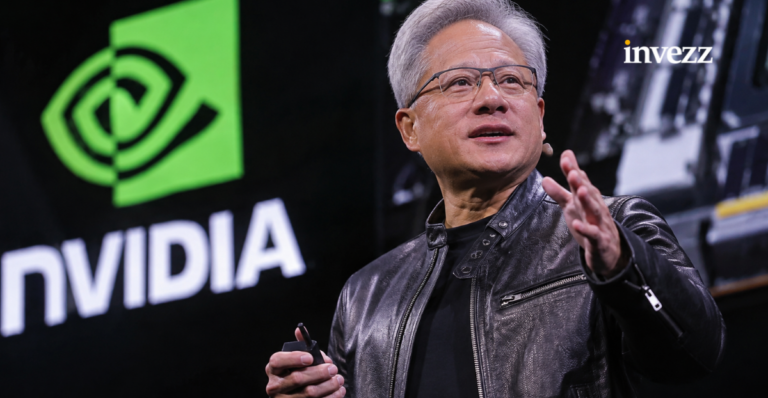
The sudden resignation of Jensen Huang from Nvidia has sent shockwaves through both Silicon Valley and the halls of power in Washington, marking a dramatic end for the leather jacket clad visionary who built the world’s most pivotal chipmaking empire. Huang stepped down on Thursday following explosive allegations that he engaged in an affair with Alice Huang, an executive at the Singaporean firm Megaspeed who is suspected of being a Chinese spy. While the corporate transition sees Colette Kress stepping in as interim chief, the political storm surrounding the former CEO is only just beginning to intensify.

Lawmakers on both sides of the aisle are now scrambling to determine if this personal entanglement compromised U.S. artificial intelligence dominance or leaked critical national security secrets. Republicans, currently holding control of Congress for a few remaining weeks, have moved quickly to summon Huang to Capitol Hill, with Senate Banking Committee Chair Tim Scott threatening subpoenas to ensure the ex-CEO provides answers regarding protected technology. The scrutiny extends beyond Huang himself, reaching deep into the Trump administration as questions arise about why Commerce Secretary Howard Lutnick may have stalled crackdowns on firms smuggling Nvidia chips into China.

The timing of the scandal creates a volatile political landscape, as Democrats prepare to seize control of the House and Senate in January. Figures like Senator Elizabeth Warren and Minority Leader Chuck Schumer are already signaling that Nvidia will be a primary target for oversight once they take power. They are demanding full transparency concerning export control compliance and have ordered federal officials to preserve all communications related to advanced AI shipments destined for China or diverted entities.

As the legal pressure mounts, Huang appears to be coordinating his initial responses with House committees led by Representative Brian Mast, including panels focused on intelligence and China relations. These upcoming testimonies, conducted under oath, aim to uncover whether the intimacy between a titan of industry and an alleged foreign agent created a backdoor for adversaries to bypass strict trade restrictions. For now, what began as a tabloid scandal has evolved into a sweeping probe into the intersection of private profit and global security.

Broadcom shares AVGO rose 4.6% on Thursday as investors assessed the potential impact of Nvidia’s leadership turmoil on the broader artificial intelligence sector.

The stock’s gains came after Nvidia’s board confirmed the resignation of chief executive Jensen Huang.

The development has raised questions about whether hyperscalers that design their own chips could rely more heavily on alternative suppliers, including Broadcom, while Nvidia navigates a leadership transition.

However, market participants have so far appeared to distinguish between company-specific concerns at Nvidia and the broader outlook for AI-related stocks.

Broadcom could benefit as investors assess Nvidia turmoil

Broadcom is among the semiconductor companies that investors may consider as they assess potential alternatives to Nvidia.

Hyperscalers developing their own chips could lean more heavily on Broadcom, particularly as Nvidia works through its leadership transition.

The company also features in Anthropic’s amended S-1 filing as a buyer in a $26 billion share placement.

According to the filing, Broadcom is taking 13,513,513 Class N shares, worth approximately $1 billion at the $74 midpoint.

The placement also includes Google, Nvidia, AMD, Micron, Microsoft and TSMC.

Pepperstone analyst Chris Weston said the market appeared to be treating Nvidia’s problems as separate from the broader AI investment theme.

“The market appears to be distinguishing between a problem for Nvidia and a problem for AI. That’s an important distinction for the broader technology trade,” Weston said.

He added that, despite the interconnected nature of the AI ecosystem, market movements suggested investors were viewing the situation primarily as a company-specific risk for Nvidia.

Tom Lee maintains technology stocks have bottomed

Fundstrat’s Tom Lee also reiterated his view that technology stocks had already reached a bottom following last week’s market selloff.

“We are sticking with the thesis that Technology stocks bottomed last week,” Lee said on Thursday, in a CNBC interview. He added that Huang’s exit “does not change our view.”

Last week, Lee had identified memory, semiconductor, data centre and neocloud stocks as potential beneficiaries of a rebound following the midterm election results.

He argued that the previous week’s selloff marked a low point, pointing to heavy losses at several prominent hedge funds as evidence that an internal market bottom had formed.

Lee described the episode as a wave of selling and forced liquidations.

He also said the sharp decline was unusual because hedge funds generally operate with beta-neutral strategies and should not necessarily experience substantial losses when technology stocks fall.

According to Lee, the market’s response to negative developments is an important indicator of whether a bottom has formed.

“History shows markets bottom on bad news,” he wrote, arguing that stocks ceasing to fall despite negative headlines can signal that selling pressure has been exhausted.

Wall Street analysts maintain positive Broadcom ratings

Broadcom has also retained support from several Wall Street analysts.

Bank of America and JPMorgan maintained their Buy ratings on the stock on Wednesday.

D.A. Davidson upgraded Broadcom to Buy in a report issued on October 27, setting a price target of $400.

Barclays analyst Thomas O’Malley also maintained a Buy rating on Broadcom last week and set a price target of $500.

The combination of analyst support and potential demand from hyperscalers developing custom chips has kept Broadcom in focus as investors assess the implications of Nvidia’s leadership change.

AI disclosure: AI tools assisted with research and drafting of this piece. An Invezz editor reviewed the facts, sources and wording before publication. Any opinions or analysis are Invezz’s, not those of an automated system.

The post Broadcom stock surges 4%: is there more upside to the stock? appeared first on Invezz

ThedaCare has officially broken ground on a sixteen million dollar expansion of its emergency room at the Medical Center in Waupaca, signaling a strong commitment to rural healthcare. While many small town hospitals across the country are currently struggling to keep their doors open, this investment aims to meet the demands of a growing local community and an increasing number of seasonal visitors. With an aging population relying more heavily on urgent medical services, officials say the upgrade is essential for maintaining public safety and accessibility.

Lynn Detterman, President of the North Region of Froedtert ThedaCare, noted that the current facility often reaches maximum capacity during the summer months, forcing staff to treat patients in waiting areas and other makeshift spaces. To solve this congestion, the new emergency wing will add ten thousand square feet to the building, marking a thirty percent increase in total size. This growth will allow the center to expand from eight treatment rooms up to twelve, ensuring there is ample space for patients along with their families and caregivers.

Beyond just adding beds, the renovation focuses on operational efficiency and comfort. A new ambulance bay will be constructed to handle larger modern vehicles while shielding arriving patients from harsh weather conditions. According to Jenny Derks, Vice President of ThedaCare Medical Centers for New London and Waupaca, these changes are designed to improve the overall flow of care through the department. Hospital staff also believe that creating a less cramped environment will boost morale among nurses and technicians, which directly correlates to higher quality patient outcomes.

This project represents only one part of a broader strategy by ThedaCare to modernize its presence in Waupaca over recent years. The organization has already introduced robotic surgery options, expanded behavioral health facilities, and recruited more primary care physicians into the region. Once construction is complete, residents can expect the upgraded emergency department to begin serving the community in early 2028.

Prospective homebuyers are retreating from the market in droves as a combination of soaring mortgage rates and stubborn inflation pushes home sales to their lowest point in sixteen years. New data from the National Association of Realtors shows that existing home sales plummeted to 3.75 million units in October, marking an 8.8 percent drop compared to last year. While prices remained relatively resilient with a median sale price of 416,700 dollars, the volume of transactions cratered across the Midwest, South, and West.

The sudden chill in the market comes after a brief window of optimism where rates had dipped below six percent earlier in 2026. However, geopolitical instability surrounding the war in Iran and spiking inflation have sent those numbers climbing once again. The standard 30 year fixed mortgage rate is now hovering around 7.18 percent, creating a financial barrier for many who remember the era of three percent loans during the pandemic. Lawrence Yun, chief economist at the NAR, noted that buying a home has become incredibly difficult given these historic highs.

This downturn is closely tied to recent moves by the Federal Reserve, which raised interest rates in September for the first time since 2023 to fight overheating inflation. With another hike likely next month, analysts worry that affordability will continue to slide further into crisis mode. This economic pressure was felt deeply during the recent midterm elections, contributing to a Democratic victory in Congress as voters expressed frustration over stagnant home ownership and rents that are growing faster than general inflation.

Despite the grim statistics and record lows in pending contracts, some experts believe this slump is temporary rather than a permanent shift in behavior. Danielle Hale of Realtor.com suggests that current figures reflect a perfect storm involving seasonal slowdowns and political uncertainty leading up to an election cycle. For now, however, millions of Americans remain locked out of the dream of home ownership as they wait for a more stable financial horizon.

Nvidia stock plunged in the extended hours after reports that the company’s board of directors was meeting and planning to oust Jensen Huang. NVDA erased the gains it made in the regular session and dropped to a low of $158, its lowest level in months. It has now plunged into a bear market after falling by 34% from its highest point this year.

Nvidia board is planning to remove Jensen Huang

According to the Wall Street Journal, Nvidia’s board of directors is planning to remove Jensen Huang as Chief Executive, marking one of the biggest downfalls in corporate history.

The move comes after Huang admitted to infidelity, including to Alice Huang, a Chinese national who is believed to be a spy. Most importantly, the WSJ reports that Huang was also in another affair with an employee. 

It is possible for a board to remove a company’s founder from its leadership, especially when they don’t have a majority shareholding. In this case, Huang owns less than 10% of the company, which is currently valued at $145 billion. According to Bloomberg, Huang’s net worth has slumped by over $23 billion year-over-year. 

Huang admitted to having an affair in a note to employees on Sunday. This note came a few weeks after the New York Times reported that he was seeing Alice Huang, an employee of Megaspeed, a Singapore-based company. 

Huang’s removal presents a major risk

The potential removal of Jensen Huang as the CEO presents a major risk for Nvidia. For one, Huang has been in the industry for over three decades and is seen as a visionary leader. 

Most importantly, it presents a major risk because the company has not been doing any succession planning. As such, it is unclear who will become the CEO if he departs and whether he will be as effective as Huang. 

Also, the allegations could open the company to further investigations now that Democrats have won the midterm elections. One area they will look at is whether Nvidia has been selling its chips to China. In a report released in May, Culper Research estimated that about 20% of the company’s sales were from China. In all its recent earnings reports, Nvidia has maintained that it made no money in China. 

On the positive side, many companies have survived after the removal of their popular CEOs. A good example of this is Apple, which has become the biggest company in the world. Apple’s board of directors fired Steve Jobs in 1985 and then rehired him in 1997. Since then, the company thrived, including by launching the iPhone. 

Looking ahead, Nvidia shares will be highly sensitive to the actions of the board. At the same time, it will be sensitive to next week’s earnings report, which will provide more hints about its operations. These results are expected to show that its revenue growth intensified, with Yahoo Finance estimating that it hit $108 billion.

Nvidia stock price technical analysis

NVDA stock chart | Source: TradingView

The daily chart shows that the NVDA stock price has been in a strong downward trend in the past few weeks. This sell-off intensified on Monday after Huang admitted to infidelity. After rebounding on Wednesday, the stock retreated to $158 in the extended hours after reports on his removal. 

The stock has remained below all moving averages and is now below the key support level of $164, its lowest level in March. Therefore, there is a likelihood that it will drop further in the

The post What next for Nvidia stock as board considers ousting Jensen Huang? appeared first on Invezz

For many investors over the last year, the conversation around technology has begun and ended with Nvidia. The chipmaker’s meteoric rise has turned it into the primary engine of market growth, creating a gravitational pull that makes other opportunities seem insignificant. However, relying solely on one hardware giant can leave a portfolio vulnerable to volatility, prompting experts to look toward the broader ecosystem that allows artificial intelligence to actually function.

One area gaining significant traction is the energy infrastructure required to power massive data centers. As AI models grow more complex, their appetite for electricity becomes insatiable, shifting focus toward smart grid technologies and sustainable power sources. Investors are increasingly realizing that while chips provide the brainpower, stable energy is the heartbeat of the entire operation, making utility upgrades and green energy integration essential pillars for long term growth.

Beyond power, there is a growing interest in cybersecurity firms capable of defending against AI driven threats. As hackers leverage automation to create more sophisticated attacks, companies that offer autonomous defense systems are becoming indispensable. This creates a symbiotic relationship where every leap forward in generative AI necessitates an equal leap in digital security, ensuring that protection software remains a constant necessity regardless of which specific AI model wins the popularity contest.

Finally, attention is shifting toward edge computing and specialized software applications that bring AI directly to consumer devices rather than keeping it locked in distant clouds. By processing data locally on smartphones and industrial sensors, these technologies reduce latency and improve privacy. Moving away from a single point of failure like one dominant chip manufacturer allows investors to capture value across the entire pipeline, from the power plants and security shields to the handheld devices in our pockets.

Poundland appears to have dodged an immediate collapse after its American owners signaled they are open to extending the deadline for a rescue deal. The discount giant, which employs roughly 11,000 people across 600 stores, had been spiraling toward administration due to a restrictive grip on its finances held by investment firm Gordon Brothers. While a critical midnight cutoff loomed, insiders suggest that recently released funding will buy the company precious extra time to secure a sustainable buyer.

The situation has sparked a political firestorm, with members of Parliament accusing Gordon Brothers of acting like wolves on Wall Street. During a tense hearing with the business and trade committee, lawmakers suggested the investment firm might be intentionally squeezing the retailer to profit from selling off assets piece by piece rather than saving the brand as a whole. At the center of the dispute is approximately 50 million pounds in frozen funds that left managers unable to properly stock shelves or cover essential costs just as the busy Christmas shopping season began.

Despite these tensions, there is evidence that the core business remains resilient. Chief executive Barry Williams reported that like for like sales have climbed significantly and noted an annual profit of over 18 million pounds, marking a sharp turnaround from previous losses. However, Gordon Brothers continues to maintain that the chain is fragile and vulnerable, arguing that splitting the estate among rivals such as Tesco or B&M might actually be the safest way to preserve some employee roles.

With three separate bids already on the table and another ten days granted following a fresh injection of nine million pounds into operating accounts, the focus now shifts back to the boardroom. For thousands of workers and shoppers relying on affordable goods during a cost of living crisis, the next fortnight represents a desperate race to find an owner willing to prioritize stability over short term liquidation profits.

US stock futures were mixed early Thursday as renewed uncertainty surrounding Nvidia’s leadership threatened to interrupt Wall Street’s recovery.

Nasdaq-100 futures fell over 170 points, or 0.63%, while S&P 500 futures declined 0.31%. Dow futures edged higher in overnight trading.

The cautious sentiment followed Wednesday’s rebound, when the S&P 500 gained 1.3%, the Nasdaq advanced 1.6% and the Dow rose 0.5%.

5 things to know before Wall Street opens

1. Nvidia’s leadership uncertainty unsettles global technology stocks

Nvidia shares plunged more than 8% in Wednesday’s extended trading after reports that its board was considering removing founder and CEO Jensen Huang.

The reported leadership crisis threatens to disrupt the recovery in semiconductor shares, which had helped lift US markets during Wednesday’s session.

The uncertainty spread across Asian technology markets on Thursday, with Taiwan’s benchmark index falling approximately 2.8%.

2. Treasury yields and Fed rate expectations remain in focus

Wall Street continues to assess the consequences of Tuesday’s stronger-than-expected US inflation report.

October consumer prices increased 0.4% month-on-month, exceeding economists’ forecast of 0.3%. Core inflation also rose 0.3%, above the expected 0.2%.

The figures prompted traders to increase expectations that the Federal Reserve could raise interest rates at its December meeting.

The benchmark 10-year Treasury yield approached 5% on Tuesday, while the dollar strengthened as investors adjusted their monetary policy forecasts.

3. US jobless claims and housing data could shift market expectations

Investors face two important economic releases on Thursday that could provide fresh evidence about the strength of the US economy.

Weekly initial jobless claims are scheduled for 8:30 a.m. ET. Economists expect approximately 195,000 new applications, compared with 189,000 the previous week.

October existing-home sales are due at 10 a.m. ET, offering another assessment of housing demand amid elevated mortgage rates and affordability pressures.

Stronger economic readings could reinforce expectations that interest rates will remain elevated.

4. Oil prices rebound as geopolitical risks counter supply concerns

Oil prices reversed early losses on Thursday as persistent Middle East tensions complicated expectations of an easing global supply outlook.

Brent crude rose 0.49% to $93.21 a barrel by 07:32 GMT, while West Texas Intermediate gained 0.31% to $86.80.

Both benchmarks had fallen more than $1 earlier in the session.

Investors are weighing higher OPEC+ production against continuing disruptions around the Strait of Hormuz and uncertainty surrounding US-Iran negotiations.

5. Cisco and Applied Materials earnings put technology spending to the test

Investors will turn their attention to Cisco Systems and Applied Materials, which are scheduled to report quarterly results after Thursday’s closing bell.

Cisco’s earnings will provide insight into enterprise networking demand, including spending on infrastructure supporting artificial intelligence.

Applied Materials will offer a separate perspective on semiconductor manufacturing investment and demand for advanced chipmaking equipment.

The results follow a strong Wednesday rally in AI infrastructure stocks, led by CoreWeave’s nearly 25% surge after its latest earnings.

AI disclosure: AI tools assisted with research and drafting of this piece. An Invezz editor reviewed the facts, sources and wording before publication. Any opinions or analysis are Invezz’s, not those of an automated system.

The post Nasdaq futures sink amid Nvidia CEO crisis: 5 things to know before Wall Street opens appeared first on Invezz