
Most Americans would know, or correctly guess, that football, or soccer, as they call it, is the most-followed sport in the world.
But ask which sport comes second, and there is a good chance their guesses will be wildly off the mark.
In fact, outside the Indian subcontinent and some other Commonwealth countries, many people would struggle to guess the correct answer.
It is cricket, a bat-and-ball game that attracts enormous audiences across densely populated South Asian countries and several other parts of the world.
The India-Pakistan match at the 2019 Cricket World Cup in England attracted an estimated 1 billion viewers worldwide.
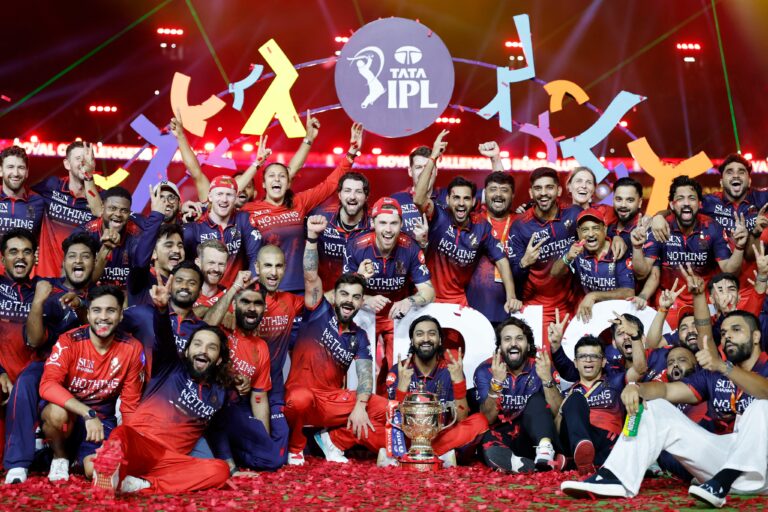
That popularity has gradually been transformed into a commercial powerhouse through the Indian Premier League, or IPL, one of the world’s biggest sporting leagues that many people outside cricket-playing nations may never have heard of.
How big is the IPL?
There is little that comes close to the Super Bowl in the United States when it comes to sporting events and television audiences.
Nielsen data shows that 125.6 million viewers tuned in to watch the 2026 Super Bowl, in which the Seattle Seahawks defeated the New England Patriots to lift the trophy after 12 years.
Now consider this: an average IPL league match this year attracted 277 million viewers. The final had an even bigger audience of 400 million, according to the official broadcaster.
On a per-match basis, few other sporting leagues come close to the viewership numbers generated by the IPL.
And those eyeballs translate into serious money.
A recent Sportico report valued the Mumbai Indians, the joint most successful IPL franchise, at $2.1 billion.
That puts the team in a valuation league comparable to Major League Baseball’s Detroit Tigers and the NHL’s Vancouver Canucks, both considered mid-tier franchises in their respective competitions.
Sportico’s analysis put the average IPL franchise valuation at $1.7 billion, with almost every one of the 10 teams worth at least as much as some of the lowest-valued franchises in the NHL and MLB.
And the IPL has not even completed two decades of existence.
The four major American leagues have all decorated histories stretching way back into the 20th century.
How did the IPL become so big?
The IPL began in 2008 with the aim of tapping cricket’s largely untapped commercial potential.
Eight franchises, some partly owned by hugely popular Bollywood stars, participated in the inaugural edition.
Today, 10 city-based franchises compete in the tournament, with reports of further expansion continuing to circulate.
Every team plays 14 league games, with four top teams advancing to the playoffs.
A total of 74 games are played in a season, far lower than major leagues in America and even Europe.
A strict salary cap is put in place to ensure all teams are on a level playing field.
The cricket-mad Indian public embraced the format, and the league has since grown into a giant in the global sporting business.
The financial transformation has been remarkable. The original eight teams averaged $90 million in value. Sportico’s latest calculations put the average franchise valuation at $1.7 billion.
That value is not just theoretical. Recent franchise sales have attracted interest from major global sports investors, including Manchester United owners, American billionaire families, and private equity giants.
Royal Challengers Bengaluru was acquired by a consortium including Blackstone and Bolt Ventures for $1.78 billion ahead of this season.
Another franchise, Rajasthan Royals, was acquired for $1.61 billion by a group that includes Lakshmi Mittal and his family, which also owns a stake in the Boston Celtics.
So what makes these franchises so attractive to investors?
“IPL teams benefit from extreme scarcity with only 10 teams, cost certainty ensuring every team is profitable and potential opportunity in a massive market with a young demographic,” Kurt Badenhausen, co-author of the Sportico report, told Invezz.
The combination of a limited number of franchises, a massive potential audience and predictable league economics gives investors exposure to a market that is difficult to replicate.
The money behind the cricket
The financial foundation of the IPL is its lucrative broadcast and sponsorship model.
The Board of Control for Cricket in India (BCCI) sold the league’s media rights for ₹48,390 crore, approximately $6.2 billion at the time of the auction, for the 2023-2027 cycle.
That agreement made the IPL the world’s second-most valuable sports league on a per-match basis, trailing only the NFL.
But how does that money reach individual franchises?
Venkat Ananth, a longtime sports journalist who runs State of Play, a publication focused on the business of Indian sport, explained that the IPL operates through a central revenue-sharing arrangement.
The BCCI sells media rights to broadcasters and sponsorship rights to commercial partners, then distributes approximately 45%-50% of the proceeds to the teams.
This central pool is critical to franchise economics. Ananth estimates that media-related income accounts for roughly 70% of a team’s revenue, while the remaining 30% comes from non-media sources such as ticketing, merchandise and local sponsorships.
For investors, Ananth identifies two major attractions: “One, it is a validation of the Indian consumption story. Two, because of the league’s dynamics,” he tells Invezz.
The IPL is a closed league, with no promotion or relegation, and has a limited number of franchises. That scarcity, combined with the enormous media rights opportunity and the profile of its owners, makes the teams particularly attractive assets, he said.
The league’s growth numbers reinforce that appeal.
The IPL has recorded a compounded annual growth rate of 17.73%, exceeding the growth of all four major American sports leagues as well as the S&P 500 and Nasdaq Composite over the same period.
Sportico’s analysis also puts the average IPL franchise revenue multiple at 22.9, the highest among major sporting leagues.
A revenue multiple measures how much a business is valued at relative to the revenue it generates.
In this case, a 22.9-times multiple means the average IPL franchise valuation is equivalent to 22.9 times its annual revenue. Put another way, investors are valuing each $1 of franchise revenue at approximately $22.90.
It is a measure of how much investors are willing to pay for a business relative to its current sales, rather than its profits.
A high multiple can reflect expectations of future growth, but it also means valuations depend heavily on the ability of franchises to sustain and expand their commercial earnings.
A lucrative broadcast deal forms the backbone of what IPL founder Lalit Modi has described as a “recession proof” model.
However, there are questions about whether the next broadcast rights agreement can sustain the league’s extraordinary growth.
Can the IPL boom be sustained?
During the last rights cycle, Viacom18, backed by India’s second-richest man Mukesh Ambani, and Disney India competed extensively to secure the broadcasting rights, pushing up the value of the deal.
However, the two entities merged in 2024 to form a new broadcaster, JioStar.
The merger created a major player in India’s sports broadcasting market, raising questions about whether the next rights auction, due in 2027, will attract the same level of competition and generate an equally lucrative deal.
Ananth believes the next cycle could be challenging, but he also sees an opportunity for franchises to diversify their businesses.
“Yes next rights cycle could be a tricky one but it could also be a blessing in disguise,” he said.
Historically, franchises have relied heavily on the central media revenue pool, leaving less incentive to develop other commercial opportunities. Ananth believes that could now change.
“There is a lack of incentive to push the boundaries in terms of going beyond media rights. That is changing, gradually, and with a flat media rights cycle and sponsorship categories such as Real Money Gaming also being vapourised overnight, the hope is that most teams will start taking this bucket seriously.”
One example worth watching is the recent partnership between the Mumbai Indians and Nike.
The two signed a multi-year agreement, making Nike the franchise’s official kit partner. It marks Nike’s first official kit deal with an IPL franchise since supplying the now defunct Deccan Chargers in 2008.
For Ananth, such partnerships reflect how teams are beginning to look beyond broadcasting revenue and develop themselves as consumer-facing businesses.
He believes more franchises are starting to think of themselves as consumer product companies, a shift he considers important for the league’s next stage of growth.
The opportunity, he said, is to build something more enduring than media and sponsorship income alone. Teams could develop merchandise, brand partnerships and other commercial products that allow them to recover some of the value potentially lost through a flatter media rights cycle.
But that requires franchises to rethink the experience they offer supporters.
“Teams need to think of it as an experience. Every franchise must own the experience,” Ananth said.
That includes everything from the team’s visual identity and merchandise design to making products affordable for fans. It also means ensuring that attending an IPL match feels worth the money, with stadium facilities and the overall match-day experience becoming central to the business.
In other words, franchises must become more than teams that play cricket for two months every year. They need to build brands that supporters want to engage with throughout the year.
Can the IPL compete with America’s biggest sports leagues?
So can the IPL continue pushing its limits and eventually compete with the biggest American sporting leagues?
Ananth believes the potential exists.
“The conditions are very much there. The television product is good. The gameplay is good,” he said.
To become as big as these NFL or MLB or NBA franchises, they (IPL teams) need to do more.
Badenhausen also sees considerable room for growth, although he believes the IPL still has a substantial financial gap to close.
“Its revenue is a fraction of top four American sports leagues, but its valuations are already on par or ahead of the lowest ranked MLB, NHL teams. The IPL has a massive opportunity ahead that could see it continue to close the gap with top American leagues in the decades ahead.”
That distinction between revenue and valuation is important.
While the IPL’s franchises are already attracting prices comparable to established American sports teams, their underlying businesses still generate considerably less revenue than the biggest US leagues.
The opportunity, therefore, is not simply to sell more broadcasting rights or attract wealthier owners.
It is to turn cricket’s enormous audience into a far bigger and sustainable commercial business.
The post Cricket's billion-dollar goldmine: why IPL works and can it rival NFL, NBA, MLB? appeared first on Invezz