Archive

June 24, 2026

Browsing

Meta Platforms (NASDAQ: META) stock has fallen sharply in recent months, sliding from its record high of $796 in August last year to $562. Although the decline has left the company looking increasingly undervalued, downside risks remain, and the stock could face further weakness in the near term.

Meta Platforms stock price crashes amid AI fears

Meta, the parent company of Facebook, Instagram, and WhatsApp, has been in a strong downward spiral in the past few months. This retreat has coincided with that of other companies like Amazon and Microsoft.

Meta has dropped because of the ongoing data center spending that has continued soaring this year. In its recent earnings report, the company said that it would spend over $145 billion in capital expenditure this year, up from the previous estimate of $125 billion. This increase was mostly driven by chip price increases amid the ongoing global shortage. 

The company is spending all this money to make its Meta AI solution more competitive. Still, there are concerns that the platform, despite being on all the billions of devices, has not gained market share yet. 

A recent report showed that ChatGPT maintains the biggest share, and is followed by Google’s Gemini and Anthropic. Other tools like Meta AI and Grok command a tiny market share.

There are also concerns about whether these investments will ultimately pay off in the long term. Also, and most importantly, investors are concerned about the potential dilution of their shares.

Meta Platforms ended the last quarter with over $81 billion in cash and marketable securities. Despite this, the company is expected to go to the market to raise over $80 billion through a combination of debt and equity. 

Meta’s revenue growth has slowed

The ongoing Meta Platforms stock retreat is also happening as its growth slows. The most recent results showed that its business continued doing well in the first quarter. Its revenue jumped by 33% in the first quarter to $56 billion, while its operating margin remained unchanged at 41%.

Analysts anticipate that its revenue will rise by 25% this year, followed by 19% in the coming year. As such, the management aims that its AI products and the recent monetization strategies on WhatsApp will boost its growth in the coming years. 

Third-party data shows that the company has become highly undervalued. Its forward price-to-earnings ratio has dropped to 17, lower than the five-year average of 22. 

READ MORE: Meta stock struggles in 2026: is a second-half rebound coming?

Meta Platforms stock price technical analysis

META stock chart | Source: TradingView

The weekly chart shows that the Meta stock has retreated in the past few months, moving from a record high of $796 to the current $562. It has dropped below the crucial support of $630, the 23.6% Fibonacci Retracement level. 

It has also formed a head-and-shoulders pattern. Also, it has slumped below the 50-week Exponential Moving Average (EMA). The Relative Strength Index (RSI) and the MACD have also continued falling.

Therefore, the stock will likely continue falling, potentially to the key support of $450. It will then bounce back later this year as it has now become a value stock.

The post Meta Platforms stock has become a bargain: will it rebound or slip further? appeared first on Invezz
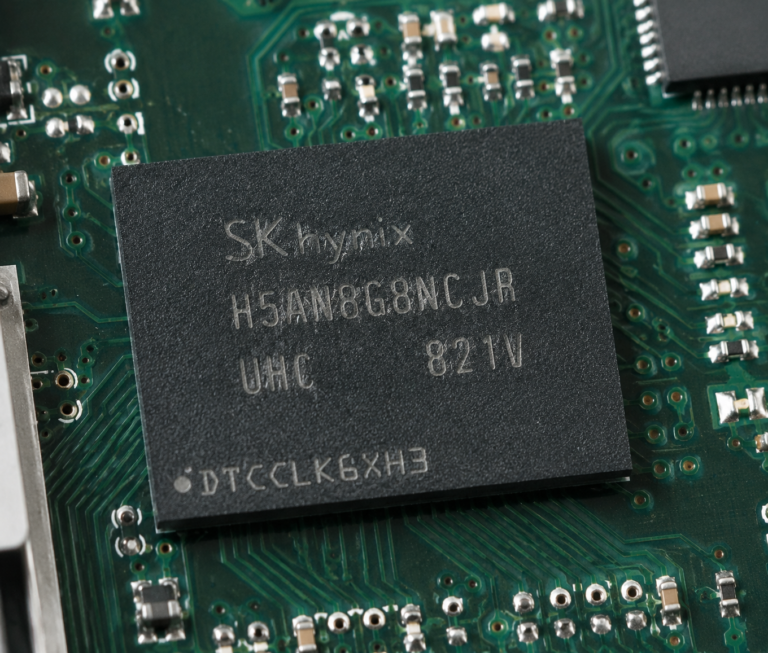

South Korean memory chip giant SK Hynix said on Wednesday that it plans to raise up to $29.4 billion through a US stock market listing, potentially marking the largest American Depositary Receipt offering ever and underscoring investor appetite for artificial intelligence-linked stocks.

If completed at the upper end of the proposed range, the offering would surpass Alibaba’s $25 billion US debut in 2014 and become the largest US listing by a Korean company.

The listing comes at a time when SK Hynix has emerged as one of the biggest beneficiaries of the AI boom.

The company, a major supplier of high-bandwidth memory chips used in Nvidia’s AI processors, is now valued at about $1.2 trillion.

Its shares have surged more than 280% this year and recently overtook Samsung Electronics to become South Korea’s most valuable listed company.

It is only the second Korean company after Samsung to cross the $1 trillion market capitalisation threshold.

Implications of listing in the US

Analysts say the company’s decision to list in the US is aimed at narrowing the valuation discount historically attached to Korean equities and positioning SK Hynix directly alongside global semiconductor peers such as Micron.

A Seoul-based semiconductor analyst told TechCrunch in March that the US listing could help address a long-standing valuation gap.

“SK hynix’s US listing could help close a long-standing valuation gap with global peers. Despite having comparable or in some areas stronger production capacity than US-based chipmakers, the Korean company has historically traded at a discount, partly due to its primary listing in Korea.”

Analysts believe the move could also support valuations of SK Hynix’s Korea-listed shares.

“The most attractive benefit for investors is that SK Hynix will trade on Nasdaq alongside rival Micron, giving the company an opportunity to be re-rated in the US market,” said Ryu Young-ho, senior analyst at NH Investment & Securities.

“That could also be reflected in its Korea-listed shares as investors increasingly link the two valuations.”

CLSA Senior Analyst Sanjeev Rana said expectations surrounding the US listing have already contributed to the stock’s rally.

“If they can get at least a valuation multiple similar to Micron, for example, then the local shares also need to reflect that, so that kind of expectation is there,” Rana said in a Reuters report.

“I wouldn’t be surprised if this rally continues.”

The listing also carries broader strategic implications.

By debuting on Nasdaq, SK Hynix will gain access to deep pools of capital and become part of a market that increasingly views memory chips as critical AI infrastructure rather than cyclical hardware products.

The move could also trigger a wave of passive investment flows, as technology-focused exchange-traded funds and index funds that track US benchmarks would be required to add SK Hynix shares to their portfolios.

Potential challenges for Micron

SK Hynix said the proceeds from the ADR listing will be invested entirely into expanding manufacturing capacity.

The company plans to use the funds to construct new chip fabrication plants in South Korea and purchase advanced semiconductor manufacturing equipment, including extreme ultraviolet scanners produced by Dutch equipment maker ASML, whose shares rose 1.1% on Wednesday.

The spending plans reflect expectations that demand for high-end memory chips used in AI data centres will remain robust over the coming years.

The listing may also increase competitive pressures on Micron.

First, since SK Hynix plans to use the entire amount raised to expand manufacturing capacity and acquire new equipment, higher production volumes could strengthen its competitive position and potentially allow it to lower prices.

Second, the ADR listing gives global investors another way to gain exposure to the memory chip industry.

Some investors may diversify their holdings across both companies or rotate funds out of Micron and into SK Hynix.

MU shares have gained 269% this year despite a 13% decline on Tuesday, when concerns about the sustainability of aggressive AI spending triggered a broader selloff in semiconductor stocks.

The post SK Hynix to raise $29.4B in US listing: How it may impact the AI memory chip trade appeared first on Invezz

Wall Street indices opened higher on Wednesday as investors rotated back into beaten-down technology stocks and positioned ahead of key earnings from Micron Technology.

The positive start follows two straight sessions of losses driven by concerns over AI-related spending and interest rates.

The Dow Jones Industrial Average was up 67 points. While the S&P 500 rose 0.44% and the Nasdaq Composite gained 0.6%.

The move comes after the S&P 500 and Nasdaq Composite fell 1.44% and 2.21% in the previous session, extending a tech-led sell-off that wiped out more than $1 trillion in value from the Nasdaq 100 over recent days.

Oil prices also extended declines, with Brent crude falling 3% to around $74 a barrel and West Texas Intermediate slipping 3% to around $71, as geopolitical tensions in the Middle East remained in focus.

Memory chips recover as focus shifts to Micron results

Semiconductor and memory chip stocks led the rebound after sharp losses on Tuesday.

Micron Technology rose about 2.11% in trading, while SanDisk added 2.7%, recovering part of its 13% decline in the prior session.

The Roundhill Memory ETF also moved higher after dropping 14% on Tuesday.

Micron’s earnings, due after the closing bell, are now a key focal point for investors assessing the durability of the AI-driven semiconductor rally.

Micron has been one of the standout performers of the year, rising more than 268% in 2026 despite recent volatility.

Analysts surveyed by FactSet expect earnings of $20.83 per share on revenue of $35.75 billion.

Other chipmakers also rebounded in trading, with Intel and Qualcomm both up more than 1% after steep losses in the previous session.

AI spending concerns and Fed outlook continue to weigh on sentiment

The recent market weakness has been driven by concerns over debt-funded artificial intelligence infrastructure spending and expectations of a more hawkish Federal Reserve.

Traders are increasingly pricing in a potential second rate hike by the Fed by December-end, according to CME Group’s FedWatch tool, as inflation expectations remain elevated.

Investors are also awaiting Thursday’s release of the Personal Consumption Expenditures Price Index, the Fed’s preferred inflation gauge, with economists expecting a reading of 4.1%.

Concerns over the AI trade have also broadened beyond chips.

Analysts pointed to pricing pressure and shifting strategies among major technology firms, including changes in approach from Microsoft regarding lower-cost AI models.

Despite recent volatility, JPMorgan raised its year-end S&P 500 target to 7,800 points, citing strong earnings momentum and economic resilience.

Broader markets stabilize as earnings and geopolitics remain in focus

Outside of technology, several notable stocks moved on company-specific developments.

Cerebras Systems fell 11.24% after forecasting lower full-year profit margins in its debut earnings report since going public.

FedEx dropped 0.3% after reporting weaker margins in its core delivery business, while Hertz plunged 23% following a weak outlook and a planned equity offering.

Alphabet gained 1.66% after S&P Global said it would replace Verizon in the Dow Jones Industrial Average, adding to its recent strength.

As investors await Micron’s results, sentiment remains balanced between renewed buying in beaten-down tech stocks and lingering concerns over valuations, monetary policy, and AI-driven capital spending.

The post Dow rises as tech rebounds ahead of Micron earnings after recent sell-off appeared first on Invezz

US stocks opened lower on Tuesday as a technology-led selloff accelerated, with semiconductor and artificial intelligence-related stocks coming under renewed pressure.

The Dow Jones Industrial Average fell 326 points. The Nasdaq Composite dropped 2.2% while the S&P 500 was down 1.5%.

The weakness followed Monday’s session, when the Nasdaq Composite fell 1.3%, weighed heavily by Alphabet and other megacap technology companies.

The selloff quickly spread to global markets overnight.

South Korea’s Kospi index led regional losses, falling nearly 10% after a steep decline in technology shares.

Memory chipmaker SK Hynix, one of the biggest beneficiaries of the AI rally, closed down more than 12%.

Japan’s Nikkei 225 also declined 3.55%, ending an eight-session winning streak.

Semiconductor and AI stocks lead declines

The selloff was particularly pronounced across semiconductor and AI-linked stocks.

Micron Technology dropped 12% in trading ahead of its quarterly results scheduled for Wednesday.

SanDisk fell nearly 11%, while storage company Seagate Technology shed more than 7%.

Intel declined more than 6.4%, while Advanced Micro Devices and Qualcomm fell more than 6% and 7%, respectively.

Nvidia dropped 3.3%, and Alphabet extended Monday’s losses with another 1.6% decline.

The State Street Technology Select Sector SPDR ETF fell 3.7% in early trading, while the VanEck Semiconductor ETF declined 6.4%.

Morgan Stanley Investment Management senior portfolio manager Andrew Slimmon described the selloff as a healthy development.

“The AI beneficiaries are the sell-off, and I don’t think they’re expensive, but they’re crowded,” Slimmon said on CNBC’s “Squawk Box” Monday. “It’s captured kind-of the zeitgeist of the momentum traders and when that happens, you’re going to have sharp sell offs like we’re having. I’d argue it’s healthy.”

European markets also weakened, with the pan-European Stoxx 600 index falling 1%.

The region’s technology sector declined 3%, led by losses of more than 6% in Dutch semiconductor equipment maker ASMI and chipmaker STMicroelectronics.

Fed concerns and AI spending scrutiny remain in focus

Investors are increasingly questioning whether the massive spending commitments on AI infrastructure can be sustained, particularly as many large technology companies continue to fund expansion through debt issuance.

SpaceX fell 2.5% in trading, putting the stock on pace for a fourth consecutive decline.

More than $600 billion has been wiped from the company’s market value over the past three sessions.

Markets are also adjusting to expectations of a more hawkish Federal Reserve.

According to LSEG data, traders are increasingly pricing in a second interest-rate increase by December, compared with expectations of only one 25-basis-point hike two weeks ago.

Attention later on Tuesday will turn to private surveys of June business activity, while investors continue to await Thursday’s release of the Personal Consumption Expenditures Index, the Federal Reserve’s preferred inflation gauge.

Developments in the Middle East also remain in focus after the United States waived sanctions on Iran for 60 days following the first round of talks under an emerging peace agreement.

The post Dow falls 320 points as Nasdaq slides 2.2% in AI tech selloff appeared first on Invezz

SpaceX stock price has suffered a major crash a few days after it launched the biggest initial public offering (IPO) on record. SPCX tumbled to $154, down sharply from its all-time high of $225.80.

As a result, Elon Musk’s net worth has tumbled by $300 billion, and he may soon lose his trillionaire status.

Elon Musk’s net worth crashes amid the SpaceX stock crash

Data shows that Musk’s wealth cratered by over $152 billion on Monday as investors continued dumping SpaceX shares. He is now worth about $1.08 trillion, down from over $1.3 trillion last week. 

The ongoing SpaceX stock crash is in line with our prediction in several pieces before the IPO, as you can see hereand here

This performance is in line with that of other companies that have gone public in the past few months.

A good example of this is Circle, whose stock went parabolic after the IPO, reaching a high of $300. It then reversed a few months later and reached a record low of $49.

Other recent IPOs have suffered a similar fate. This includes companies like Bullish, Gemini Space Station, Wealthfront, and Figma. All these names are trading at a much lower price than they did a few months ago.

The ongoing retreat is happening as investors book profits after the stock jumped to a record high. Also, the hype surrounding the IPO has started to fade in the past few days. 

SpaceX’s actions have contributed to the retreat

There are other reasons why the stock has crashed in the past few days. First, the company announced the $60 billion Cursor buyoutlast week.

It will spend $60 billion doing that, a price that analysts believe is quite high, even for a company whose ARR has jumped to over $6 billion.

Second, the company announced its first bond sale worth $20 billion, days after its IPO. That is a sign that the management expects its AI costs to remain at an elevated level.

Third, there are fears that Grok, its main AI product, is lagging behind other popular names like ChatGPT and Claude. Grok has a much smaller share than these products, which may push it to spend more to bridge the gap. 

Most importantly, there are signs that the company is highly overvalued. It made $18 billion in revenue last year and had a net loss of close to $5 billion.

As a result, its peak valuation of over $3 trillion was much higher than its intrinsic value. Indeed, Morningstar analysts believe that the company should be valued at less than $1 trillion.

All hope is not lost for SpaceX

Looking at the historical performance of most companies shows that all hope is not lost. Data shows that 91% of all companies that go public rise and then plunge a few days after that. 

However, this retreat usually creates a good entry point for most investors. This is what happened with companies like Meta Platforms, Tesla, and Google. They initially jumped, cratered, and then embarked on a multi-year rally.

The same will likely happen with SpaceX as long as it demonstrates consistent revenue and profitability growth. The challenge, however, is that it is hard to time the market on when it will bottom and start its rebound.

The post Elon Musk’s net worth plunges $300B as SpaceX stock crashes appeared first on Invezz

AMZN kicked off its 12th annual Prime Day event on Tuesday, launching a four-day shopping extravaganza featuring millions of deals across more than 35 countries.

For the e-commerce giant, Prime Day has become one of the most important events on the retail calendar, driving a surge in online spending and offering insights into consumer behaviour.

This year’s edition also carries added significance as it marks the first time since 2021 that the event is taking place in the second quarter.

The extended shopping event is also the first major retail test since Amazon introduced its artificial intelligence-powered shopping assistant, Alexa for Shopping, in May.

As a result, investors and analysts are paying close attention not only to sales figures but also to whether Amazon’s sizeable investments in AI can translate into greater engagement and spending on its platform.

AI shopping tools face their first major test

Prime Day has evolved far beyond a promotional sales event.

Amazon is using this year’s shopping festival to showcase Alexa for Shopping, which is designed to serve as a product discovery and deal-tracking assistant.

The feature offers personalised recommendations based on a shopper’s browsing history, tracks product prices for up to a year, enables users to set price alerts, and can automatically place orders when target prices are reached.

The event is effectively becoming a litmus test for whether AI can improve shopping experiences and encourage customers to spend more.

Amazon has spent billions of dollars building the infrastructure required to power artificial intelligence while simultaneously investing heavily in developing its own AI products.

Shareholders are now looking for evidence that these investments can generate tangible returns.

Likely impact on sales and revenue

Bank of America said the new tool would play a crucial role “in protecting direct traffic for Amazon, as well as enabling higher conversion rates and driving incremental spend on the platform.”

The brokerage estimates that the 96-hour event will generate $21.6 billion in goods sold, representing a 5% increase over last year.

JPMorgan analysts estimate the event could contribute between $7 billion and $8 billion in incremental global revenue during the second quarter.

They expect sales growth of 6% per day in third-party sales and 7% in first-party sales during the promotional period.

eMarketer estimates Amazon will generate $15.7 billion in US e-commerce sales during the event, up 7.1% from last year.

It also expects the company to capture 60.3% of all US e-commerce sales during the period, its highest Prime Day share since 2019.

Timing shift could boost seasonal spending

Amazon shifted Prime Day from its traditional July slot to late June this year, citing a crowded calendar that includes the FIFA World Cup and celebrations surrounding the 250th anniversary of US independence.

Analysts believe the earlier timing could prove advantageous.

eMarketer analyst Sky Canaves said an earlier Prime Day will help Amazon capture spending on outdoor and travel products, summer clothing, and seasonal purchases.

She added that consumers have become increasingly strategic in their shopping habits and often wait for major sales events to stock up on necessities and purchase larger-ticket items that they had previously delayed.

Prime Day’s impact on online shopping is expected to be substantial.

According to Adobe’s latest Prime Day forecast report, average daily online spending during the event is projected to be 84% higher than the average daily spending in June.

Adobe also expects consumers to spend more during this year’s Prime Day than they did during Black Friday and Cyber Monday combined in 2025.

Prime Day to offer clues on Americans’ financial health

Beyond sales figures, analysts say what consumers purchase this week may provide a clearer picture of the financial health of American households.

The event comes as inflation continues to squeeze budgets.

Consumer prices rose 4.2% in May, marking the fastest pace in three years, while higher fuel prices linked to conflict in the Middle East have added further pressure.

As a result, lower- and middle-income consumers are increasingly prioritising everyday necessities over discretionary purchases.

“People just don’t have the cash right now,” said William Stern, chief executive of small business lender Cardiff, in a Reuters report.

“Prime Day isn’t going to be about buying big TVs or fun stuff this year. It’s for buying toilet paper and garbage bags on sale. Families are literally waiting for these discounts just to buy regular everyday things because their bank accounts are empty.”

Amazon itself has highlighted deals on groceries, household essentials, travel products, and school-related items, noting that fresh food and essential products are making up a larger share of Prime members’ shopping baskets as the company expands its same-day delivery network.

Adobe Analytics expects strong demand for children’s clothing, backpacks, lunch boxes, refrigerators, power tools, and vacuum cleaners.

It forecasts average discounts of 23% on apparel, 23% on electronics, and 19% on toys, largely unchanged from last year.

Amazon’s competitors are once again seeking to capitalise on the shopping frenzy.

Walmart’s seven-day sales event began on Monday, while Target’s Circle Deal Days are running concurrently with Prime Day, turning the period into an industry-wide discount battle.

Yet analysts say retailers are increasingly fighting for the same value-conscious customer.

“Walmart and Target aren’t getting people to spend more overall, they’re just fighting over the same person. People are just going to go to whichever store has the absolute cheapest price,” Stern said.

For Amazon, the coming days may reveal not only whether consumers remain resilient but also whether artificial intelligence can become a meaningful driver of the future of online shopping.

The post Amazon Prime Day begins today: Here's what AMZN investors should know appeared first on Invezz

Qualcomm Inc. QCOM shares moved lower on Tuesday, falling about 6% in trading as a broader technology selloff weighed on sentiment, even as fresh reports pointed to an expansion of its artificial intelligence ambitions.

The decline came despite Bloomberg reporting that Qualcomm is in advanced talks to acquire AI infrastructure software company Modular Inc. in a deal valued at around $4 billion.

A transaction could be announced in the coming weeks, though sources emphasized that a final agreement is not guaranteed and terms could still change.

Qualcomm stock has been one of the stronger performers in the semiconductor space in recent months, rising 72% over the past three months and gaining around 30% year to date.

Investors have been positioning ahead of the company’s investor day on Wednesday, where Qualcomm is expected to provide updates on its next-generation processor strategy and potentially identify a major customer for a custom data-center chip.

Modular acquisition would expand Qualcomm’s AI software push

Modular Inc., founded in 2022 in Silicon Valley by Chris Lattner and Tim Davis, former Google employees, focuses on building software tools designed to simplify the deployment of artificial intelligence models across different hardware systems and cloud environments.

According to its website, the founders created the company after becoming “frustrated by AI’s fragmented infrastructure.”

The startup has positioned itself in a growing segment of the AI market focused on inferencing and cross-platform deployment, an area increasingly seen as critical as AI workloads expand beyond training into real-world applications.

Modular raised $250 million in a September funding round at a $1.6 billion valuation, bringing total capital raised to $380 million.

The reported acquisition price of roughly $4 billion would represent more than a 2.5-times increase in valuation in less than two years.

The company is backed by investors including DFJ Growth, Factory, General Catalyst, Google Ventures, Greylock Partners and US Innovative Technology Fund.

Qualcomm pursues broader AI acquisition strategy

The Modular discussions are part of a wider acquisition strategy aimed at strengthening Qualcomm’s position in artificial intelligence.

The Information in a seperate report said that the company is in talks to acquire AI chip startup Tenstorrent for between $8 billion and $10 billion.

If completed, the two deals would reflect a dual-track AI expansion strategy: hardware capabilities through Tenstorrent and software infrastructure through Modular.

Qualcomm has previously pursued similar expansion efforts through acquisitions, including its agreement to buy Alphawave IP Group Plc for about $2.4 billion in cash.

Its earlier attempt to acquire NXP Semiconductors NV was ultimately scrapped due to regulatory hurdles.

The company is expected to use its upcoming investor day to provide further details on its AI roadmap, including custom chip development and potential major customer relationships.

Despite the acquisition momentum, Qualcomm shares remain under pressure in the near term amid a broader tech sector downturn.

The post Qualcomm eyes modular AI deal as stock falls on tech selloff pressure appeared first on Invezz

Memory chip stocks came under heavy pressure on Tuesday, extending a broad technology selloff on Wall Street.

Investors grew increasingly uneasy about the enormous sums being poured into artificial intelligence infrastructure and the growing use of debt to finance that expansion.

Shares of memory chipmakers, some of this year’s biggest market winners, suffered steep declines.

Micron Technology MU fell more than 8% in morning trading, while Sandisk tumbled over 10%.

Seagate Technology dropped more than 7% and Western Digital slid over 8%.

The weakness followed a sharp selloff across Asian technology markets earlier in the day.

South Korean memory giants Samsung Electronics and SK Hynix, which together account for roughly half of the benchmark Kospi’s market capitalisation, each fell more than 12%.

The declines marked a sharp reversal for a sector that has been among the biggest beneficiaries of the AI boom.

AI spending concerns move to centre stage

Investors have poured money into memory stocks over the past year, betting that demand for high-performance memory chips used in AI data centres would remain robust for years.

However, analysts say market participants are beginning to question whether the industry’s massive capital spending plans are sustainable.

The latest catalyst for those concerns came from SpaceX.

The company, whose shares plunged 16.4% on Monday after unveiling plans for a major bond sale, has become the latest example of companies turning to debt markets to finance large-scale AI and infrastructure ambitions.

Although SpaceX shares were slightly up on Tuesday, analysts said the bond sale had amplified worries surrounding the broader AI ecosystem.

Ipek Ozkardeskaya, senior analyst at Swissquote, said the company had reignited concerns that technology firms may be spending too aggressively.

“Seemingly, the recent IPO did not suffice to assuage the company’s funding needs, a reminder of how much money may still be burned on the way to Mars,” she said.

Ozkardeskaya noted that Morgan Stanley expects global AI-related borrowing to exceed half a trillion dollars this year, making corporate debt markets increasingly tied to the AI theme.

Valuations leave little room for disappointment

Concerns are spreading beyond individual companies because some of the world’s largest technology firms have collectively committed hundreds of billions of dollars toward building AI infrastructure.

Companies including Alphabet, Amazon, Microsoft, Meta Platforms, and Tesla continue to ramp up investments in data centres and computing capacity, even as investors seek clearer evidence that those spending plans can deliver returns that justify the costs.

Memory stocks have become particularly vulnerable because of their extraordinary gains this year.

Micron shares have surged more than 250% so far in 2026. Sandisk has risen over 639%, while Seagate and Western Digital have gained more than 257% and 260%, respectively.

Such gains have left valuations stretched and increased investor sensitivity to any signs that enthusiasm around AI may be overheating.

Joachim Klement, investment strategist at Panmure Liberum, said the sector had become excessively extended.

“We have seen tech stocks go vertical and become very overbought. What we’re doing now is getting rid of that overbought situation,” Klement said.

He warned that the correction could become more severe if investors increasingly question the sustainability of massive AI spending plans.

“I think a lot of the selloff is also triggered by SpaceX. A lot of retail investors have taken profits, and this news about additional debt piles onto concerns around fundraising across hyperscalers,” he said.

Nigel Green, chief executive of investment adviser deVere Group, told Reuters, “The AI trade became one of the most crowded trades in global markets. When everybody owns the same stocks, the exit door becomes very small very quickly.”

Higher rate expectations add to pressure

Technology stocks are also contending with a less favourable interest-rate environment.

According to CME’s FedWatch Tool, traders now see an 88% probability of a Federal Reserve rate increase in December, sharply higher than the 61% probability seen before the central bank’s meeting last week.

The prospect of higher borrowing costs poses an additional challenge for highly valued technology companies, particularly those dependent on large amounts of capital to fund ambitious AI infrastructure projects.

The post Micron, Sandisk, other memory stocks tumble on high AI spending and rate hike fears appeared first on Invezz