Archive

June 25, 2026

Browsing

Micron Technology’s latest earnings were not just another strong AI-chip result, but a warning that the next big shortage in artificial intelligence may be hiding in memory.

The company reported record fiscal third-quarter revenue of $41.5 billion and adjusted profit of $25.11 per share, both comfortably ahead of Wall Street estimates.

Its shares jumped 12% in after-hours trading, extending a rally that has already pushed Micron’s market value above $1 trillion.

But the real story was the signal from customers: they are no longer just buying memory chips. They are trying to lock up future supply before everyone else does.

AI’s next shortage is hiding in memory chips

For years, the AI trade has revolved around Nvidia and the graphics processors needed to train and run large models.

Micron’s results suggest investors may now need to widen the frame.

AI models need more than processors. They need fast memory to move and store huge amounts of data.

That is where high-bandwidth memory, or HBM, comes in.

These chips sit alongside advanced AI processors and help feed them data at the speed modern AI workloads require.

Micron said that customers had committed $22 billion to secure memory-chip supply under agreements with 16 strategic customers across data centres, consumer devices and autos.

That number matters because it shows how memory is being increasingly treated as a strategic infrastructure.

Daniel Newman, CEO of Futurum Group, told Reuters that the scale of the AI buildout has been underestimated, adding that memory should continue to command “premium pricing” while supply remains constrained.

Micron is no longer just a cyclical chip story

Memory has historically been one of the most boom-and-bust corners of the chip industry.

As supply tightens, chipmakers raise prices and expand capacity, but once supply catches up, prices and margins typically come under pressure.

Micron is trying to change that story.

The company’s new customer agreements include take-or-pay commitments, cash deposits and pricing floors.

In plain English, customers are committing money and volume ahead of time, while Micron gets better visibility on demand and some protection if the market turns.

As per the company, the remaining performance obligations (RPOs) tied to these agreements are around $100 billion.

That gives investors a clearer view of future contracted revenue than they would normally expect from a memory company.

That is why investors are re-rating Micron: customers are not just buying for today’s demand, but securing future supply to avoid being caught short.

Art Hogan, chief market strategist at B. Riley Wealth, told Reuters that pure memory demand had risen rapidly and that Micron “sits at the center” of that shift.

He also described the company’s trillion-dollar valuation milestone as an “exclamation point” on the demand required to run AI data centres.

Wall Street’s new question: is the memory cycle still early?

The sharpest post-earnings reaction came from D.A. Davidson analyst Gil Luria, who raised his price target on Micron to $2,000 from $1,500, setting a new Street-high target while keeping a Buy rating.

His argument goes to the heart of the rerating debate.

Luria said Micron now has “some of the semi industry’s best visibility”, helped by long-term strategic customer agreements that give the company a clearer view of future demand than investors normally expect from a memory-chip maker.

The analyst pushed back against the idea that Micron is already near the top of the cycle.

He argued that “the memory cycle is far from over”, with tight supply-demand dynamics likely to last through at least calendar 2027, even as Micron spends heavily on capacity.

The post Micron’s record-breaking quarter reveals AI’s next trillion-dollar bottleneck appeared first on Invezz

The S&P 500 Index has surged more than 21% over the past 12 months and is up 7% year to date, adding trillions of dollars in market value. The rally has been fueled by the ongoing artificial intelligence boom, which has driven corporate earnings growth to multi-year highs.

Top software stocks are plunging this year

A closer look at its top gainers and laggards shows something unique. Software stocks like Intuit (INTU), Trade Desk (TTD), Adobe (ADBE), and Salesforce (CRM) are among the top laggards. They have all plunged by over 43% this year and by over 50% from their all-time highs.

Intuit stock has slumped by 67% from its highest point in July last year. The Trade Desk stock has slumped by 87% from its all-time high, erasing the gains made in 2024, when it was one of the best-performing companies in the United States.

Adobe stock sank to $196, down by over 70% from its record high, while Salesforce has plummeted by 57% in this period. Other software companies like ServiceNow, Palantir, Autodesk, AppLovin, and Veeva have also retreated sharply this year. 

Altogether, the iShares Expanded Tech-Software Sector (IGV) has slumped in the past four consecutive weeks. It has dropped by 27% from its highest point on record. 

Top software stocks have plunged this year | Source: TradingView

SaasPocalypse fears and valuation reset

The ongoing retreat in software stocks is happening because of the ongoing SaasPocalypse fears and the valuation reset.

SaasPocalypse is a phenomenon in which investors believe that software companies will be disrupted by artificial intelligence tools like Claude, Harvey, and Numeric.

Most of these companies have boosted their investments in the AI, creating tools that they hope will complement their solutions. For example, Salesforce has launched Agentforce, which involves building and deploying autonomous AI agents that can perform work across areas like sales, customer service, marketing, and commerce. Intuit launched Intuit Assist, an AI-powered financial assistant that helps companies to automate their accounting, tax preparation, and marketing. 

READ MORE: Salesforce stock hits 52-week low amid record losing streak and AI fears

Workday launched Workday Illuminate, which helps companies across various industries like HR, finance, and planning. All other software firms like ServiceNow, Trade Desk, and Figma have all launched similar solutions.

Still, these products have not led to a substantial revenue growth to these companies. For example, analysts believe that Adobe’s revenue growth will be 11% this year, followed by 8% in the next one. Workday’s growth is expected to be 11.6% this year and 10% next year. 

The same is happening across other software companies in the United States, like ServiceNow, Trade Desk, and Figma. 

Software stocks are also falling because of the ongoing valuation reset in the industry. For a long time, these were among the most expensive companies to own, and investors are now re-evaluating their valuations. 

A good example of this is in the private markets, where companies like Medallia, Pluralsight, Qualtrics, and Proofpoint have led to a sharp decline in their valuations. 

Thoma Bravo, a private equity company that focuses on software, bought Medallia in a $6.4 billion deal in 2021. Its equity has now been wiped out as creditors like Blackstone, KKR, and Apollo took over. 

The same happened with Pluralsight, which went public in 2018 and was then acquired in a $3.8 billion deal by Vista Equity Partners. Ultimately, its value collapsed, and Vista was forced to have a $3 billion write-down.

Will software stocks rebound?

The question among investors is on whether software stocks will rebound in the near future. History shows that these companies will ultimately bounce back as they have become highly undervalued. For example, Adobe has a forward PE ratio of 8, while Workday has a multiple of 10. Salesforce has a forward multiple of 10, while The Trade Desk has a multiple of 9.

However, the recovery is likely to take time. It will also occur as investors begin rotating out of semiconductor and memory stocks once their rally fades.

The post Why software stocks like INTU, ADBE, TTD, WDAY, CRM are trailing the S&P 500 appeared first on Invezz

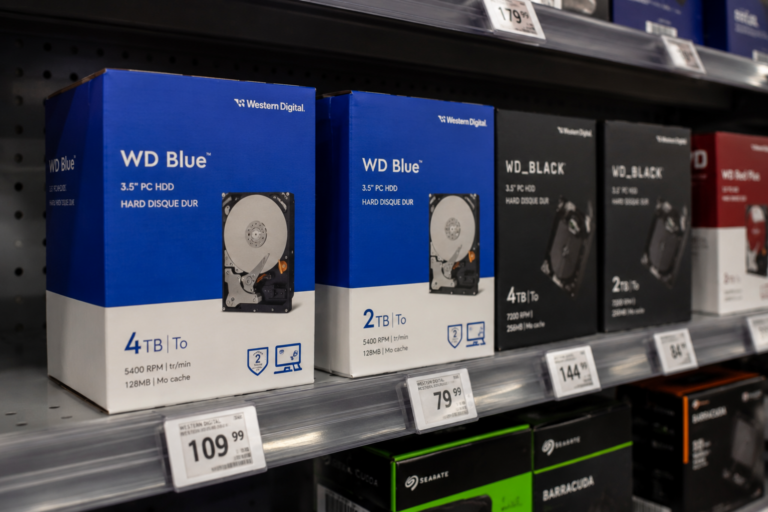
Western Digital stock has embarked on a major bull run this year, reaching its highest point on record on June 18. It has soared by 264% this year and 960% in the last 12 months, bringing its market capitalization to over $221 billion. While this rally may continue after the Micron earnings, WDC faces some major risks that may drive it lower over time.

Western Digital stock has jumped amid rising AI demand

WDC is a top manufacturer of internal and external hard drives and data center storage solutions. Its products are used by some of the biggest hyperscalers in the world, like Amazon, Microsoft, Google, and Meta. They are also used by computer manufacturers like Dell, HP, and Lenovo.

The ongoing WDC share price surge is because of its exposure in the growing data center industry, where vast amounts of data are being created each day. This growth has led to a surge in demand and a shortage, pushing hyperscalers to enter into long-term contracts. 

Western Digital’s business has continued growing this year, and analysts are predicting robust double digit growth in the foreseeable future. The most recent results showed that its revenue jumped by 45% YoY to $3.34 billion, while its gross margin expanded to 50.2%. In his statement, the CEO said:

“The demand drivers are clear: Virtually every AI workload, from training, inference, agentic AI to physical AI, creates data that is stored persistently and cost-efficiently on HDDs.”

Wall Street analysts tracking the company are optimistic that the growth will continue this year. The average estimate is that this quarter’s revenue (Q4) will grow by 42% to $3.69 billion. If this happens, it will bring the annual revenue to $12.87 billion, up by 35% YoY. The next annual revenue will jump by 38% to $17.7 billion.

Wall Street analysts are bullish on WDC shares

Most analysts tracking the company have a favorable outlook for it. Morgan Stanley’s analysts boosted the target from $488 to $650, while JPMorgan also hiked to the same target. Mizuho and Citigroup hiked to $685, while Barclays increased the target to $620. Morgan Stanley also boosted its outlook to $650.

Still, the company faces some major challenges ahead. For example, its business is usually cyclical, experiencing periods of boom and bust. This happens because soaring prices normally push prices higher, pushing companies to boost production.

READ MORE: Western Digital, Seagate, Sandisk stocks are bracing for a major Micron event

The other risk is that the company has become more overvalued than its faster-growing peers like Micron and Sandisk. It has a forward price-to-earnings ratio of 67, higher than Sandisk’s 30, and Micron’s 17. The multiple is also higher than the S&P 500 Index’s average of 22.

At the same time, there is a risk that the ongoing data center cancellations in the US will affect the growth.

Technicals suggest that the Western Digital stock price may drop further

WDC stock chart | Source: TradingView

The daily chart shows that the WDC stock price has slumped in the past few days, moving from a high of $800 to a low of $613 on Wednesday. It then bounced back to $730 after the Micron earnings.

A major risk is that the stock remains much higher than the 200-day moving average of $317. This means that the stock may go through a mean-reversion, where an asset drops to align with its historical averages. 

The stock has also formed a bearish divergence as the Relative Strength Index (RSI) has formed a descending channel. Therefore, there is a risk that the stock will drop further to the key support of $500 in the near term.

READ MORE:Western Digital stock looks ripe for a near-term pullback: find out more

The post Soaring Western Digital stock faces some major risks: is a reversal coming? appeared first on Invezz

US stocks opened higher on Thursday, led by gains in technology shares as strong earnings updates from Micron Technology and Qualcomm reignited optimism around artificial intelligence demand.

The Dow Jones Industrial Average was up 270 points or 0.52%. The S&P 500 and the Nasdaq Composite climbed 0.60%.

Micron surged 19% in trading after reporting fiscal third-quarter results that exceeded analyst expectations.

Qualcomm advanced 9.5% after raising its guidance for non-handset revenue in fiscal 2029.

Other semiconductor stocks also rallied in sympathy, including Sandisk, Western Digital, Lam Research, KLA, and Applied Materials.

European chip stocks also moved higher, with ASMI, Be Semiconductor, and Soitec posting sharp gains.

Micron and Qualcomm highlighted strong demand for AI infrastructure, with customers committing $22 billion to secure Micron’s memory chips, while Qualcomm forecast $15 billion in data center revenue by 2029.

The moves helped extend a tech-driven rally that had recently lost momentum, with investors reassessing valuations in the semiconductor sector.

Inflation data and economic signals shape sentiment

Market participants also digested the latest inflation and growth data, which broadly met expectations and added to the positive tone.

May’s personal consumption expenditures (PCE) price index showed headline inflation rising 0.4% month-on-month and 4.1% year-on-year, in line with forecasts.

Core PCE rose 0.3% on the month and 3.4% annually, also matching expectations.

Core inflation rose to its highest level since October 2023, but investors took some comfort that the reading was not higher given rising energy prices linked to the Middle East conflict.

A separate reading of first-quarter GDP showed the US economy grew 2.1%, compared with a prior estimate of 1.6%.

Treasury yields moved lower following the data, with the 10-year US Treasury note slipping more than 2 basis points to 4.374%.

The dollar index was little changed after gaining on Wednesday amid rising expectations of Federal Reserve rate hikes.

Tech rally resumes as investors reassess Fed outlook

Thursday’s gains followed a recent pullback in technology stocks driven by concerns over debt-funded AI spending and a potentially more hawkish Federal Reserve.

Despite recent volatility, semiconductor stocks remain strong performers.

Micron and Qualcomm have rallied over 200% and 50%, respectively, in the quarter. The Philadelphia Semiconductor Index is on track for its strongest quarter on record, according to LSEG data.

However, broader indices remain mixed in performance.

The Nasdaq is still on track for its biggest monthly decline since March 2025, while semiconductor shares are heading for their worst week since the start of the Middle East conflict earlier this year.

Traders are also watching comments from Federal Reserve officials, including Chair Kevin Warsh, as markets continue to price in the possibility of at least one rate hike by year-end.

Across global markets, Asia-Pacific equities closed mostly higher, led by sharp gains in South Korea and Japan, while European markets also opened in positive territory, supported by strength in chip stocks.

The post Dow rises 270 points as Micron, Qualcomm fuel AI-driven stock rally appeared first on Invezz

Alphabet shares GOOG rose 1.8% on Wednesday after S&P Dow Jones Indices announced that the Google parent will replace Verizon Communications in the Dow Jones Industrial Average (DJIA) ahead of the opening of trading on June 29.

The move will also result in changes to the S&P 500, with Honeywell Aerospace set to replace Conagra Brands on the same date.

The update marks one of the most significant changes to the 30-stock Dow in recent years and increases the index’s exposure to large-cap technology companies.

Following the adjustment, five of the so-called Magnificent 7 companies will now be included in the benchmark.

S&P Dow Jones Indices said Verizon’s low share price meant it had an “immaterial impact” on the price-weighted index.

Alphabet, by contrast, has a stock price of around $350 compared with Verizon’s roughly $47, making it more influential in a price-weighted structure such as the Dow.

Tech representation in the Dow expands with Alphabet inclusion

The Dow Jones Industrial Average is a price-weighted index, meaning companies with higher share prices carry greater influence regardless of market capitalization.

As a result, Alphabet is expected to account for approximately 4.0% of the index based on Tuesday’s closing price, making it the seventh-largest component.

S&P Dow Jones Indices said in a press release that “Alphabet’s diversified technology and digital services portfolio spans advertising, cloud infrastructure, artificial intelligence, hardware, autonomous mobility, healthcare technology, and media distribution.”

It added: “Adding Alphabet will broaden and strengthen the DJIA’s exposure to these dynamic areas of the US economy.”

Both Alphabet and Verizon are classified as communications stocks by S&P Dow Jones.

The inclusion also reflects a broader shift in the Dow’s composition over recent years.

Nvidia and Sherwin-Williams were added to the index in November 2024, replacing Dow Inc. and Intel.

After the latest change, most major technology companies—including Alphabet, Microsoft, Apple, Amazon.com and Nvidia—will be represented in the Dow.

Honeywell International will remain in the index following the spinoff of Honeywell Aerospace.

Limited short-term impact expected on Alphabet stock

Despite the announcement, Alphabet’s share price reaction is expected to be limited.

The stock has fallen about 11% over the past month amid investor concerns about its artificial intelligence strategy and heavy spending.

Market history suggests index additions to the Dow do not typically generate sustained share price gains.

Because the Dow is not widely tracked by passive funds in the same way as the S&P 500, there is little forced buying pressure when companies are added or removed.

When Nvidia and Amazon.com joined the Dow in 2024, both stocks saw muted immediate reactions, with Nvidia falling 0.8% and Amazon slipping 0.1% on the day of inclusion, according to Dow Jones Market Data.

While the direct impact on Alphabet shares may be limited, the inclusion underscores the increasing dominance of large technology companies in major US equity indices and the continued rebalancing of traditional benchmarks toward the tech sector.

The post Alphabet stock gains after Dow Jones inclusion announcement appeared first on Invezz

Sunrun shares RUN surged 27% in early trading on Wednesday after the residential solar company unveiled a partnership with Tesla and home-energy management platform Renew Home.

The partnership aims to supply electricity capacity to data centers and utilities grappling with soaring demand from artificial intelligence.

The three companies said they would work together to deliver more than 16 gigawatts of flexible energy capacity by creating what they described as the largest distributed power plant in the United States.

The network will draw power from Sunrun and Tesla home battery systems and use more than 8 million smart thermostats and connected devices managed by Renew Home to shift electricity demand and dispatch power during periods of peak grid stress.

AI boom drives electricity demand

The agreement comes as the rapid expansion of artificial intelligence infrastructure places increasing pressure on US electricity networks.

According to Goldman Sachs Commodities Research, data center power demand in the United States is expected to reach 41 gigawatts in 2026 and climb to 66 gigawatts in 2027.

The bank estimates total US data center capacity could approach 95 gigawatts by the end of next year.

The companies said their approach could help support hyperscale data centers without requiring costly investments in new power infrastructure.

“The grid of the 1800s cannot power the innovation of 2026,” Sunrun Chief Executive Mary Powell said.

“Americans deserve innovation that does not create unnecessary energy costs. When data centers are asked to throttle down operations during the most expensive and stressful hours of the day, we can activate our distributed power plants to help provide them the power they need while also protecting American families from footing the bill for costly new infrastructure.”

The partnership already has more than 300 megawatts of capacity available for deployment in Virginia, one of the world’s largest data center markets.

The companies expect that figure to exceed 500 megawatts by 2030 as installations of home batteries and smart devices accelerate.

Distributed energy gains investor attention

The alliance also highlights growing interest in using distributed energy resources to manage rising electricity demand.

Analysis by economic consultancy Brattle Group suggests that better utilization of existing grid infrastructure could lower electricity bills by between $110 billion and $170 billion over the next decade.

Wednesday’s rally put Sunrun on course to erase much of its decline for the year.

The stock had fallen about 30% through Tuesday’s close after the company issued cautious guidance.

The stock was recently trading around $16.24.

Last month, UBS lowered its price target on Sunrun to $20 from $23 while maintaining a Buy rating.

The brokerage reduced its forecasts for solar capacity deployment and now expects Sunrun to deploy 891 megawatts in 2026, down from its previous estimate of 935 megawatts.

Despite trimming projections, UBS maintained its positive stance on the stock, noting that Sunrun and the residential solar sector continue to represent a relatively high-risk, high-reward investment opportunity.

The post Sunrun stock surges on Tesla and Renew Home partnership to power data centers appeared first on Invezz

Rheinmetall AG (RHM) shares are slipping on Wednesday – heading toward one of their sharpest single-day declines ever – due to a major blow to the company’s naval defense pipeline.

On Jun. 24, the German Defense Ministry said it is cancelling the “multi-billion-euro” F126 frigate program, which was slated to be the largest naval procurement project for the German Navy since World War II.

Including today’s crash, Rheinmetall stock is down more than 50% versus its year-to-date high.

Here’s why Rheinmetall stock tanked today

Rheinmetall was positioned to take over as the prime contractor for the F126 frigate program.

Management had actively targeted this contract for completion in Q2, expecting it to bring in €12 billion (at least) in order intake.

Analysts from Morgan Stanley estimate the sudden cancellation would force RHM stock to absorb about €2 billion in write-downs.

This is largely due to its recent €1.5 billion buyout of the Naval Vessels Lürssen (NVL) shipyard, a strategic move specifically designed to anchor its execution of the F126 project.

The Defense Ministry cited severe software delays, persistent friction, and projected cost overruns that would have driven the final bill past €18 billion if they continued with the program.

TKMS shares are defying the defense sector sell-off

Instead of continuing with the F126 “super-frigates,” Berlin has pivoted entirely.

On Wednesday, the German government announced plans to purchase eight smaller Meko A-200 frigates from Rheinmetall’s direct competitor, TKMS AG.

While Rheinmetall shares cratered, TSMS stock was seen trading up as much as 14% on Jun. 24, mostly because Berlin pay roughly €6.3 billion for the first four TKMS vessels, with an option for four more at €5.3 billion.

This massive divergence highlights a swift reallocation of capital across EU defense portfolios, as investors aggressively price in the long-term cash flow injection from the revised naval strategy, immediately transforming TKMS into Germany’s premier maritime contractor.

Wall Street remains bullish on RHM shares

The German Defense Ministry’s announcement has exposed a deeper anxiety across the entire EU defense sector, pulling down peers like Hensoldt, Renk, and Saab.

Investors are beginning to realize that aggressive government defense budgets do not automatically translate into locked-in revenues for specific land defense contractors.

Moreover, capital flows are facing fragmentation as Franco-German tank maker KNDS announced plans today for a dual Frankfurt-Paris IPO, creating a new alternative for defense sector investment.

This sudden contract loss exacerbates a tough year for RHM shares, featuring lacklustre revenue conversions and an investor rotation into drone and air defense-focused manufacturers.

Still, Wall Street analysts remain convinced that Rheinmetall AG will recover in the back of 2026, given the consensus rating on the automotive and arms manufacturer sits at “Buy” currently, according to The Wall Street Journal.

The post Rheinmetall stock: why Germany just dealt a major blow to its biggest defense firm appeared first on Invezz

Nvidia NVDA shares edged higher on Wednesday as the chipmaker stabilized following a broader semiconductor-sector selloff, with market participants assessing whether the stock is establishing a new trading range.

Despite recent volatility, the stock has largely held above the psychologically important $200 level since breaking out of its previous range in April.

Nvidia still trading at cheaper valuation

The move comes as investors weigh Nvidia’s relative underperformance against the broader semiconductor sector.

The stock is up 7.3% so far this year, compared with a roughly 90% gain for the PHLX Semiconductor Index over the same period.

Still, technical and valuation signals suggest some support for the stock at current levels.

Nvidia has only briefly fallen below $200 in recent months and has tended to rebound on dips around that level.

The company is trading at a forward price-to-earnings ratio of 19.34 times, according to FactSet, slightly below the S&P 500 average of 20.77 times.

Analysts suggest this valuation could attract investors looking for relative value, potentially limiting further downside.

Nvidia is also returning significant capital to shareholders through dividends and buybacks, distributing about 50% of free cash flow.

Based on expected free cash flow of $195.35 billion in 2026, the company could return more than $97 billion to investors.

However, expectations for a sustained breakout remain tied to product cycle developments.

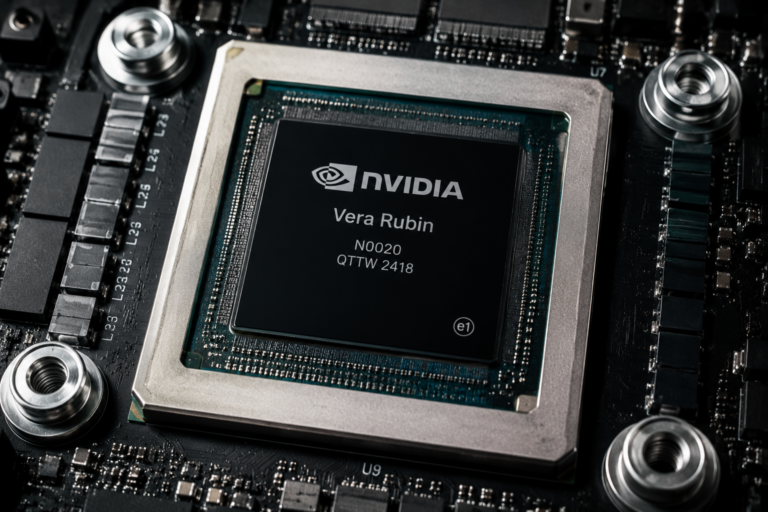
Investors are watching the rollout of Nvidia’s next-generation Vera Rubin chips, which are expected to enter the market in the second half of the year.

Market participants say the company will need to demonstrate continued dominance in artificial intelligence hardware to drive the next leg higher.

China black market pricing highlights strong demand for Nvidia chips

Nvidia’s AI chips have seen sharply higher prices on China’s black market, more than doubling over the past six months, according to a Financial Times report.

The increase comes amid tighter US enforcement of export controls restricting access to advanced semiconductors.

The DGX B300 server, which contains eight Blackwell graphics processing units, has risen in price to more than 8 million yuan ($1.1 million), up from around 4 million yuan, based on interviews with Chinese chip traders.

The system typically sells for about $400,000 in the United States.

Similarly, the RTX 6000 Pro workstation chip, used in large language model development, has increased from roughly 50,000 yuan at the start of the year to as much as 130,000 yuan, according to the report.

Both products are subject to US export restrictions on sales to China.

The surge in unofficial pricing follows a series of enforcement actions.

In March, a Supermicro co-founder, along with a Taiwan-based employee and a contractor, was charged with allegedly smuggling $2.5 billion worth of Nvidia AI servers to Chinese customers in what is described as the largest US enforcement case related to AI chip exports.

The post Nvidia steadies above $200 as valuation, China chip demand draws focus appeared first on Invezz

Uber Technologies (UBER) shares are ripping higher on Wednesday morning after the ride-hailing giant confirmed it has added five major, diverse brands to its on-demand Uber Eats marketplace.

As investors cheered the announcement, UBER broke above its key moving averages (20-day, 50-day, and 100-day), indicating bulls are beginning to take back control across multiple timeframes.

Despite today’s rally, Uber stock remains down nearly 10% versus the start of this year (2026).

Significance of the expansion for UBER stock

Uber has added five prominent, high-profile brands to its on-demand marketplace, significantly broadening its reach beyond traditional restaurant and grocery delivery, including FedEx Office, Kiehl’s, Academy Sports + Outdoors, Blick Art Materials, and Choice Pet.

This multi-vertical rollout deepens UBER’s “high-margin” retail delivery segment and builds on its partnerships with Home Depot, Sephora, and Best Buy.

Uber shares are extending gains because this expansion shifts users from transactional food ordering to lower-churn, recurring Uber One memberships.

Note that UBER’s relative strength index (RSI) sits in the early 50s currently, indicating significant room to the upside before the stock climbs into the “overbought” territory.

Uber Technicals

Wall Street values this because it shifts users from transactional food ordering to lower-churn, recurring Uber One memberships, expanding their non-restaurant retail scale.

Should you chase the momentum in Uber shares?

Heading into Jun. 24, UBER stock was trading at a rather compelling 2.8x sales, weighed down by structural operating costs and competitive concerns surrounding Waymo’s scale-up in the autonomous vehicle (AV) space.

Capital is flowing back into the equity today also because it was trading just a few percentage points above its 52-week low – signaling an attractive valuation cushion.

Analysts at Wall Street firms like Tigress Financial have recently flagged Uber Technologies Inc as “undervalued”, maintaining a $115 price target that suggests potential upside of more than 50% from current levels.

With gross bookings projected to hit at least $56.25 billion in Q2, institutional investors are using today’s retail news as a technical trigger to step in and buy the dip – banking on Uber’s robust free cash flow growth.

The bottom-line: bull case reignited

All in all, the announced marketplace expansion gives UBER shares exactly what they needed to turn the narrative around: a tangible growth catalyst that rewards patient investors.

By successfully leveraging its massive logistics engine to capture steady, high-margin retail spend, Uber is proving it can grow its profitable Uber One subscriber base even while facing long-term autonomous vehicle pressures.

Crucially, technicians and institutional dip-buyers are clearly liking what they see today.

If Uber’s upcoming Q2 numbers can validate the margin-expansion thesis and keep gross bookings on track, today’s technical breakout could easily be the first leg of a sustained summer recovery.

The post What's behind Uber stock's technical breakout today? appeared first on Invezz