Archive

July 10, 2026

Browsing

Netflix Inc. shares NFLX edged higher ahead of Friday’s opening bell after a report said the streaming giant is exploring live TV channels and streaming bundles as it looks to boost subscriber engagement.

The stock rose in premarket trading after initially moving lower on the news. Netflix has lost more than 39% over the past 12 months as investors have grown concerned about slowing engagement, disappointing guidance and rising competition across the streaming industry.

Netflix explores live TV and streaming bundles

According to a Wall Street Journal report, Netflix executives have recently discussed adding live TV channels that would continuously stream certain programs or genre-based content.

The company has also explored bundling third-party streaming services, including NBCUniversal’s Peacock, into its platform, allowing users to subscribe through the Netflix app.

The discussions mark a potential strategic shift for the company, whose former co-founder Reed Hastings long emphasized simplicity and a streaming-first approach.

Netflix has also reportedly begun offering French broadcaster TF1’s programming to subscribers in France and is considering similar partnerships across Europe and Latin America.

The company is also evaluating future sports rights opportunities.

According to the report, executives are discussing bids for the 2030 and 2034 FIFA World Cup while continuing to avoid expensive long-term league rights.

Declining engagement remains a key concern

The strategic review comes as subscriber engagement has become a recurring topic among senior management.

The Wall Street Journal reported that executives identified weakening engagement during the company’s annual business review this spring, despite rising profits and industry-low customer defections.

Netflix’s share of US streaming time declined to 17% from 21% over the two years through March 2026, according to Nielsen.

Its share of total US TV viewership also fell to 7.8% in April, the lowest level since May 2025.

The company has faced increasing competition from Disney+, HBO Max, YouTube, Tubi and Roku Channel, while investors have also questioned its failed pursuit of Warner Bros. Discovery’s studio and streaming assets.

Netflix is expected to report earnings next week alongside its latest engagement report, which will provide updated viewership data for its programming.

Analysts watch churn and long-term growth

Citizens reiterated its Market Perform rating on Netflix, saying the company continues to benefit from the scale of its subscriber base and distribution network but faces growing questions over engagement.

Analyst Matthew Condon said rising churn could threaten Netflix’s competitive position.

“This is ultimately what is prompting Netflix to explore Live TV and subscription bundle partnerships,” Condon said.

He also warned that if engagement weakens further, Netflix’s competitive advantages could begin to diminish.

“The important thing for me is what is happening with ‘churn,’” said Uday Cheruvu, portfolio manager and analyst at Harding Loevner in the WSJ report.

“It may not be a concern yet, but it is something I am keeping my eye on.”

Netflix has also introduced lower-cost programming, including video podcasts, YouTube content and short-form videos from publishers such as BuzzFeed and Condé Nast, while continuing to expand its advertising business.

The company generated about $1.5 billion in advertising revenue last year and previously said it expects to double ad revenue in 2026.

Live programming could further strengthen that business because viewers cannot skip commercials during live broadcasts.

The post Netflix stock gains as live TV, streaming bundle plans come into focus appeared first on Invezz
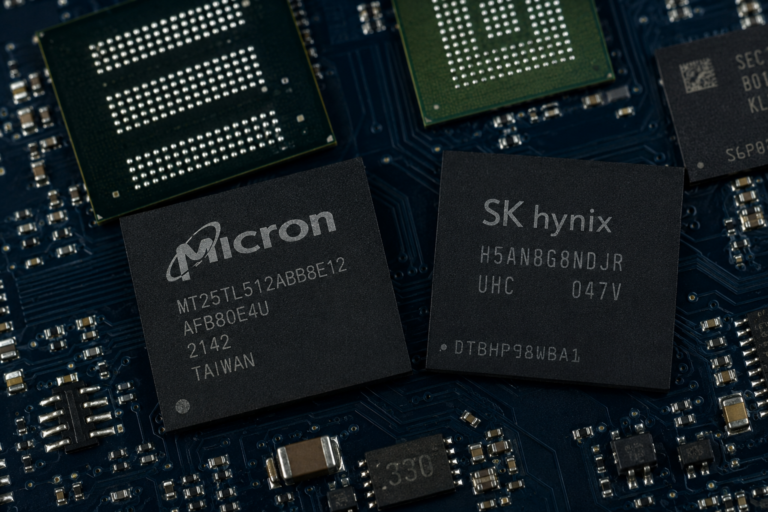

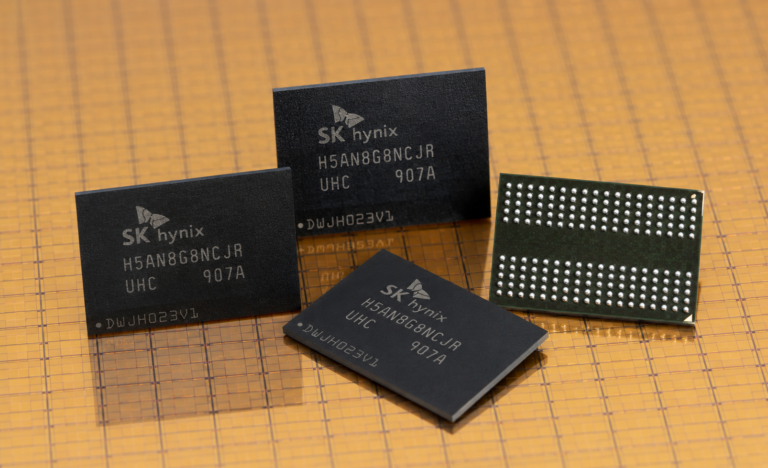
Shares of Micron MU, SanDisk and other semiconductor companies edged lower during premarket trading on Friday ahead of the much-awaited Wall Street debut of SK Hynix through its American depositary receipts (ADRs).

The South Korean memory chipmaker and Nvidia supplier has raised $26.5 billion through its US share offering, making it the largest-ever US listing by a foreign company.

Micron was down about 2.6% during premarket trading, while SanDisk declined more than 3.8%. Western Digital fell 2.78% and Seagate Technology was down about 2.5%.

Shares of Marvell Technology and Lam Research, both key players in the memory chip supply chain, also slipped 2% and 3.4%, respectively.

Memory stocks face fresh competition

The decline in memory stocks can be attributed to a broader weakness across the chip sector after Thursday’s rally.

Intel also fell 2.6% in premarket trading, while Nvidia and AMD were down less than 1%.

However, SK Hynix’s Nasdaq debut is also expected to reshape the US memory-chip trade, which has so far been dominated by Micron.

Some investors could rotate funds out of Micron and into the South Korean memory-chip maker.

Analysts have argued that SK Hynix’s US listing could help narrow its long-standing valuation gap with global peers.

Trading alongside Micron on a major US exchange may also lead to a re-rating of the company among international investors.

According to Thomas Hughes of MarketBeat, while Micron’s long-term outlook remains bullish, its share price could lag SK Hynix in the near to medium term.

“The risk is that investors will take profits and reduce their holdings of MU in order to shift capital into SK Hynix,” he said.

“In this scenario, the best-case is that MU’s stock price moves sideways within a range near existing highs, while the worst-case is that it experiences a more robust correction than it already has. Down more than 20% from its post-earnings highs as of early July, Micron’s share price could shed another 30% before hitting solid support,” he added.

Some analysts see upside for Micron

Not all analysts believe SK Hynix’s listing will be negative for Micron.

According to trader and financial analyst Dmytro Lebid, SK Hynix’s “Korean discount” will be eliminated following its US listing, potentially supporting higher valuations across the memory-chip sector, including Micron.

“As the South Korean giant was inaccessible to US investors in the domestic market, its multiples were undervalued. The issue, though, will boost these multiples, which will make Micron’s multiples more fair as well (for example, SK Hynix’s current P/E ratio is 18.3x, compared to Micron’s 22.0x). The bottom line is that the valuation ceiling for memory players will shift to higher levels,” he said.

Lebid also believes the listing could attract additional institutional capital into the sector.

“Many investors face administrative barriers to purchasing shares on the Korean KOSPI exchange. Since SK Hynix’s listing on Nasdaq will draw additional investor attention to memory market assets, this may increase liquidity from general-purpose funds as well. Since Micron serves as a national benchmark in the US, this may further boost demand for its shares,” he said.

Largest foreign listing in the US

SK Hynix raised about $26.5 billion after pricing 177.9 million American depositary shares at $149 each.

The company is issuing 17.79 million new common shares, represented by 177.9 million US depositary shares, with 10 depositary shares equivalent to one Seoul-listed common share.

According to reports, investor demand exceeded the available shares by more than seven times despite the recent pullback in global semiconductor stocks.

The post MU, SNDK, MRVL slip ahead of SK Hynix's Nasdaq debut: what's causing the jitters? appeared first on Invezz

Wall Street opened in green on Friday as investors awaited the Nasdaq debut of South Korean memory chipmaker SK Hynix while continuing to monitor renewed tensions in the Middle East and their potential impact on inflation and interest rates.

The Dow Jones Industrial Average rose about 70 points, or 0.14%, while the S&P 500 was up by 0.11%. The Nasdaq Composite gained about 0.14%.

The cautious tone followed a strong session on Thursday, when the major US indexes rallied on gains in semiconductor stocks.

For the week, the S&P 500 is on track to gain 0.8%, while the Nasdaq Composite is headed for a 1.5% advance.

The Dow is down about 0.8% for the week.

SK Hynix listing takes center stage

Investors are closely watching SK Hynix’s highly anticipated Nasdaq debut after the South Korean memory-chip maker raised about $26.5 billion by pricing its American depositary receipts at $149 each.

The offering is set to become the world’s largest share sale since SpaceX’s record-breaking IPO last month.

Despite the optimism, semiconductor stocks traded lower ahead of the listing.

Micron Technology fell about 2.4% in trading after gaining 4.5% in the previous session. Intel dropped roughly 3.3%, while Marvell Technology and Lam Research also declined.

Nvidia, Broadcom and AMD traded modestly lower, while both the iShares Semiconductor ETF and the VanEck Semiconductor ETF slipped.

Some investors have expressed concern that SK Hynix’s large offering could temporarily draw capital away from US-listed memory chip companies.

Geopolitical risks and Fed outlook remain in focus

Investors also continued to monitor the conflict between the United States and Iran after fresh military exchanges this week renewed concerns about inflation.

Iran launched attacks on US military infrastructure in Gulf states on Thursday following US strikes on Iranian targets, adding to uncertainty surrounding global energy markets.

However, markets found some relief after President Donald Trump said Iran had reached out to negotiate a deal.

Officials from Qatar and Pakistan are also working to bring both sides back to the negotiating table, while an administration official told MS Now that technical talks would continue despite the latest military action.

New York Federal Reserve President John Williams said he does not expect the Middle East conflict to cause a sustained increase in energy prices through the remainder of the year.

Attention is now shifting to next week’s US inflation report and testimony from Federal Reserve Chair Kevin Warsh before the House Committee on Financial Services.

According to LSEG data, markets are pricing in at least one 25-basis-point interest rate hike before the end of 2026.

Earnings season approaches

Investors are also preparing for the start of the second-quarter earnings season.

According to LSEG data, analysts expect S&P 500 companies to report average earnings growth of 24% from a year earlier, with technology companies expected to account for much of that increase.

Elsewhere, crypto-related stocks advanced in trading as bitcoin strengthened. Strategy gained 6.2%, while Coinbase rose 5.5% and Circle surged 15%.

Among individual movers, Delta Air Lines slipped 1.85% despite forecasting third-quarter profit above Wall Street expectations.

Meanwhile, European markets edged higher, with the Stoxx 600 rising 0.19%, while South Korea’s Kospi outperformed regional peers with a 2.5% gain.

The post Dow rises as Wall Street awaits SK Hynix debut, tracks Iran tensions appeared first on Invezz

Illinois Tool Works (NYSE: ITW) stock has pulled back in the past few days as investors position themselves for the upcoming earnings report that will provide more color on its business. While growth expectations are low, the stock has formed the rare inverted head-and-shoulders pattern, pointing to a rebound.

Illinois Tool Works is a dividend king with slowing sales growth

Illinois Tool Works is a large American industrial company that makes products used directly and indirectly by millions of people globally. 

It makes automotive products that are used by large companies like General Motors and Ford, construction products like Paslode, Ramset, and Red Head, and food equipment like commercial dishwashers and ovens.

ITW has grown to become a dividend king, a company that has paid and raised its dividends for over 50 years. It now has a dividend yield of 2.43%, a five-year growth of 7.4%, and a payout ratio of 58%.

Illinois Tool Works stock has come under pressure in the past few months as the US-Iran war has led to a surge in key raw material costs. At the peak of this war, the stock dropped from $303 to $241 within weeks.

The next key catalyst for the ITW stock price is the upcoming earnings report, which will provide more color on its business. The report will come out on July 28th this year.

Yahoo Finance data shows that analysts expect the upcoming report will show that its revenue rose by 3.36% in the last quarter to $4.19 billion. Its guidance for the third quarter’s number will be $4.18 billion, up by 3%. Its annual revenue is expected to come in at $16.6 billion from the previous year’s $16 billion.

The most recent results showed that ITW delivered solid numbers, with its revenue rising by 5% in Q1, with its margin rising by 60 basis points to 25.4%. Its earnings per share (EPS) rose by 12% to $2.66.

READ MORE: Illinois Tool Works stock: why Josh Brown says ITW is the ‘best’ in market

Valuation concerns persist

A key concern now is on its valuation, which is a bit elevated for a slow-growing industrial company. 

Illinois Tool Works trades with a forward price-to-earnings ratio of 23.38, slightly higher than the sector median of 20. The S&P 500 Index has a multiple of 22.

Most notably, ITW now trades with a higher multiple than other faster-growing companies like Micron and Nvidia. Micron, whose revenue is growing by triple digits and has higher margins, trades with a forward multiple of 13, while Nvidia has a multiple of 21.

As such, the company will need to report stronger revenue and profits to convince investors.  This explains why analysts are not highly excited about the company, with most of them having hold or underweight ratings.

ITW stock price technical analysis

Illinois Tool Works stock chart | Source: TradingView

The daily chart shows that the Illinois Tool Works stock remains under pressure today. However, a closer look shows that it is in the process of forming an inverted head-and-shoulders pattern. It has already completed the formation of the left shoulder and head sections and is now in the right one.

This pattern suggests that it may need to rereat to the right shoulder section of $255 and then bounce back. In the future, the stock may jump to $303, its highest level in February this year.

The post ITW stock: New dividend king slowly forms a highly bullish pattern appeared first on Invezz

US stock futures were mixed on Friday as investors paused after a chip-led rally and turned their attention to SK Hynix’s Nasdaq debut.

Dow futures edged higher, but S&P 500 and Nasdaq 100 futures slipped as memory-chip stocks pulled back in premarket trading.

The listing of South Korea’s SK Hynix is a major test of Wall Street’s appetite for AI infrastructure exposure after months of sharp gains and volatility in semiconductor shares.

Middle East tensions also kept investors cautious, with oil and inflation risks still feeding into the Federal Reserve rate debate.

5 things to know before Wall Street opens

1. Futures pause after a strong rally

Dow futures rose 109 points, or 0.21%, while S&P 500 futures were little changed. Nasdaq 100 futures lagged, slipping 0.38%.

The move followed a stronger Thursday session, when the main US indexes gained on renewed demand for chip and AI-linked stocks.

The S&P 500 and Nasdaq remain on track for weekly gains, but Friday’s early tone suggests traders are taking some profit before the next major catalyst.

2. SK Hynix debut tests AI appetite

SK Hynix priced its American depositary receipts at $149 each, raising about $26.5 billion.

The offering is expected to be the world’s second-largest share sale, behind SpaceX’s record listing last month.

AJ Bell analysts see the debut as slightly late in the cycle because memory shares have already pulled back from earlier highs.

Even so, strong demand for the deal suggests investors may view the recent memory-chip weakness as a pause rather than the end of the rally.

3. Memory stocks cool before the open

Semiconductor shares eased in premarket trading, led by memory names. Micron Technology fell 3.2% after a 4.5% gain in the previous session.

Western Digital dropped 2.8%, while Seagate Technology lost 2.7%.

The pullback reflects the market’s broader struggle with AI valuations.

Investors still believe data-centre spending will support chip demand, but they are becoming less willing to chase the sector without fresh earnings confirmation.

4. Middle East risk keeps inflation in focus

Geopolitical risk remains a drag after Iranian forces attacked US military infrastructure in Gulf states, following US strikes on Iran’s southern coastal and eastern provinces.

New York Fed President John Williams said he does not expect Middle East hostilities to cause a lasting rise in energy prices this year, but he avoided saying how he would vote at the July policy meeting.

Markets are still pricing at least one 25-basis-point rate increase by the end of 2026.

5. Earnings season starts to matter

Delta Air Lines reports before the bell, offering an early read on consumer demand and travel pricing. The broader earnings season gathers pace next week.

Analysts expect S&P 500 profits to rise more than 24% from a year earlier, with technology companies driving much of the growth.

That leaves the market with a high bar: AI needs to keep delivering, not just promising.

The post Wall Street futures trade mixed: 5 things to know before the market opens appeared first on Invezz

Circle shares surged in premarket trading on Friday after the stablecoin issuer announced it had received final regulatory approval from the US OCC to establish a national trust bank.

At the time of writing, Circle shares were up 13.33% in premarket trading.

The regulatory approval allows the company to act as custodian for its own reserves and hold crypto assets on behalf of institutional clients.

OCC approval marks a key milestone

Circle said the final approval enables it to establish Circle National Trust and places the trust bank under the direct oversight of the OCC, the primary federal regulator for lenders and national trust banks.

Commenting on the approval, Circle Chief Executive Officer Jeremy Allaire described the development as a significant step for the digital asset industry.

“OCC approval to establish Circle National Trust marks a defining step in bringing blockchain technology and digital assets into the core of the US financial system,” Allaire said in a statement.

According to the company, operating under a national trust charter will allow it to expand its role in safeguarding digital assets while maintaining direct federal regulatory oversight.

Charter expands custody capabilities

The national trust bank charter allows Circle to serve as custodian for its own reserves, which back its stablecoin operations.

It also permits the company to hold crypto assets on behalf of institutional clients.

The approval comes as digital asset companies continue to broaden their presence in traditional financial services.

As regulatory hurdles have eased over the past year, firms in the sector have increasingly pursued banking licenses, custody businesses, and payment services.

The move reflects a broader effort by crypto companies to integrate more closely with regulated financial infrastructure while expanding their service offerings.

USDC remains a major stablecoin

Circle is the issuer of USDC, a dollar-pegged stablecoin designed to maintain a fixed value through a 1:1 peg with the US dollar.

Stablecoins are widely used within the cryptocurrency market to transfer funds between crypto tokens while minimizing price volatility.

Their fixed-value design makes them a commonly used medium for transactions across digital asset platforms.

Stock gains despite year-to-date decline

Friday’s rally follows a challenging year for Circle’s stock.

Despite the sharp premarket gains, the company’s shares had fallen 20.5% so far this year through the previous market close, according to LSEG data.

The decline had left Circle with a market capitalization of approximately $15.7 billion before Friday’s trading session.

Investors appeared to welcome the OCC’s final approval, sending the stock sharply higher as the market reacted to the company’s expanded regulatory status and new custody capabilities.

The approval gives Circle the authority to operate its national trust bank under direct federal supervision while broadening its role in providing custody services for both its reserves and institutional crypto clients.

The post Circle stock climbs over 10% in premarket after securing final US trust bank approval appeared first on Invezz

London’s FTSE 100 edged higher on Friday, supported by strong gains in Vodafone and easyJet following major corporate developments.

However, renewed tensions in the Middle East continued to weigh on investor sentiment, limiting broader market gains.

The blue-chip FTSE 100 index rose 0.08% to 10,480.31 points by 1053 GMT.

Meanwhile, the mid-cap FTSE 250 gained 0.1%.

Despite the modest advances, both indexes remained on track to record weekly losses.

Vodafone jumps after a major stake sale agreement

Vodafone emerged as the top performer on the FTSE 100, with its shares rising 12.6%.

The gains came after UAE telecommunications group e& announced that it would sell its stake in the British telecom company to the family investment vehicle of French billionaire Xavier Niel.

The transaction was valued at nearly $6 billion.

The announcement boosted investor confidence and helped lift the broader benchmark index despite cautious market sentiment.

easyJet leads FTSE 250 higher on takeover approach

Shares of easyJet climbed 14.5%, making it the strongest performer on the FTSE 250.

The budget airline said it had agreed in principle to a £5.7 billion ($7.65 billion) takeover approach from Apollo Global.

The proposed deal lifted sentiment across the travel and leisure sector, which rose 1.6% and led sectoral gains during the session.

The takeover news added to the day’s corporate activity, providing support for UK equities even as geopolitical concerns remained in focus.

Mining stocks advance alongside the broader market

Industrial metal miners also posted gains during the session.

The sector rose 0.8%, with Atalaya Mining, Antofagasta, and Rio Tinto advancing between 1.4% and 1.8%.

The gains in mining stocks further contributed to the positive performance of the UK’s main equity indexes.

Middle East tensions cap broader market gains

Despite the rally in several major stocks, investor sentiment remained cautious.

Renewed tensions in the Middle East weighed on markets after Iranian forces attacked US military infrastructure in Gulf states.

The development further undermined a three-week-old ceasefire and increased uncertainty surrounding the direction of the conflict.

The geopolitical uncertainty prevented stronger gains across the broader market, keeping investors cautious despite positive corporate news.

Financial stocks under pressure

Investment banks and brokerages declined 0.8%, making them among the weakest-performing sectors during the session.

St. James’s Place was one of the biggest fallers on the FTSE 100, dropping 8.7%.

The decline followed a report that Sovereign Wealth, one of the money manager’s largest partner firms, was in discussions to join a Swedish wealth management group.

Hays rises after upbeat profit outlook

Recruitment company Hays gained 13.8% after issuing a positive earnings outlook.

The company said it expects its annual operating profit to come in at the top end of market expectations.

According to the company, the improved outlook was supported by ongoing cost-cutting measures and higher consultant productivity.

The update was well received by investors and helped lift the stock sharply during Friday’s trading session.

Political developments remain in focus

On the political front, Andy Burnham moved closer to becoming Britain’s next prime minister after securing overwhelming backing from Labour lawmakers.

The support places Burnham in a strong position to succeed Keir Starmer, adding a political dimension to a session otherwise dominated by corporate deal activity and geopolitical developments.

The post FTSE 100 edges higher as Vodafone, easyJet rally offsets Middle East concerns appeared first on Invezz

SK Hynix’s blockbuster US listing is already spawning a new wave of leveraged investment products, with several exchange-traded fund issuers preparing to launch products tied to the South Korean memory-chip maker’s American depositary receipts (ADRs), a move that analysts say could increase volatility in one of the world’s hottest AI stocks.

According to a Bloomberg report, ProShares, Leverage Shares, and Rex Shares are among the issuers planning leveraged and inverse exchange-traded products that will track SK Hynix’s newly listed ADRs.

At least six such products are expected to begin trading next week, according to information published on the issuers’ websites.

The launch comes after SK Hynix raised about $26.5 billion by pricing 177.9 million American depositary shares at $149 apiece, marking one of the largest US listings by a foreign company and underscoring investor appetite for companies benefiting from the artificial intelligence infrastructure boom.

Leveraged products arrive after a record debut

The introduction of leveraged products would allow investors to magnify their daily gains or losses from movements in SK Hynix shares.

Some products are designed to deliver twice the daily return of the underlying stock, while others aim to generate inverse returns for investors betting on declines.

The products mirror investment vehicles that have become hugely popular in South Korea and Hong Kong, where leveraged bets on SK Hynix have attracted billions of dollars in assets.

Bloomberg noted that one leveraged SK Hynix product issued by CSOP Asset Management in Hong Kong has grown into the world’s largest single-stock leveraged ETF, managing more than $16 billion before the recent correction in the company’s share price.

How leveraged products have played a role in the chip stock boom in S. Korea

Analysts say the rapid rise of leveraged single-stock products has already altered trading patterns in South Korea.

SK Hynix, Samsung Electronics, and leveraged products linked to the two companies now account for more than 70% of total trading value on South Korea’s $4.3 trillion equity market, contributing to sharp swings in the benchmark Kospi index.

“Some elements of retail activity appear to be increasingly momentum-driven, with growth in single-stock ETFs boosting trading volumes and volatility in mega-cap names,” said John Cho, Korea equities portfolio manager at JPMorgan Asset Management in the Bloomberg report.

“The emergence of leveraged ETFs is not viewed as a healthy sign, as it may be indicative of late-cycle retail behavior.”

South Korean investors have shown strong enthusiasm for leveraged semiconductor products this year.

According to the South China Morning Post, leveraged ETFs tracking SK Hynix and Samsung Electronics were the two most-purchased investment products by South Korean investors during the first five months of 2026, attracting cumulative investments of $311.8 million and $211.1 million, respectively, based on Korea Securities Depository data.

The country’s market for single-stock leveraged ETFs has expanded rapidly since launching in late May.

As of this week, the combined market capitalisation of 14 leveraged ETFs tracking Samsung Electronics and SK Hynix had reached 13.02 trillion won ($8.63 billion), while cumulative trading value exceeded 212 trillion won during their first month.

Why leveraged ETPs in the US could increase volatility

Market participants say the growing popularity of leveraged products could create fresh challenges as issuers rebalance their portfolios daily to maintain targeted returns.

The growing concentration of money in single-stock leveraged products has started influencing the price movements of the underlying shares themselves.

The launch of additional leveraged exchange-traded products (ETPs) in the US is expected to increase daily portfolio rebalancing activity, potentially adding to already elevated volatility.

Bloomberg Intelligence also noted that the sheer size of these products has made it harder for issuers to consistently deliver twice the daily returns of the underlying stock, resulting in tracking errors.

“US investors may encounter the same tracking challenges” seen in Hong Kong’s leveraged product tracking SK Hynix, said Rebecca Sin, ETF analyst at Bloomberg Intelligence.

“When demand significantly exceeds available inventory, ETP issuers can face difficulties sourcing shares and maintaining effective hedges, potentially leading to tracking errors versus the underlying stock.”

The Bank of Korea has also warned that leveraged single-stock ETFs could amplify volatility through mandatory daily rebalancing of spot and futures positions, increasing concentration risks in underlying stocks.

Those concerns have sparked criticism from some policymakers, with at least one opposition lawmaker reportedly calling for the products to be delisted.

With SK Hynix now firmly established on Wall Street following its record ADR offering, analysts expect the launch of leveraged US products to further increase global trading activity around one of the AI industry’s most closely watched semiconductor companies.

The post SK Hynix's record US listing sets stage for leveraged ETF boom: volatility ahead? appeared first on Invezz

Netflix Inc. shares NFLX edged higher ahead of Friday’s opening bell after a report said the streaming giant is exploring live TV channels and streaming bundles as it looks to boost subscriber engagement.

The stock rose in premarket trading after initially moving lower on the news. Netflix has lost more than 39% over the past 12 months as investors have grown concerned about slowing engagement, disappointing guidance and rising competition across the streaming industry.

Netflix explores live TV and streaming bundles

According to a Wall Street Journal report, Netflix executives have recently discussed adding live TV channels that would continuously stream certain programs or genre-based content.

The company has also explored bundling third-party streaming services, including NBCUniversal’s Peacock, into its platform, allowing users to subscribe through the Netflix app.

The discussions mark a potential strategic shift for the company, whose former co-founder Reed Hastings long emphasized simplicity and a streaming-first approach.

Netflix has also reportedly begun offering French broadcaster TF1’s programming to subscribers in France and is considering similar partnerships across Europe and Latin America.

The company is also evaluating future sports rights opportunities.

According to the report, executives are discussing bids for the 2030 and 2034 FIFA World Cup while continuing to avoid expensive long-term league rights.

Declining engagement remains a key concern

The strategic review comes as subscriber engagement has become a recurring topic among senior management.

The Wall Street Journal reported that executives identified weakening engagement during the company’s annual business review this spring, despite rising profits and industry-low customer defections.

Netflix’s share of US streaming time declined to 17% from 21% over the two years through March 2026, according to Nielsen.

Its share of total US TV viewership also fell to 7.8% in April, the lowest level since May 2025.

The company has faced increasing competition from Disney+, HBO Max, YouTube, Tubi and Roku Channel, while investors have also questioned its failed pursuit of Warner Bros. Discovery’s studio and streaming assets.

Netflix is expected to report earnings next week alongside its latest engagement report, which will provide updated viewership data for its programming.

Analysts watch churn and long-term growth

Citizens reiterated its Market Perform rating on Netflix, saying the company continues to benefit from the scale of its subscriber base and distribution network but faces growing questions over engagement.

Analyst Matthew Condon said rising churn could threaten Netflix’s competitive position.

“This is ultimately what is prompting Netflix to explore Live TV and subscription bundle partnerships,” Condon said.

He also warned that if engagement weakens further, Netflix’s competitive advantages could begin to diminish.

“The important thing for me is what is happening with ‘churn,’” said Uday Cheruvu, portfolio manager and analyst at Harding Loevner in the WSJ report.

“It may not be a concern yet, but it is something I am keeping my eye on.”

Netflix has also introduced lower-cost programming, including video podcasts, YouTube content and short-form videos from publishers such as BuzzFeed and Condé Nast, while continuing to expand its advertising business.

The company generated about $1.5 billion in advertising revenue last year and previously said it expects to double ad revenue in 2026.

Live programming could further strengthen that business because viewers cannot skip commercials during live broadcasts.

The post Netflix stock gains as live TV, streaming bundle plans come into focus appeared first on Invezz