Archive

June 29, 2026

Browsing

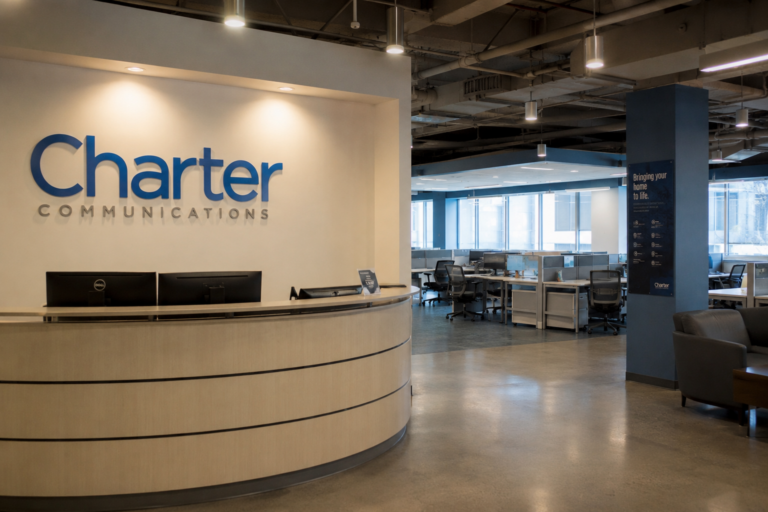
Charter Communications shares CHTR surged over 24% in premarket trading on Monday after a Bloomberg report said the cable and broadband giant was in discussions with SpaceX over a potential partnership to offer consumer mobile services.

According to the report, executives from SpaceX and Charter have held high-level talks about working together on a mobile phone offering.

While the discussions remain private and no agreement has been finalized, investors welcomed the possibility of Charter becoming a key partner in SpaceX’s expanding consumer connectivity ambitions.

Partnership could accelerate SpaceX’s mobile plans

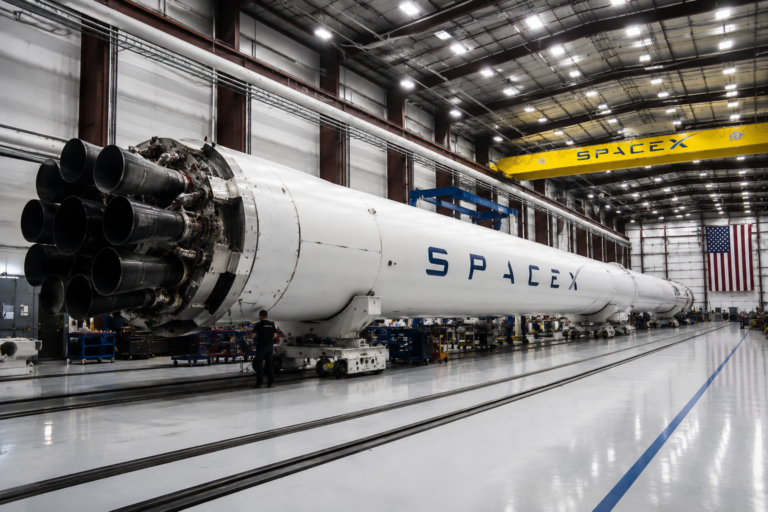
People familiar with the discussions told Bloomberg that Charter, the largest home internet provider in the United States, could route some of SpaceX’s mobile traffic through its ground-based internet infrastructure, similar to how it currently supports its Spectrum Mobile service.

Such an arrangement would advance SpaceX’s plans to become a broader direct-to-consumer mobile provider rather than relying solely on partnerships with established wireless carriers.

The discussions gained added significance after the Financial Times reported on Friday that SpaceX intends to offer mobile services directly to consumers.

To achieve that goal, the company will require significant mobile spectrum holdings alongside extensive terrestrial infrastructure to complement its satellite network.

SpaceX has already been strengthening its wireless assets.

The company recently acquired mobile spectrum in the Federal Communications Commission’s AWS-3 auction after purchasing additional spectrum rights from EchoStar last year.

“Starlink Mobile will far exceed Starlink broadband in the home,” SpaceX President Gwynne Shotwell recently told CNBC.

“Not everybody is going to need broadband, a Starlink broadband, in their homes. There’s lots of other options as well. But I think the numbers of users of Starlink Mobile will far exceed our Starlink broadband.”

Currently, SpaceX offers Starlink Mobile as a $10-per-month add-on through T-Mobile, allowing users to send text messages and make internet-based calls in remote areas beyond conventional cellular coverage.

Charter could gain from shifting competitive landscape

For Charter, a partnership with SpaceX could mark a strategic shift at a time when investors have become increasingly concerned about Starlink’s growing competitive threat.

Despite expanding its wireless business through Spectrum Mobile and agreeing last year to merge with Cox Communications, Charter’s shares have fallen about 36% so far this year as Wall Street reassessed the risks posed by satellite broadband.

Through Spectrum Mobile, Charter currently provides wireless services using infrastructure agreements with T-Mobile and Verizon while routing a substantial portion of customer traffic over its own Wi-Fi network.

The addition of Cox is expected to expand Charter’s subscriber base by more than 20%, strengthening its position in broadband and mobile services.

Starlink no longer viewed as a niche rival

Investor sentiment toward Starlink has shifted sharply over the past year.

For years, the satellite internet business was largely viewed as serving rural areas lacking access to cable or fibre broadband.

However, its rapid subscriber growth and expansion into commercial aviation have prompted analysts to reassess its long-term competitive impact.

Starlink has doubled its subscriber base annually in recent years while securing major broadband contracts with airlines including American Airlines and United Airlines.

Wolfe Research analyst Peter Supino recently warned that Starlink could become “a comet bearing down on broadband incumbents.”

Wall Street is increasingly concerned that SpaceX could begin taking broadband market share from cable operators including Charter and Comcast, as well as fibre providers such as AT&T and Verizon.

Among those companies, cable operators are widely regarded as the most exposed because broadband services generate the majority of their profits and rely on ageing network infrastructure.

Against that backdrop, any partnership between Charter and SpaceX could potentially transform a growing competitive threat into a strategic opportunity for both companies.

The post Charter Communications stock jumps over 24%: what's the SpaceX link? appeared first on Invezz
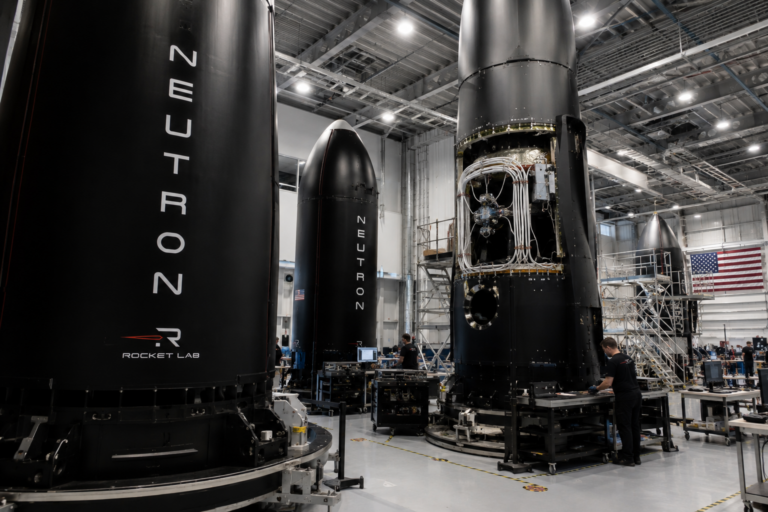
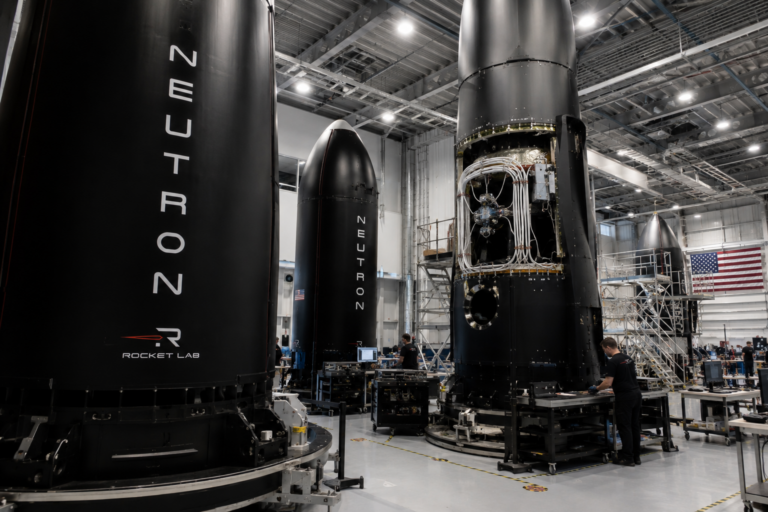
Rocket Lab (NASDAQ: RKLB) stock price has suffered a major reversal in the past few weeks, moving from the year-to-date high of $151 on May 27 to $84. This retreat continued even after the company landed a new NASA contract last week. So, is it safe to buy the dip or sell the rip?

Rocket Lab stock under pressure despite NASA deal

RKLB share price has dropped sharply in the past few weeks as investors booked profits following its spectacular rally ahead of the SpaceX IPO. It jumped to a record high of $151, up by 3,700% from its lowest level in 2014, with its market capitalization peaking at $82 billion.

The ongoing Rocket Lab stock retreat has coincided with that of other companies in the space industry. SpaceX itself has plunged by over 30% from its highest point after its IPO. Also, other top players in the space industry, like Planet Labs and Intuitive Machines, have also plunged recently. 

The sell-off intensified recently after the company entered the blue-chip index, a move that forced ETF and mutual fund operators to buy it. It is common for stocks to pop after an ETF inclusion news and then retreat when it eventually happens. 

Most importantly, demand for Rocket Labs’ solutions jumped after NASA selected the company for the Polarized Submillimeter Ice-cloud Radiometer (PolSIR) and Total and Spectral Solar Irradiance Sensor-2 (TSIS-2) missions. The deal is worth $300 million.

Rocket Lab’s growth is continuing, but valuation risks remain

The most recent financial results showed that Rocket Labs’ business is firing on all cylinders with the number of launches continuing growing. It made a record $200 million revenue, up by 63.5% from the same period last year. Also, the company’s revenue backlog surged to over $2.2 billion or 70+ missions.

While most of these orders are for its Electron product, the company is seeing more demand for its HASTE and Neutron projects. It secured 5 Neutron launches in the last quarter, with the manifest filling to end of the decade.

Analysts predict that Rocket Lab’s revenue growth will continue in the foreseeable future. The annual revenue is expected to be $915 million, up by 52% YoY. It is expected to grow by 41% next year to $1.29 billion.

Still, there are concerns about the company’s valuation, which has become extremely stretched in the past few months. It now trades with a forward price-to-sales ratio of 53, which is a massive number. This means that it will need to continue growing its revenues and boosting its profit metrics in the long term.

READ MORE: Here’s why Rocket Lab stock is ripe for a strong comeback

RKLB stock price technical analysis

Rocket Lab stock chart | Source: TradingView

The daily chart shows that the RKLB share price has dived in the past few months, moving from a high of $151 to $84 today. Its current price is notable as it coincides with the ascending trendline that connects the lowest swings since November last year.

The stock remains above the 200-day Exponential Moving Average (EMA), a sign that all hope is not lost. It has also settled along the Strong, Pivot, Reverse level of the Murrey Math Lines tool.

Therefore, there is a likelihood that the Rocket Lab stock price will bounce back and retest the Major S&R level of $100 as investors buy the dip. This view will become invalid if the stock drops below the Strong, Pivot, Reverse level of the Murrey Math Lines at $75.

The post Rocket Lab stock stuck above 200 EMA: Is it a buy after the NASA deal? appeared first on Invezz

Shares of advanced battery materials developer Solidion Technology STI swung sharply on Monday after the company announced plans to acquire a stake in SpaceX as a long-term treasury asset.

It became the latest listed firm seeking exposure to Elon Musk’s aerospace company through its balance sheet.

Solidion’s stock jumped more than 23% at one point, during premarket trading, before reversing course.

At the time of writing, the shares were down about 1.5%.

The announcement follows a similar move last week by Triller Group, suggesting that corporate treasury allocations to SpaceX are emerging as a new investment theme following the rocket company’s recent public listing.

Treasury allocation tied to long-term strategy

Solidion said the initial investment would account for a “modest” portion of its available cash, though it did not disclose the size of the allocation.

The company said the position would be held as a long-term treasury asset rather than a short-term investment.

“The allocation reflects the Company’s conviction that SpaceX represents a generational asset — the world’s leading aerospace, satellite communications, and transportation infrastructure company — with strategic relevance that extends directly to Solidion’s addressable markets, including electric vehicles, energy storage, aerospace, and defense applications,” the company said in a statement.

Management also stressed that the investment complements its core battery technology business.

“SpaceX’s Starship, Falcon, and Starlink programs represent some of the most demanding environments for next-generation battery technology — and the energy density, thermal performance, and safety characteristics required for aerospace applications are precisely the challenges Solidion’s silicon anode, graphene-enhanced, and bipolar solid-state battery technologies are engineered to address,” the company said.

“Beyond thematic alignment, the Company believes a modest SpaceX position enhances the quality of Solidion’s treasury through exposure to a high-conviction, publicly held asset.”

Chief Executive Jaymes Winters described the investment as a strategic decision rather than a speculative trade.

“SpaceX is one of the most extraordinary companies ever built — redefining what is possible in aerospace, energy, and global connectivity,” Winters said.

“This is not a speculative trade — it is a deliberate decision to place a small but meaningful vote of confidence in a company shaping the future of the industries we serve. We look forward to providing our shareholders with a window into that value creation directly through our balance sheet.”

Space ambitions extend beyond investment

The treasury announcement comes only weeks after Solidion unveiled its Generation Extreme-Climate Battery (Gen-ECB) platform, targeting batteries designed for low-Earth orbit AI data centres, satellite constellations and lunar missions.

That announcement had triggered a spectacular rally, with the company’s shares climbing more than sevenfold as investors embraced its push into space-focused battery technology ahead of SpaceX’s June 12 market debut.

The company believes future aerospace applications will increasingly require batteries capable of operating in extreme environments, creating a natural overlap with SpaceX’s expanding ambitions in launch systems, satellite communications and deep-space missions.

More companies seek SpaceX exposure

Solidion is not alone in using its balance sheet to gain exposure to SpaceX.

Last week, Triller Group announced plans to acquire a SpaceX-linked position through a wholly owned subsidiary.

According to an SEC filing, Triller agreed to acquire a Bahamian investment vehicle holding economic interests equivalent to about 3.9 million SpaceX Class A shares in a transaction valued at roughly $411 million.

The company said the purchase would be financed through a secured financing arrangement backed by the underlying position.

“SpaceX is one of the most extraordinary companies of our generation, and we are securing meaningful exposure to it at a compelling entry point and placing it at the very heart of our balance sheet,” Triller Chief Executive Wing-Fai Ng said.

Potential catalysts for SPCX

SpaceX shares have declined roughly 5% since their market debut and recently closed at $153.23, below their post-listing high of $225.64 but still above the $135 IPO price.

The stock, however, entered the week with several potential catalysts.

SpaceX joined the Russell 1000 index after Friday’s close and is scheduled to enter the Nasdaq-100 on July 7, moves that could trigger additional buying from passive index funds.

Shares rose about 1.9% in premarket trading to $156.10.

Musk also added to investor optimism after responding to a social media post suggesting SpaceX could generate $100 billion in revenue by 2028.

“I would be disappointed if SpaceX did not significantly exceed these milestones,” he wrote.

Wall Street currently forecasts revenue of roughly $103 billion in 2028, broadly in line with Musk’s comments.

The billionaire also said Grok 4.5 could outperform competing artificial intelligence models, following SpaceX’s integration of xAI earlier this year.

The post From Solidion to Triller: why are companies buying SpaceX stakes as treasury assets appeared first on Invezz

Wall Street’s main indexes opened higher on Monday as easing tensions in the Middle East lifted investor sentiment after days of hostilities between the United States and Iran.

Technology stocks also rebounded following a sharp selloff last week, while Comcast shares soared after the media and cable company announced plans to split into two publicly traded businesses.

The Dow Jones Industrial Average rose about 271 points, while the S&P 500 gained 0.82%.

The Nasdaq Composite advanced 1.31%, supported by strength in technology shares.

A US official said on Sunday that Washington and Tehran would de-escalate following several days of hostilities, raising hopes that an interim peace agreement signed earlier this month could remain intact.

The two sides also agreed to allow commercial vessels to transit the Strait of Hormuz freely after a weekend of military exchanges that had threatened negotiations.

While diplomatic efforts have reassured investors, concerns remain over the possibility of renewed conflict disrupting global energy supplies.

Technology stocks recover after last week’s selloff

Technology stocks attempted to recover after a difficult week that saw investors rotate into more defensive sectors.

Last week, the S&P 500 lost nearly 2%, while the Nasdaq Composite dropped about 4.6% as semiconductor companies and the so-called Magnificent Seven came under pressure.

Apple shares gained 1% in trading after falling 4.8% last week.

The company raised iPad and MacBook prices on Thursday, saying it could no longer absorb higher memory and storage chip costs driven by the artificial intelligence industry’s expanding data center investments.

Chipmakers also traded higher, with Marvell gaining 1.8%.

Meanwhile, RBC Capital Markets raised its 12-month target for the S&P 500 to 8,150 from 7,900, citing earnings strength and favorable market conditions.

The second-quarter earnings season, set to begin in the coming weeks, is expected to provide the next major test for equities.

“The 21% S&P 500 return over the past 12 months has been driven entirely by earnings, making the upcoming Q2 2026 reporting season an important catalyst for the forward trajectory of the market,” said Ben Snider, chief US equity strategist at Goldman Sachs in a Reuters report.

Corporate developments drive individual stocks

Comcast shares jumped about 8% in trading after the company announced plans to separate NBCUniversal and Sky into an independent publicly traded company through a tax-free spinoff.

The separation is expected to be completed in about a year.

SpaceX gained roughly 4% after Nasdaq said the newly listed company would be added to the Nasdaq-100 index on July 7.

Elsewhere, Martin Marietta Materials fell 6.11% after announcing a $13.5 billion merger with limestone supplier Lhoist North America.

Viridian Therapeutics climbed 6.65% after the US Food and Drug Administration approved its treatment for thyroid eye disease.

Investors also remained focused on monetary policy expectations.

Traders were pricing in at least one Federal Reserve interest rate hike this year to contain inflation, with upcoming US jobs data expected to influence those expectations.

Oil prices edged higher as markets assessed whether the pause in hostilities between the United States and Iran would hold.

The post Dow jumps 270 points as US-Iran tensions ease; Comcast surges on split plan appeared first on Invezz

Cardano (ADA) remains under pressure after a sharp sell-off over the past month, but several technical indicators suggest the pace of the decline may be slowing.

The Cardano price was trading at $0.1445 at the time of writing, down 1.3% over the previous 24 hours and 10.8% over the last seven days.

The token has lost 38.6% over the past month and remains more than 95% below its all-time high of $3.09, which was recorded in September 2021.

Notably, the most recent decline follows the impact of the recent SecondFi wallet exploit, an incident that exposed vulnerabilities in wallet software rather than the Cardano blockchain itself.

Although the broader trend remains bearish, momentum indicators are beginning to paint a different picture.

With the Relative Strength Index (RSI) moving into oversold territory, focus has now shifted to whether Cardano can stabilise and even recover.

SecondFi exploit and the recovery plan

Investor sentiment took a hit after the SecondFi wallet exploit resulted in the theft of approximately 16 million ADA, valued at roughly $2.4 million at the time of the attack.

Following a forensic investigation, SecondFi said it identified the root cause of the incident as a deterministic nonce derivation flaw within its wallet signing implementation.

According to the company’s findings, the vulnerability allowed attackers to reconstruct private keys using publicly available blockchain data, leading to the compromise of affected wallets.

The attack unfolded in three automated waves, with two distinct threat actors directly draining 16 million ADA from 374 wallet addresses.

However, forensics show the total footprint of vulnerable accounts actually reached 3,072.

To prevent further theft, SecondFi executed a rapid emergency containment sweep during the fourth wave, successfully rescuing and isolating roughly 129 million ADA in a secure third-party custodian vault before hackers could exploit the remaining addresses.

SecondFi has since outlined a recovery roadmap, completing a final balance snapshot on June 26 and expecting to spend about one week building its recovery mechanism before conducting another week of security testing.

If those tests are completed successfully, reimbursements to affected users are expected to begin roughly two weeks after the snapshot.

The incident also prompted fresh security guidance for users.

SecondFi advised affected customers not to sign transactions from compromised addresses and instead create entirely new wallets with fresh recovery phrases while waiting for official recovery instructions.

Importantly, the exploit targeted wallet software rather than the Cardano network itself.

The issue stemmed from cryptographic implementation inside the wallet, not from a weakness in Cardano’s blockchain protocol.

RSI oversold as ADA approaches key support

While the SecondFi exploit created additional uncertainty, price action suggests traders are increasingly focused on technical levels.

Across most technical indicators, technical analysis currently shows a bearish short-term bias.

Cardano (ADA) is trading below its 10-day, 20-day, 50-day, 100-day and 200-day exponential moving averages (EMAs), a sign that the broader trend is still pointing lower.

Momentum indicators, however, tell a more balanced story.

The 14-day RSI stands at 30.26 coming from 28.28, placing ADA just above oversold territory.

But on the weekly timeframe, the RSI is 28.14, deep into the oversold region.

These RSI readings indicate that selling pressure has become stretched, although they do not confirm that a trend reversal has already begun.

The Moving Average Convergence Divergence (MACD) has begun turning positive, suggesting bearish momentum is fading even as price remains below major resistance levels.

Meanwhile, derivatives positioning continues to reflect cautious sentiment.

The long-to-short ratio is approximately 0.72, indicating that short positions still outnumber long positions.

Funding rates have also remained slightly negative, showing that bearish traders continue to dominate perpetual futures markets.

Despite that, on-chain data has shown increased activity from larger investors, with sizeable spot-market purchases suggesting that some whales have been accumulating ADA during the recent decline.

The Cardano price is approaching an important technical zone.

The immediate support level sits at $0.1387, close to the recent 24-hour low of $0.1418. A decisive move below that support could expose ADA to additional downside.

On the upside, the first major resistance stands at $0.1739.

A daily close above that level would strengthen the case for a broader recovery and could shift attention toward the next resistance at $0.1895.

Those levels broadly align with the recent trading range, where ADA has fluctuated between $0.1397 and $0.1627 over the past week.

The post Can Cardano (ADA) recover after SecondFi Wallet exploit? appeared first on Invezz

Charter Communications shares CHTR surged over 24% in premarket trading on Monday after a Bloomberg report said the cable and broadband giant was in discussions with SpaceX over a potential partnership to offer consumer mobile services.

According to the report, executives from SpaceX and Charter have held high-level talks about working together on a mobile phone offering.

While the discussions remain private and no agreement has been finalized, investors welcomed the possibility of Charter becoming a key partner in SpaceX’s expanding consumer connectivity ambitions.

Partnership could accelerate SpaceX’s mobile plans

People familiar with the discussions told Bloomberg that Charter, the largest home internet provider in the United States, could route some of SpaceX’s mobile traffic through its ground-based internet infrastructure, similar to how it currently supports its Spectrum Mobile service.

Such an arrangement would advance SpaceX’s plans to become a broader direct-to-consumer mobile provider rather than relying solely on partnerships with established wireless carriers.

The discussions gained added significance after the Financial Times reported on Friday that SpaceX intends to offer mobile services directly to consumers.

To achieve that goal, the company will require significant mobile spectrum holdings alongside extensive terrestrial infrastructure to complement its satellite network.

SpaceX has already been strengthening its wireless assets.

The company recently acquired mobile spectrum in the Federal Communications Commission’s AWS-3 auction after purchasing additional spectrum rights from EchoStar last year.

“Starlink Mobile will far exceed Starlink broadband in the home,” SpaceX President Gwynne Shotwell recently told CNBC.

“Not everybody is going to need broadband, a Starlink broadband, in their homes. There’s lots of other options as well. But I think the numbers of users of Starlink Mobile will far exceed our Starlink broadband.”

Currently, SpaceX offers Starlink Mobile as a $10-per-month add-on through T-Mobile, allowing users to send text messages and make internet-based calls in remote areas beyond conventional cellular coverage.

Charter could gain from shifting competitive landscape

For Charter, a partnership with SpaceX could mark a strategic shift at a time when investors have become increasingly concerned about Starlink’s growing competitive threat.

Despite expanding its wireless business through Spectrum Mobile and agreeing last year to merge with Cox Communications, Charter’s shares have fallen about 36% so far this year as Wall Street reassessed the risks posed by satellite broadband.

Through Spectrum Mobile, Charter currently provides wireless services using infrastructure agreements with T-Mobile and Verizon while routing a substantial portion of customer traffic over its own Wi-Fi network.

The addition of Cox is expected to expand Charter’s subscriber base by more than 20%, strengthening its position in broadband and mobile services.

Starlink no longer viewed as a niche rival

Investor sentiment toward Starlink has shifted sharply over the past year.

For years, the satellite internet business was largely viewed as serving rural areas lacking access to cable or fibre broadband.

However, its rapid subscriber growth and expansion into commercial aviation have prompted analysts to reassess its long-term competitive impact.

Starlink has doubled its subscriber base annually in recent years while securing major broadband contracts with airlines including American Airlines and United Airlines.

Wolfe Research analyst Peter Supino recently warned that Starlink could become “a comet bearing down on broadband incumbents.”

Wall Street is increasingly concerned that SpaceX could begin taking broadband market share from cable operators including Charter and Comcast, as well as fibre providers such as AT&T and Verizon.

Among those companies, cable operators are widely regarded as the most exposed because broadband services generate the majority of their profits and rely on ageing network infrastructure.

Against that backdrop, any partnership between Charter and SpaceX could potentially transform a growing competitive threat into a strategic opportunity for both companies.

The post Charter Communications stock jumps over 24%: what's the SpaceX link? appeared first on Invezz

Rocket Lab (NASDAQ: RKLB) stock price has suffered a major reversal in the past few weeks, moving from the year-to-date high of $151 on May 27 to $84. This retreat continued even after the company landed a new NASA contract last week. So, is it safe to buy the dip or sell the rip?

Rocket Lab stock under pressure despite NASA deal

RKLB share price has dropped sharply in the past few weeks as investors booked profits following its spectacular rally ahead of the SpaceX IPO. It jumped to a record high of $151, up by 3,700% from its lowest level in 2014, with its market capitalization peaking at $82 billion.

The ongoing Rocket Lab stock retreat has coincided with that of other companies in the space industry. SpaceX itself has plunged by over 30% from its highest point after its IPO. Also, other top players in the space industry, like Planet Labs and Intuitive Machines, have also plunged recently. 

The sell-off intensified recently after the company entered the blue-chip index, a move that forced ETF and mutual fund operators to buy it. It is common for stocks to pop after an ETF inclusion news and then retreat when it eventually happens. 

Most importantly, demand for Rocket Labs’ solutions jumped after NASA selected the company for the Polarized Submillimeter Ice-cloud Radiometer (PolSIR) and Total and Spectral Solar Irradiance Sensor-2 (TSIS-2) missions. The deal is worth $300 million.

Rocket Lab’s growth is continuing, but valuation risks remain

The most recent financial results showed that Rocket Labs’ business is firing on all cylinders with the number of launches continuing growing. It made a record $200 million revenue, up by 63.5% from the same period last year. Also, the company’s revenue backlog surged to over $2.2 billion or 70+ missions.

While most of these orders are for its Electron product, the company is seeing more demand for its HASTE and Neutron projects. It secured 5 Neutron launches in the last quarter, with the manifest filling to end of the decade.

Analysts predict that Rocket Lab’s revenue growth will continue in the foreseeable future. The annual revenue is expected to be $915 million, up by 52% YoY. It is expected to grow by 41% next year to $1.29 billion.

Still, there are concerns about the company’s valuation, which has become extremely stretched in the past few months. It now trades with a forward price-to-sales ratio of 53, which is a massive number. This means that it will need to continue growing its revenues and boosting its profit metrics in the long term.

READ MORE: Here’s why Rocket Lab stock is ripe for a strong comeback

RKLB stock price technical analysis

Rocket Lab stock chart | Source: TradingView

The daily chart shows that the RKLB share price has dived in the past few months, moving from a high of $151 to $84 today. Its current price is notable as it coincides with the ascending trendline that connects the lowest swings since November last year.

The stock remains above the 200-day Exponential Moving Average (EMA), a sign that all hope is not lost. It has also settled along the Strong, Pivot, Reverse level of the Murrey Math Lines tool.

Therefore, there is a likelihood that the Rocket Lab stock price will bounce back and retest the Major S&R level of $100 as investors buy the dip. This view will become invalid if the stock drops below the Strong, Pivot, Reverse level of the Murrey Math Lines at $75.

The post Rocket Lab stock stuck above 200 EMA: Is it a buy after the NASA deal? appeared first on Invezz

Shares of advanced battery materials developer Solidion Technology STI swung sharply on Monday after the company announced plans to acquire a stake in SpaceX as a long-term treasury asset.

It became the latest listed firm seeking exposure to Elon Musk’s aerospace company through its balance sheet.

Solidion’s stock jumped more than 23% at one point, during premarket trading, before reversing course.

At the time of writing, the shares were down about 1.5%.

The announcement follows a similar move last week by Triller Group, suggesting that corporate treasury allocations to SpaceX are emerging as a new investment theme following the rocket company’s recent public listing.

Treasury allocation tied to long-term strategy

Solidion said the initial investment would account for a “modest” portion of its available cash, though it did not disclose the size of the allocation.

The company said the position would be held as a long-term treasury asset rather than a short-term investment.

“The allocation reflects the Company’s conviction that SpaceX represents a generational asset — the world’s leading aerospace, satellite communications, and transportation infrastructure company — with strategic relevance that extends directly to Solidion’s addressable markets, including electric vehicles, energy storage, aerospace, and defense applications,” the company said in a statement.

Management also stressed that the investment complements its core battery technology business.

“SpaceX’s Starship, Falcon, and Starlink programs represent some of the most demanding environments for next-generation battery technology — and the energy density, thermal performance, and safety characteristics required for aerospace applications are precisely the challenges Solidion’s silicon anode, graphene-enhanced, and bipolar solid-state battery technologies are engineered to address,” the company said.

“Beyond thematic alignment, the Company believes a modest SpaceX position enhances the quality of Solidion’s treasury through exposure to a high-conviction, publicly held asset.”

Chief Executive Jaymes Winters described the investment as a strategic decision rather than a speculative trade.

“SpaceX is one of the most extraordinary companies ever built — redefining what is possible in aerospace, energy, and global connectivity,” Winters said.

“This is not a speculative trade — it is a deliberate decision to place a small but meaningful vote of confidence in a company shaping the future of the industries we serve. We look forward to providing our shareholders with a window into that value creation directly through our balance sheet.”

Space ambitions extend beyond investment

The treasury announcement comes only weeks after Solidion unveiled its Generation Extreme-Climate Battery (Gen-ECB) platform, targeting batteries designed for low-Earth orbit AI data centres, satellite constellations and lunar missions.

That announcement had triggered a spectacular rally, with the company’s shares climbing more than sevenfold as investors embraced its push into space-focused battery technology ahead of SpaceX’s June 12 market debut.

The company believes future aerospace applications will increasingly require batteries capable of operating in extreme environments, creating a natural overlap with SpaceX’s expanding ambitions in launch systems, satellite communications and deep-space missions.

More companies seek SpaceX exposure

Solidion is not alone in using its balance sheet to gain exposure to SpaceX.

Last week, Triller Group announced plans to acquire a SpaceX-linked position through a wholly owned subsidiary.

According to an SEC filing, Triller agreed to acquire a Bahamian investment vehicle holding economic interests equivalent to about 3.9 million SpaceX Class A shares in a transaction valued at roughly $411 million.

The company said the purchase would be financed through a secured financing arrangement backed by the underlying position.

“SpaceX is one of the most extraordinary companies of our generation, and we are securing meaningful exposure to it at a compelling entry point and placing it at the very heart of our balance sheet,” Triller Chief Executive Wing-Fai Ng said.

Potential catalysts for SPCX

SpaceX shares have declined roughly 5% since their market debut and recently closed at $153.23, below their post-listing high of $225.64 but still above the $135 IPO price.

The stock, however, entered the week with several potential catalysts.

SpaceX joined the Russell 1000 index after Friday’s close and is scheduled to enter the Nasdaq-100 on July 7, moves that could trigger additional buying from passive index funds.

Shares rose about 1.9% in premarket trading to $156.10.

Musk also added to investor optimism after responding to a social media post suggesting SpaceX could generate $100 billion in revenue by 2028.

“I would be disappointed if SpaceX did not significantly exceed these milestones,” he wrote.

Wall Street currently forecasts revenue of roughly $103 billion in 2028, broadly in line with Musk’s comments.

The billionaire also said Grok 4.5 could outperform competing artificial intelligence models, following SpaceX’s integration of xAI earlier this year.

The post From Solidion to Triller: why are companies buying SpaceX stakes as treasury assets appeared first on Invezz

Wall Street’s main indexes opened higher on Monday as easing tensions in the Middle East lifted investor sentiment after days of hostilities between the United States and Iran.

Technology stocks also rebounded following a sharp selloff last week, while Comcast shares soared after the media and cable company announced plans to split into two publicly traded businesses.

The Dow Jones Industrial Average rose about 271 points, while the S&P 500 gained 0.82%.

The Nasdaq Composite advanced 1.31%, supported by strength in technology shares.

A US official said on Sunday that Washington and Tehran would de-escalate following several days of hostilities, raising hopes that an interim peace agreement signed earlier this month could remain intact.

The two sides also agreed to allow commercial vessels to transit the Strait of Hormuz freely after a weekend of military exchanges that had threatened negotiations.

While diplomatic efforts have reassured investors, concerns remain over the possibility of renewed conflict disrupting global energy supplies.

Technology stocks recover after last week’s selloff

Technology stocks attempted to recover after a difficult week that saw investors rotate into more defensive sectors.

Last week, the S&P 500 lost nearly 2%, while the Nasdaq Composite dropped about 4.6% as semiconductor companies and the so-called Magnificent Seven came under pressure.

Apple shares gained 1% in trading after falling 4.8% last week.

The company raised iPad and MacBook prices on Thursday, saying it could no longer absorb higher memory and storage chip costs driven by the artificial intelligence industry’s expanding data center investments.

Chipmakers also traded higher, with Marvell gaining 1.8%.

Meanwhile, RBC Capital Markets raised its 12-month target for the S&P 500 to 8,150 from 7,900, citing earnings strength and favorable market conditions.

The second-quarter earnings season, set to begin in the coming weeks, is expected to provide the next major test for equities.

“The 21% S&P 500 return over the past 12 months has been driven entirely by earnings, making the upcoming Q2 2026 reporting season an important catalyst for the forward trajectory of the market,” said Ben Snider, chief US equity strategist at Goldman Sachs in a Reuters report.

Corporate developments drive individual stocks

Comcast shares jumped about 8% in trading after the company announced plans to separate NBCUniversal and Sky into an independent publicly traded company through a tax-free spinoff.

The separation is expected to be completed in about a year.

SpaceX gained roughly 4% after Nasdaq said the newly listed company would be added to the Nasdaq-100 index on July 7.

Elsewhere, Martin Marietta Materials fell 6.11% after announcing a $13.5 billion merger with limestone supplier Lhoist North America.

Viridian Therapeutics climbed 6.65% after the US Food and Drug Administration approved its treatment for thyroid eye disease.

Investors also remained focused on monetary policy expectations.

Traders were pricing in at least one Federal Reserve interest rate hike this year to contain inflation, with upcoming US jobs data expected to influence those expectations.

Oil prices edged higher as markets assessed whether the pause in hostilities between the United States and Iran would hold.

The post Dow jumps 270 points as US-Iran tensions ease; Comcast surges on split plan appeared first on Invezz