Archive

July 11, 2026

Browsing

US stocks ended higher on Friday, with the S&P 500 closing just shy of a record high as enthusiasm around artificial intelligence and semiconductor stocks offset concerns over renewed tensions in the Middle East.

Investors also turned their attention to the start of the second-quarter earnings season next week, when major US banks will begin reporting results.

The Dow Jones Industrial Average rose 148.28 points, or 0.28%, to 52,635.69. The S&P 500 gained 0.38% to close at 7,572.36, while the Nasdaq Composite added 0.25% to finish at 26,273.21.

The benchmark S&P 500 finished the week up roughly 1%, while the Nasdaq also advanced more than 1%. The Dow, however, ended the week slightly lower.

SK Hynix debut lifts AI optimism

Artificial intelligence remained a key driver of market sentiment after South Korean memory-chip maker SK Hynix made its Nasdaq debut.

The company opened at $170, about 14% above its American depositary receipt offering price of $149 after raising more than $26 billion in one of the world’s largest share sales.

The listing renewed investor optimism around memory-chip makers despite recent volatility across the semiconductor sector.

Nvidia rose more than 3% on Friday, helping lead gains in the S&P 500.

Meta Platforms jumped around 6%, marking its strongest weekly performance since early 2024 after Bank of America reiterated its Buy rating.

Investor sentiment was also supported by reports suggesting Meta could improve the cost efficiency of its artificial intelligence infrastructure.

Although chip stocks have faced profit-taking in recent weeks, they remain among the year’s strongest performers.

Micron Technology has surged more than 200% in 2026, while Lam Research, Marvell Technology and Intel have all more than doubled year to date.

Global markets also reflected mixed sentiment.

South Korea’s Kospi gained 2.5%, while Japan’s Nikkei 225 rose 1.2%. China’s CSI 300 declined 1.96%, weighed down by technology and industrial stocks. Europe’s Stoxx 600 index finished little changed.

Middle East tensions remain in focus

Investors continued to monitor developments in the Middle East after renewed military exchanges between the United States and Iran earlier this week raised concerns about higher energy prices and inflation.

Market sentiment improved after President Donald Trump said Iran had requested to continue negotiations and that the United States had agreed, although he also stated that the June ceasefire was over.

Officials from Qatar and Pakistan are also working to facilitate renewed discussions between the two sides, while an administration official told MS Now that technical talks would continue despite the latest military actions.

The easing in oil prices following those developments helped support equities after Thursday’s rally.

Attention turns to earnings and inflation

Investors are now preparing for the second-quarter earnings season, which begins next week with reports from major US banks.

According to LSEG I/B/E/S data, analysts expect S&P 500 earnings to increase 24% from a year earlier, with technology companies expected to account for much of the growth.

Despite the benchmark index trading near record highs, the S&P 500’s forward price-to-earnings ratio has eased to around 20 times expected earnings from 21 times in late May, reflecting stronger corporate earnings expectations.

Markets will also closely watch next week’s US inflation report and testimony from Federal Reserve Chair Kevin Warsh before the House Committee on Financial Services for further clues on the outlook for interest rates.

The post Dow rises as S&P 500 nears record, SK Hynix debut boosts AI chip stocks appeared first on Invezz
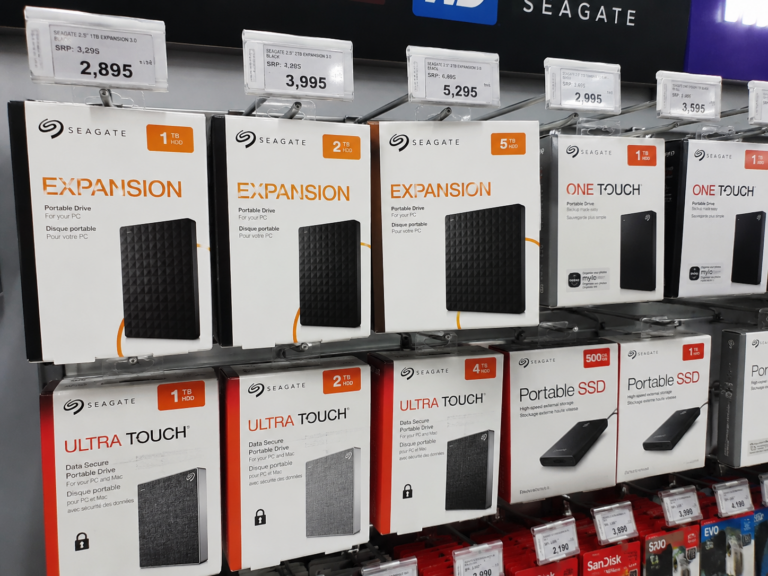
Seagate Technology (STX) shares rose on Friday after Wells Fargo upgraded the data storage company to an Overweight rating.

The analyst cited growing confidence in its long-term earnings potential and sustained demand for hard-disk drives (HDDs) driven by artificial intelligence infrastructure.

The upgrade comes after Seagate shares pulled back in recent weeks amid concerns over the sustainability of AI-related spending, despite the stock remaining up more than 500% over the past 12 months.

Rival Western Digital (NASDAQ: WDC), which has also benefited from the AI infrastructure boom, is up nearly 800% over the same period.

Wells Fargo upgrades Seagate, raises earnings outlook

Wells Fargo analyst Aaron Rakers upgraded Seagate from Equal Weight to Overweight and raised the firm’s price target to $1,100 from $900.

“With the recent market pullback and increasing confidence in what we view as a path to plus-$50 earnings-per-share and significant (capital) return capacity ahead, we upgrade STX to Overweight with a $1,100 price target,” Wells Fargo analyst Aaron Rakers said in a note for clients.

Rakers also lifted his price target on Western Digital to $730 from $575 while maintaining an Overweight rating.

The analyst said he remains “positive on HDDs” ahead of June-quarter earnings and increased estimates for both companies.

He projects Seagate’s annual earnings per share will rise from $21.60 this year to $53.69 by 2028.

Rakers expects both storage companies to emphasize “extending demand visibility” through long-term purchase agreements with customers.

AI infrastructure spending supports storage demand

Seagate said during its latest earnings call that the top three global cloud service providers have nearly doubled their Remaining Performance Obligations (RPO) to a record $1.1 trillion, reflecting growing long-term commitments for cloud and AI infrastructure.

The company said the expanding pipeline of contracted revenue should support demand for its high-capacity storage products.

Seagate also highlighted strong momentum for its Mozaic platform and Heat-Assisted Magnetic Recording (HAMR) technology, with its 3TB-per-disk HAMR drives shipping to its first cloud service provider during 2025.

According to the company, AI applications are driving higher data creation, longer retention requirements and greater reliance on historical datasets, increasing demand for cost- and energy-efficient HDDs.

Seagate said its strategy is built around durable storage demand, a strong technology roadmap and disciplined execution.

It also raised its annual revenue growth outlook to at least 20%.

The company added that nearline storage products account for about 90% of exabyte shipments, with production capacity largely allocated through 2027 under long-term supply agreements, build-to-order contracts and value-based pricing arrangements.

Western Digital and Micron also benefit from AI trend

Western Digital continues expanding its Platforms business to serve enterprise and mid-scale cloud customers while increasing adoption of its UltraSMR technology.

The company said three of its largest customers have already adopted UltraSMR, with management expecting all major customers to qualify the technology by the end of calendar 2027.

Micron Technology is also strengthening customer commitments through long-term supply agreements across data center, consumer and automotive markets.

The memory-chip maker said it has signed 16 strategic customer agreements covering roughly 20% of DRAM volumes and one-third of NAND volumes during the contract period.

Fourteen of those agreements represent approximately $100 billion in cumulative minimum contract revenue and include projected customer deposits and financial commitments totaling $22 billion, including about $18 billion in cash deposits.

The post Seagate stock jumps as Wells Fargo upgrade boosts AI storage outlook appeared first on Invezz

South Korean semiconductor giant SK Hynix made history on Wall Street, listing on Nasdaq today via American Depositary Receipts (ADRs) under the ticker SKHY.

The firm’s US initial public offering (IPO) priced at $149 was more than 7x oversubscribed – and raised a total of about $26.5 billion. This made it the largest-ever US listing by a foreign company.

SK Hynix stock is now better-positioned to compete for capital against its American rival, Micron. But is it really a better investment than MU for the long-term? Let’s find out!

SK Hynix stock owns the HBM market

SKHY shares may be a superior investment than Micron due to the company’s absolute dominance on the High-Bandwidth Memory (HBM) market.

The South Korean giant commands an impressive 56.4% share of the global HBM sector – which makes it the primary supplier of ultra-fast memory for artificial intelligence (AI) accelerators.

In fact, SK Hynix is already deeply integrated into Nvidia’s next-generation Vera Rubin platform with its advanced HBM4 architecture.

While Micron Technology is executing rather well and has sold out its capacity through the end of this year, it controls a much smaller 21% market share.

SK Hynix’s massive volume footprint grants it unparalleled pricing power and stronger, contracted multi-year revenue visibility with hyperscalers.

SKHY shares are more attractively priced than MU

In terms of profitability, SK Hynix shares seem to be in a whole another league.

In its latest reported quarter, the company’s operating margin stood at a staggering 72%, driven by high-value enterprise solid-state drives (eSSDs) and premium DRAM modules.

However, despite this world-class financial efficiency, a notable valuation disconnect persists. SK Hynix trades at a highly attractive forward price-to-earnings (P/E) multiple of just 8x, which makes it infinitely cheaper to own than Micron.

In other words, SKHY offers investors direct exposure to the booming artificial intelligence memory market at a much lower valuation than MU.

Here’s why it isn’t too late to invest in SK Hynix

Despite significant market debut gains, SKHY stock remains attractive as a long-term holding also because the company plans of using the IPO proceeds to future-proof its production moat.

Executives have earmarked substantial funds for extreme ultraviolet (EUV) lithography equipment and advanced packaging plants, including the Yongin semiconductor cluster.

This positions SK Hynix to significantly benefit as the global tech infrastructure shift from massive foundational model training toward real-time, continuous inference driven by agentic AI.

All in all, Icheon-headquartered SK Hynix Inc combines unrivaled HBM leadership, impressive profitability, compelling valuation, and an aggressive capacity expansion strategy all into one.

While Micron Technology remains a formidable competitor, SKHY appears better positioned to capture the next phase of AI-driven semiconductor demand, making it a more compelling long-term investment for growth-oriented investors in 2026.

The post Is SK Hynix stock a better pick to play AI memory market than Micron? appeared first on Invezz

US stocks ended higher on Friday, with the S&P 500 closing just shy of a record high as enthusiasm around artificial intelligence and semiconductor stocks offset concerns over renewed tensions in the Middle East.

Investors also turned their attention to the start of the second-quarter earnings season next week, when major US banks will begin reporting results.

The Dow Jones Industrial Average rose 148.28 points, or 0.28%, to 52,635.69. The S&P 500 gained 0.38% to close at 7,572.36, while the Nasdaq Composite added 0.25% to finish at 26,273.21.

The benchmark S&P 500 finished the week up roughly 1%, while the Nasdaq also advanced more than 1%. The Dow, however, ended the week slightly lower.

SK Hynix debut lifts AI optimism

Artificial intelligence remained a key driver of market sentiment after South Korean memory-chip maker SK Hynix made its Nasdaq debut.

The company opened at $170, about 14% above its American depositary receipt offering price of $149 after raising more than $26 billion in one of the world’s largest share sales.

The listing renewed investor optimism around memory-chip makers despite recent volatility across the semiconductor sector.

Nvidia rose more than 3% on Friday, helping lead gains in the S&P 500.

Meta Platforms jumped around 6%, marking its strongest weekly performance since early 2024 after Bank of America reiterated its Buy rating.

Investor sentiment was also supported by reports suggesting Meta could improve the cost efficiency of its artificial intelligence infrastructure.

Although chip stocks have faced profit-taking in recent weeks, they remain among the year’s strongest performers.

Micron Technology has surged more than 200% in 2026, while Lam Research, Marvell Technology and Intel have all more than doubled year to date.

Global markets also reflected mixed sentiment.

South Korea’s Kospi gained 2.5%, while Japan’s Nikkei 225 rose 1.2%. China’s CSI 300 declined 1.96%, weighed down by technology and industrial stocks. Europe’s Stoxx 600 index finished little changed.

Middle East tensions remain in focus

Investors continued to monitor developments in the Middle East after renewed military exchanges between the United States and Iran earlier this week raised concerns about higher energy prices and inflation.

Market sentiment improved after President Donald Trump said Iran had requested to continue negotiations and that the United States had agreed, although he also stated that the June ceasefire was over.

Officials from Qatar and Pakistan are also working to facilitate renewed discussions between the two sides, while an administration official told MS Now that technical talks would continue despite the latest military actions.

The easing in oil prices following those developments helped support equities after Thursday’s rally.

Attention turns to earnings and inflation

Investors are now preparing for the second-quarter earnings season, which begins next week with reports from major US banks.

According to LSEG I/B/E/S data, analysts expect S&P 500 earnings to increase 24% from a year earlier, with technology companies expected to account for much of the growth.

Despite the benchmark index trading near record highs, the S&P 500’s forward price-to-earnings ratio has eased to around 20 times expected earnings from 21 times in late May, reflecting stronger corporate earnings expectations.

Markets will also closely watch next week’s US inflation report and testimony from Federal Reserve Chair Kevin Warsh before the House Committee on Financial Services for further clues on the outlook for interest rates.

The post Dow rises as S&P 500 nears record, SK Hynix debut boosts AI chip stocks appeared first on Invezz

The US financial landscape is featuring a striking paradox in 2026.

Wall Street is sprinting, with major indices flirting with record highs and extending a “multi-year” winning streak. Yet, step outside the trading floors, and Main Street tells a far more muted story.

The broader US economy is expanding at a tepid pace, weighed down by a cooling labour market and battered consumer sentiment.

This growing “disconnect” has been confusing for many investors as the modern economic wedge shatters the broader narrative that stock market and economic health move in lockstep.

What’s behind this divergence?

According to Mark Zandi, the chief economist at Moody’s, the primary reasons for this divergence is the explosive rallies in AI stocks.

While the benchmark S&P 500 index is currently hovering around record levels, much of its YTD rally has been driven by select AI names – particularly on the hardware side (GPUs, HBM makers).

Because technology and adjacent companies now command up to half of the stock market’s overall weight, their soaring valuations tend to artificially lift the index.

Investors are buying into tomorrow’s digital revolution – transforming the US stock market into a forward-looking speculative vehicle rather than a mirror of economic reality that’s more muted at present, to say the least.

What’s weighing on Main Street?

In stark contrast to the stock market’s glitz, the actual productive economy is growing at a soft 2% pace, a visible deceleration from previous years.

“We’re growing. We’re not in recession. But we’re not going anywhere quickly,” Zandi argued.

This stagnation is mostly rooted in the structure of the US Gross Domestic Product (GDP), where technology only accounts for a fraction of the footprint.

Instead, the economy relies on a labor market currently plagued by multi-year lows in hiring and weak labor force participation.

Coupled with stubborn inflation, consumer confidence has eroded, creating an underlying economic environment that feels decidedly fragile.

The fragile K-shaped consumer spender

Because the broader populace is tightening its belt, US economic growth has become dangerously dependent on a wealthy minority.

A distinct “K-shaped” dynamic has emerged: the top 20% of earners now drive nearly 60% of all personal spending, supercharged by the “wealth effect” of their booming stock portfolios.

This creates a precarious structural vulnerability. If the artificial intelligence hype cycle cools down and the stock market suffers a prolonged slump, the wealthy will likely stop spending – leaving an already soft economy exposed to a severe downturn.

On the other hand, if AI-driven productivity eventually translates to stronger hiring, wage growth, and business investment, the gap may narrow.

All in all, how the artificial intelligence narrative unfolds in the back half of 2026 is really the key to determining whether this divergence persists.

The post US stocks and the economy seem to moving in opposite directions: here's why appeared first on Invezz

Retail investors, long considered one of the strongest pillars supporting the US stock market since the pandemic, are becoming increasingly selective as market leadership shifts rapidly and alternative investment opportunities gain traction.

Recent data suggest individual investors are rotating between themes rather than making broad-based bets on the stock market.

At the same time, a new Bank of America Private Bank survey shows younger wealthy investors are increasingly questioning whether traditional stocks and bonds can continue to generate above-average returns, with many allocating more capital to private markets, crypto and other alternatives.

Retail traders rotate between market themes

A Bloomberg report citing Vanda Research said the gap between cash flowing into and out of the stock market over the past four weeks has narrowed to $13 billion, the lowest level since the Covid-19 pandemic.

The trend suggests retail investors are buying and selling stocks more aggressively while showing less conviction toward the broader S&P 500 Index.

Instead, investors have been chasing individual themes as market leadership shifts.

Retail traders have rotated from energy and silver stocks to software companies, then to semiconductor names, before moving into space-related stocks following SpaceX’s public listing in June.

Viraj Patel, global macro strategist at Vanda Research, said the market environment has become increasingly dependent on stock selection.

“A selective retail investor is joining what is a very selective institutional investor – one where 2026 has really been a stock picker’s world,” said Patel.

Patel added that reduced exposure to US equities does not necessarily signal a bearish outlook for the broader market.

Instead, he said retail investors appear increasingly willing to pursue emerging investment themes before quickly moving on.

“The 2026 retail investor is very different to anything we’ve really seen in the post-Covid years,” Patel said.

Sentiment data also reflect growing caution.

According to the American Association of Individual Investors, bearish investors have outnumbered bullish respondents in all but four weeks since mid-February.

In the latest survey for the week ended July 8, 37% of respondents expected stocks to decline over the next six months, compared with 36% who were optimistic.

High valuations and new investment options influence behavior

Analysts say elevated technology valuations and rapid sector rotations are making investors more cautious.

Bret Kenwell, US investment analyst at Etoro, believes recent weakness in semiconductor stocks may be encouraging retail investors to wait for better entry points.

Vanda Research also pointed to the growing popularity of crypto trading, prediction markets and sports betting as alternative destinations for speculative capital.

Retail participation in US equity trading has moderated accordingly.

Individual investors accounted for 17.2% of total US equity trading volume during the first quarter of 2026, down from 20.5% a year earlier, although still above pre-pandemic levels, according to Bloomberg Intelligence.

Even so, retail investors continue to selectively deploy capital.

JPMorgan data showed they purchased a net $8.9 billion of equities this week, exceeding the 12-month average of $6.8 billion. Technology stocks attracted the largest inflows at $712 million, followed by communication services at $617 million.

“There hasn’t been a clear theme across AI and tech. Even the Mag 7 has stopped trading like a bloc,” Vanda’s Patel said.

Younger wealthy investors embrace alternatives

The trend extends beyond retail traders.

According to the 2026 Bank of America Private Bank Study of Wealthy Americans, 67% of Gen Z and Millennial investors with at least $3 million in investable assets believe traditional stocks and bonds can no longer generate above-average returns.

As a result, younger affluent investors are increasing allocations to private equity, real estate, cryptocurrency, and emerging technology investments.

The survey found that 58% already own digital assets, while nearly nine in 10 expect to increase investments in alternatives over the coming years.

Among respondents with at least $25 million in wealth, 77% believe greater opportunities exist in private markets than public markets.

The findings suggest that as wealth transfers to younger generations, investment portfolios may continue shifting beyond publicly traded stocks toward assets that offer exposure to earlier-stage growth opportunities.

The post Why retail investors are ditching broader index bets for selective trades appeared first on Invezz

Illinois Tool Works (NYSE: ITW) stock has pulled back in the past few days as investors position themselves for the upcoming earnings report that will provide more color on its business. While growth expectations are low, the stock has formed the rare inverted head-and-shoulders pattern, pointing to a rebound.

Illinois Tool Works is a dividend king with slowing sales growth

Illinois Tool Works is a large American industrial company that makes products used directly and indirectly by millions of people globally. 

It makes automotive products that are used by large companies like General Motors and Ford, construction products like Paslode, Ramset, and Red Head, and food equipment like commercial dishwashers and ovens.

ITW has grown to become a dividend king, a company that has paid and raised its dividends for over 50 years. It now has a dividend yield of 2.43%, a five-year growth of 7.4%, and a payout ratio of 58%.

Illinois Tool Works stock has come under pressure in the past few months as the US-Iran war has led to a surge in key raw material costs. At the peak of this war, the stock dropped from $303 to $241 within weeks.

The next key catalyst for the ITW stock price is the upcoming earnings report, which will provide more color on its business. The report will come out on July 28th this year.

Yahoo Finance data shows that analysts expect the upcoming report will show that its revenue rose by 3.36% in the last quarter to $4.19 billion. Its guidance for the third quarter’s number will be $4.18 billion, up by 3%. Its annual revenue is expected to come in at $16.6 billion from the previous year’s $16 billion.

The most recent results showed that ITW delivered solid numbers, with its revenue rising by 5% in Q1, with its margin rising by 60 basis points to 25.4%. Its earnings per share (EPS) rose by 12% to $2.66.

READ MORE: Illinois Tool Works stock: why Josh Brown says ITW is the ‘best’ in market

Valuation concerns persist

A key concern now is on its valuation, which is a bit elevated for a slow-growing industrial company. 

Illinois Tool Works trades with a forward price-to-earnings ratio of 23.38, slightly higher than the sector median of 20. The S&P 500 Index has a multiple of 22.

Most notably, ITW now trades with a higher multiple than other faster-growing companies like Micron and Nvidia. Micron, whose revenue is growing by triple digits and has higher margins, trades with a forward multiple of 13, while Nvidia has a multiple of 21.

As such, the company will need to report stronger revenue and profits to convince investors.  This explains why analysts are not highly excited about the company, with most of them having hold or underweight ratings.

ITW stock price technical analysis

Illinois Tool Works stock chart | Source: TradingView

The daily chart shows that the Illinois Tool Works stock remains under pressure today. However, a closer look shows that it is in the process of forming an inverted head-and-shoulders pattern. It has already completed the formation of the left shoulder and head sections and is now in the right one.

This pattern suggests that it may need to rereat to the right shoulder section of $255 and then bounce back. In the future, the stock may jump to $303, its highest level in February this year.

The post ITW stock: New dividend king slowly forms a highly bullish pattern appeared first on Invezz

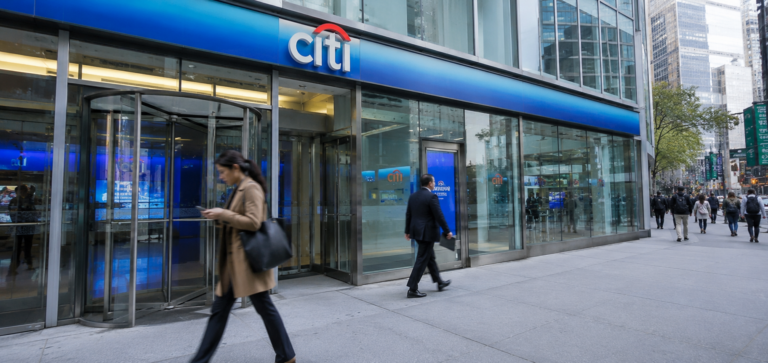
NY-headquartered Citigroup has been the perennial laggard of Wall Street for years, burdened by the legacy of the global financial crisis and an unmanageable corporate structure.

However, the narrative has flipped, with a renowned wealth manager, Josh Brown, recently calling Citi “one of the top bank stocks” to own – driven by a profound operational turnaround engineered by CEO Jane Fraser.

By aggressively divesting non-core international consumer operations and removing management layers, the bank has unlocked significant capital efficiency, he told CNBC.

Heading into its Q2 release, Citi shares C are up more than 30% versus its year-to-date low.

Why is Brown bullish on Citi stock

Brown’s bullish view on Citi stock is based on a combination of technical momentum and corporate restructuring.

According to him, the catalyst for change has been Fraser’s “shrinking to grow” strategy – exiting over a dozen overseas retail markets to focus on high-margin corporate services.

Brown particularly favours Citigroup’s global treasury and trade solutions franchise, which serves as the fundamental plumbing of international commerce.

Fraser’s visionary leadership has even helped Citi outperform its larger peers, JPMorgan and Bank of America, in the trailing 12 months.

A healthy 1.72% dividend yield makes Citigroup even more attractive to own in 2026.

Citi shares to rally after Q2 earnings

In the near-term, Citi’s upcoming earnings could prove a tailwind that unlocks the next leg higher.

Expectations are for the investment bank to report $23.4 billion in revenue – up 7.8% on a year-over-year basis – on as much as $2.72 a share of earnings, which will represent 39% growth over last year’s figure.

Crucially, options pricing is bullish heading into the company’s quarterly report. The put-to-call ratio on contracts expiring July 17, just days after the print, sits at 0.42 currently.

And the upper price on those contracts is set at about $145, indicating potential for a 4.2% increase in Citi shares from current levels.

How to play Citigroup at current levels?

Sentiment is structurally supported by the massive $30 billion share buyback program announced at Citi’s May Investor Day.

The aggressive compression of shares outstanding is mechanically lifting the EPS trajectory faster than organic growth alone.

Ultimately, Citigroup’s transformation is proving that sometimes a giant must lean down to leap forward.

By shedding the dead weight of its legacy structure and focusing squarely on its core strengths, the bank has successfully shifted market sentiment from skepticism to strong optimism.

If the upcoming Q2 earnings report validates these aggressive restructuring efforts and meets Wall Street’s heightened expectations, it will solidify the bank’s new trajectory.

For investors who once viewed Citi as a value trap, the combination of technical momentum, a robust buyback program, and disciplined leadership makes the stock a compelling comeback story for the rest of 2026.

The post Josh Brown reveals the best bank stock to own heading into Q2 earnings appeared first on Invezz

Strategy Inc. MSTR (formerly known as Microstrategy) gained on Friday after Standard Chartered said recent weakness in bitcoin reflects investor uncertainty over the company’s evolving strategy rather than any deterioration in its balance sheet.

In a note, Geoffrey Kendrick, Standard Chartered’s global head of digital assets research, maintained the bank’s end-2026 bitcoin price target of $100,000.

He argued that Strategy’s recent actions have created short-term uncertainty but do not alter bitcoin’s medium-term outlook.

The comments come after Strategy sold 3,588 bitcoin for about $216 million last week, its largest disposal to date, while adopting a Digital Credit Capital Framework that includes a bitcoin monetization program, a USD reserve, share buybacks and preferred stock support.

Strategy shifts away from its “never sell” approach

Kendrick said Strategy appears to be moving beyond its long-held commitment to never selling bitcoin, with investors still trying to understand the implications of that strategic shift.

“Strategy’s actions are muddying bitcoin’s near-term prospects,” Kendrick wrote.

He added that “The company appears to be moving away from its ‘never sell bitcoin’ mantra toward a more complex approach, and clear communication of that pivot will determine how quickly the pressure on bitcoin lifts.”

Strategy currently owns 843,775 bitcoin, representing more than 4% of the total supply that will ever exist.

According to Standard Chartered, the company’s business model has evolved as its market net asset value multiple has declined toward 1.0, limiting its ability to issue shares and buy additional bitcoin under its previous strategy.

Instead, Kendrick said Strategy is increasingly positioning bitcoin as collateral supporting STRC, its perpetual preferred stock that pays a 12% annual dividend.

STRC pricing remains key to bitcoin outlook

Standard Chartered said investor concern intensified after STRC fell well below its $100 par value, reaching an intraday low of $71.25 on June 26 following Strategy’s announcement that it had sold 32 bitcoin the previous week.

The preferred security currently trades around $90, while Strategy holds a USD reserve of $2.55 billion, equivalent to roughly 17.4 months of dividend coverage.

The company has also introduced a bitcoin monetization program that allows it to sell bitcoin from time to time and raise up to $1.25 billion to support reserves, dividend payments, interest obligations, and share repurchases.

Kendrick argued that if investors gain confidence in the framework, Strategy may not need to sell bitcoin at all.

He compared the mechanism to a central bank promising to do “whatever it takes” and, through credibility, avoiding intervention altogether.

He added that STRC remains heavily overcollateralized and should eventually trade back toward its $100 par value.

Analysts divided after bitcoin sale

Strategy’s recent sale of 3,588 bitcoin raised approximately $216 million and came alongside an $8.32 billion digital asset loss reported for the second quarter of 2026.

JPMorgan analysts said formalizing bitcoin sales introduces “avoidable two-way risk” by making Strategy both a buyer and seller of bitcoin.

Grayscale Head of Research Zach Pandl disagreed, arguing the sales strengthen Strategy’s balance sheet and help bitcoin establish a more durable price floor.

Wall Street remains broadly constructive on the stock despite differing views.

Citi maintained a Buy rating and a $260 price target, while Mizuho lowered its target to $213 but reiterated an Outperform rating.

Kendrick said the recent volatility should not change investors’ longer-term outlook.

He described the recent episode as “noise rather than a signal about bitcoin’s medium-term direction,” adding that at current levels bitcoin is “a screaming buy”.

The post Strategy (MSTR) stock gains as Standard Chartered backs $100K Bitcoin forecast appeared first on Invezz

Nvidia stock (NVDA) traded higher on Friday as investors looked past reports that one of the company’s largest customers is stepping up development of its own artificial intelligence processors.

The stock was up about 2.3% at around $207 at the time of writing after trading lower in premarket activity.

Meta advances custom AI chip efforts

The latest development came after Reuters reported that Meta Platforms plans to begin manufacturing a new in-house artificial intelligence chip from September, citing an internal company memo.

The processor, code-named “Iris,” forms part of Meta’s multi-generation Meta Training and Inference Accelerators (MTIA) program and is intended to support the artificial intelligence systems powering Facebook and Instagram.

According to Reuters, testing of the chip took six weeks and uncovered no major issues, marking progress for an initiative that has faced challenges since it began more than five years ago.

The report said Meta is working with Broadcom on the chip’s design, while Taiwan Semiconductor Manufacturing Co. will manufacture the processors.

Meta’s goal is to lower its computing costs and reduce dependence on third-party chip suppliers by using silicon tailored to its own workloads.

However, Reuters reported that the new chip is intended to augment, rather than replace, the large volumes of graphics processing units Meta continues to purchase from Nvidia and Advanced Micro Devices.

Meta has previously introduced several generations of MTIA chips and has said they could eventually replace GPUs in some servers while expanding into AI training workloads.

To date, custom chips have primarily been used for inference, the process of generating responses from trained AI models.

Competitive pressure continues to build

The report represents another example of a broader trend across the artificial intelligence industry, where major technology companies are increasingly investing in custom silicon to optimize performance and reduce infrastructure costs.

While those efforts have raised concerns about Nvidia’s long-term market share, custom processors have so far complemented rather than displaced the company’s graphics processors in many large-scale AI deployments.

Nvidia continues to dominate the market for AI accelerators, particularly for training frontier models, even as hyperscalers pursue greater control over portions of their computing infrastructure.

Wall Street remains constructive

Morgan Stanley reiterated its Overweight rating and $288 price target on Nvidia following the company’s recent non-deal roadshow with senior executives.

The investment bank said Nvidia conveyed confidence in an accelerating and increasingly diversified growth story that could appeal to both growth- and value-oriented investors.

Morgan Stanley also maintained Nvidia as its top pick within the semiconductor sector.

Earlier this week, TD Cowen reaffirmed its Buy rating and $275 price target after meeting with Chief Executive Officer Jensen Huang, Chief Financial Officer Colette Kress, and Head of Investor Relations Toshiya Hari.

According to the brokerage, Nvidia executives said demand for AI computing infrastructure remains strong, pointing to constrained compute availability, rising rental prices for legacy GPUs, expanding enterprise AI adoption, and cloud agreements signed at premium pricing.

The post Why Nvidia stock is up around 2% on Friday appeared first on Invezz