
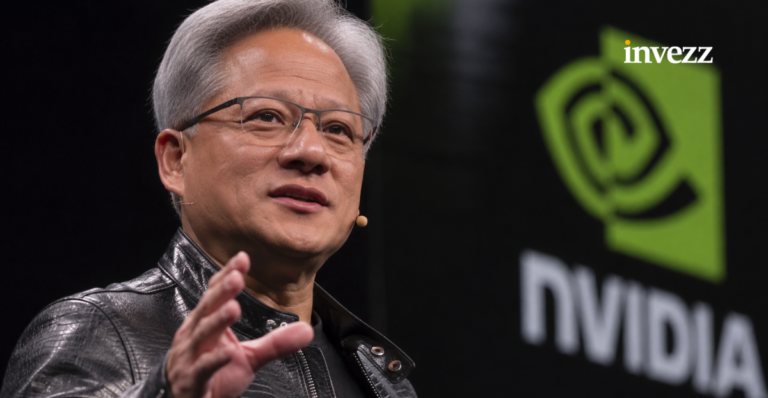
Global financial markets saw a broad recovery on Monday after Nvidia announced the immediate reinstatement of Jensen Huang as chief executive, helping revive sentiment towards technology and AI-related assets.
Nvidia shares gained 30% in the session, reversing part of last week’s steep losses.
The chipmaker had plunged 14.01% to $125.53 on Friday, taking its weekly decline to nearly 23%.
Its shares had also fallen almost 50% from their October peak.
Elsewhere, gold recovered from a more than one-year low, while oil prices declined as traders assessed rising supplies from the Middle East and the reopening of a major Libyan pipeline.
Bitcoin also rebounded after falling close to $55,000 over the weekend.
Nvidia reinstates Jensen Huang as CEO
Nvidia’s board unanimously reinstated Jensen Huang as president and chief executive officer with immediate effect, just 10 days after he stepped down from the position.
The decision followed several discussions and meetings between Huang and the board.
Directors also sought input from senior US government officials before concluding that his return would not pose a national security risk.
Board chair Harvey C. Jones said directors remained confident in Huang’s leadership.
“The Board believes Jensen is the right person to lead NVIDIA, and that his reinstatement is in the best interests of our stockholders, employees, partners and customers,” Jones said.
Jones will continue as board chair, while Colette Kress will remain chief financial officer. Kress had assumed the interim CEO position following Huang’s departure.
Nvidia also established a separate National Security and Export Control Committee comprising independent directors. The committee will oversee trade compliance and assess national security risks.
The company is bringing in legal counsel with national security experience and beginning a search for a new chief compliance officer.
Nvidia said it would continue cooperating with ongoing government investigations.
Gold price rebounds after weekly decline
Gold prices recovered on Monday as investors bought the dip following last week’s sharp decline.
Spot gold climbed 3.9% to $3,639 per ounce, after touching its lowest level since September 2025 on Friday. US gold futures advanced 3.6% to $3,642.50.
The recovery followed a decline of more than 9% last week, when an AI-related stock market sell-off prompted some investors to liquidate gold holdings to raise cash and meet margin requirements.
Market participants continued to expect a 25-basis-point Federal Reserve rate hike in December, while expectations of a larger 50-basis-point increase had been priced out.
Investors are now awaiting Wednesday’s October Personal Consumption Expenditures (PCE) index, the Fed’s preferred inflation measure, for further clues on the interest rate outlook.
Spot silver gained 6.1% to $43.70 per ounce. Platinum rose 2.9% to $1,336.17, while palladium advanced 0.8% to $901.52.
Oil price falls as Libyan pipeline restarts
Oil prices dropped nearly 4% on Monday as rising supply expectations and the reopening of Libya’s Sharara pipeline weighed on crude markets.
Brent crude futures fell 4% to $88.87 a barrel, while US West Texas Intermediate declined 3.98% to $80.09.
Libya’s National Oil Corporation confirmed that the Sharara pipeline had reopened, with crude beginning to flow into storage tanks at the Akakus facility in Zawiya.
JPMorgan expects oil futures to decline towards the high $70s in the first half of 2027, citing an expected supply surplus and increased production from the Middle East and the Americas.
However, geopolitical risks continued to limit the downside.
Recent attacks involving shipping near the Strait of Hormuz and an alleged Houthi strike on a Saudi refinery raised concerns about potential supply disruptions.
Meanwhile, Ukraine’s military said it had struck Russia’s Lukoil refinery in Perm, damaging three processing units.
Russian oil exports from major Baltic and Black Sea terminals were also facing delays due to bad weather and Ukrainian drone attacks.
Bitcoin rebounds towards $64,000 before retreating
Bitcoin recovered from a weekend low near $55,100, briefly climbing to $64,000 following Nvidia’s announcement about Huang’s return.
The cryptocurrency subsequently surrendered part of its gains and was trading around $61,130 at the time of writing.
Veteran trader Dave Weisberger said the weekend decline appeared to represent Bitcoin’s third test of a potential price floor this year.
He identified heavy trading volume near the lows and a rapid recovery on the weekly chart as possible signs that selling pressure was easing.
However, Weisberger cautioned against expecting an immediate V-shaped recovery.
“I am not calling for a V bottom,” he said.
Bloomberg’s Mike McGlone offered a different interpretation, suggesting that short sellers buying back their positions had contributed to the rebound.
With some Treasury securities offering yields of around 5%, McGlone argued that investors still have reasons to favour bonds over cryptocurrencies.
The $60,000-$61,000 range remains an important level to watch.
A recovery from that area could establish a higher low, while a break below the weekend low of $55,100 would weaken the argument that Bitcoin has reached a bottom.
AI disclosure: AI tools assisted with research and drafting of this piece. An Invezz editor reviewed the facts, sources and wording before publication. Any opinions or analysis are Invezz’s, not those of an automated system.
The post Evening digest: Nvidia reinstates Huang as CEO, gold rebounds and oil falls appeared first on Invezz