Archive

July 12, 2026

Browsing

The US financial landscape is featuring a striking paradox in 2026.

Wall Street is sprinting, with major indices flirting with record highs and extending a “multi-year” winning streak. Yet, step outside the trading floors, and Main Street tells a far more muted story.

The broader US economy is expanding at a tepid pace, weighed down by a cooling labour market and battered consumer sentiment.

This growing “disconnect” has been confusing for many investors as the modern economic wedge shatters the broader narrative that stock market and economic health move in lockstep.

What’s behind this divergence?

According to Mark Zandi, the chief economist at Moody’s, the primary reasons for this divergence is the explosive rallies in AI stocks.

While the benchmark S&P 500 index is currently hovering around record levels, much of its YTD rally has been driven by select AI names – particularly on the hardware side (GPUs, HBM makers).

Because technology and adjacent companies now command up to half of the stock market’s overall weight, their soaring valuations tend to artificially lift the index.

Investors are buying into tomorrow’s digital revolution – transforming the US stock market into a forward-looking speculative vehicle rather than a mirror of economic reality that’s more muted at present, to say the least.

What’s weighing on Main Street?

In stark contrast to the stock market’s glitz, the actual productive economy is growing at a soft 2% pace, a visible deceleration from previous years.

“We’re growing. We’re not in recession. But we’re not going anywhere quickly,” Zandi argued.

This stagnation is mostly rooted in the structure of the US Gross Domestic Product (GDP), where technology only accounts for a fraction of the footprint.

Instead, the economy relies on a labor market currently plagued by multi-year lows in hiring and weak labor force participation.

Coupled with stubborn inflation, consumer confidence has eroded, creating an underlying economic environment that feels decidedly fragile.

The fragile K-shaped consumer spender

Because the broader populace is tightening its belt, US economic growth has become dangerously dependent on a wealthy minority.

A distinct “K-shaped” dynamic has emerged: the top 20% of earners now drive nearly 60% of all personal spending, supercharged by the “wealth effect” of their booming stock portfolios.

This creates a precarious structural vulnerability. If the artificial intelligence hype cycle cools down and the stock market suffers a prolonged slump, the wealthy will likely stop spending – leaving an already soft economy exposed to a severe downturn.

On the other hand, if AI-driven productivity eventually translates to stronger hiring, wage growth, and business investment, the gap may narrow.

All in all, how the artificial intelligence narrative unfolds in the back half of 2026 is really the key to determining whether this divergence persists.

The post US stocks and the economy seem to moving in opposite directions: here's why appeared first on Invezz

Retail investors, long considered one of the strongest pillars supporting the US stock market since the pandemic, are becoming increasingly selective as market leadership shifts rapidly and alternative investment opportunities gain traction.

Recent data suggest individual investors are rotating between themes rather than making broad-based bets on the stock market.

At the same time, a new Bank of America Private Bank survey shows younger wealthy investors are increasingly questioning whether traditional stocks and bonds can continue to generate above-average returns, with many allocating more capital to private markets, crypto and other alternatives.

Retail traders rotate between market themes

A Bloomberg report citing Vanda Research said the gap between cash flowing into and out of the stock market over the past four weeks has narrowed to $13 billion, the lowest level since the Covid-19 pandemic.

The trend suggests retail investors are buying and selling stocks more aggressively while showing less conviction toward the broader S&P 500 Index.

Instead, investors have been chasing individual themes as market leadership shifts.

Retail traders have rotated from energy and silver stocks to software companies, then to semiconductor names, before moving into space-related stocks following SpaceX’s public listing in June.

Viraj Patel, global macro strategist at Vanda Research, said the market environment has become increasingly dependent on stock selection.

“A selective retail investor is joining what is a very selective institutional investor – one where 2026 has really been a stock picker’s world,” said Patel.

Patel added that reduced exposure to US equities does not necessarily signal a bearish outlook for the broader market.

Instead, he said retail investors appear increasingly willing to pursue emerging investment themes before quickly moving on.

“The 2026 retail investor is very different to anything we’ve really seen in the post-Covid years,” Patel said.

Sentiment data also reflect growing caution.

According to the American Association of Individual Investors, bearish investors have outnumbered bullish respondents in all but four weeks since mid-February.

In the latest survey for the week ended July 8, 37% of respondents expected stocks to decline over the next six months, compared with 36% who were optimistic.

High valuations and new investment options influence behavior

Analysts say elevated technology valuations and rapid sector rotations are making investors more cautious.

Bret Kenwell, US investment analyst at Etoro, believes recent weakness in semiconductor stocks may be encouraging retail investors to wait for better entry points.

Vanda Research also pointed to the growing popularity of crypto trading, prediction markets and sports betting as alternative destinations for speculative capital.

Retail participation in US equity trading has moderated accordingly.

Individual investors accounted for 17.2% of total US equity trading volume during the first quarter of 2026, down from 20.5% a year earlier, although still above pre-pandemic levels, according to Bloomberg Intelligence.

Even so, retail investors continue to selectively deploy capital.

JPMorgan data showed they purchased a net $8.9 billion of equities this week, exceeding the 12-month average of $6.8 billion. Technology stocks attracted the largest inflows at $712 million, followed by communication services at $617 million.

“There hasn’t been a clear theme across AI and tech. Even the Mag 7 has stopped trading like a bloc,” Vanda’s Patel said.

Younger wealthy investors embrace alternatives

The trend extends beyond retail traders.

According to the 2026 Bank of America Private Bank Study of Wealthy Americans, 67% of Gen Z and Millennial investors with at least $3 million in investable assets believe traditional stocks and bonds can no longer generate above-average returns.

As a result, younger affluent investors are increasing allocations to private equity, real estate, cryptocurrency, and emerging technology investments.

The survey found that 58% already own digital assets, while nearly nine in 10 expect to increase investments in alternatives over the coming years.

Among respondents with at least $25 million in wealth, 77% believe greater opportunities exist in private markets than public markets.

The findings suggest that as wealth transfers to younger generations, investment portfolios may continue shifting beyond publicly traded stocks toward assets that offer exposure to earlier-stage growth opportunities.

The post Why retail investors are ditching broader index bets for selective trades appeared first on Invezz

The Kospi Index is stuck in a local bear market after falling 21% from its year-to-date high. It ended the week at 7,475, down sharply from the year-to-date high of 9,387. This article highlights some of the top catalysts for South Korean stocks this week.

Kospi Index chart | Source: TradingView

Kospi Index to react to SK Hynix US IPO

The Kospi Index will react to last Friday’s SK Hynix US IPO that saw it raise over $26.5 billion. Its stock jumped by over 13% on its first day as brokers rushed to fill pre-orders. 

The IPO happened when South Korean stocks were closed, meaning that investors in the country will have a chance to respond to the listing. 

A key risk for SK Hynix is that most recently-launched IPOs normally jump initially and then retreat shortly after that. This happened with most IPOs, with SpaceX stock falling to a record low. Other companies like Circle, Figma, and Klarna have all plunged after the initial surge faded. 

The Kospi Index will be highly volatile in the new week as we have seen in the past few weeks. It has been normal for the index to jump and retreat by as much as 10% within a session, and this trend will likely continue this week.

South Korean Central Bank decision

The Kospi Index will react to the upcoming South Korean Central Bank interest rate decision, which will happen on Thursday this week. 

Top analysts expect that the central bank will hike interest rates by 0.25% to 3%. This hike will be because of its attempts to boost the South Korean won, which plunged to a record low against the US dollar recently. 

The rising optimism that the central bank will hike interest rates explains why the USD/KRW pair has plunged in the past few days. It has slumped from a high of 1,560 on June 5 to the current 1,500. Technically, the pair has formed a double-top pattern, pointing to more downside in the near term. 

South Korea’s central bank is concerned about inflation as semiconductor companies boost their bonuses to workers. Recent data showed that the country’s inflation jumped to the highest level in over 2 years. As such, the rate hike is expected to slow the economy down and put inflation in check. A more hawkish central bank may affect the performance of South Korean stocks and fuel volatility.

Key South Korean macro data

The Kospi Index will react to the upcoming macro data from South Korea. For example, the country will publish the latest import and export price index reports on Wednesday. 

It will also release the June import and export data on the same day. Economists expect the data to show that exports surged by 70.9% in June, while imports rose by 30%, leading to a trade surplus of over 36 billion KRW. These numbers will provide more information about the state of the South Korean economy.

US and Iran tensions

The Kospi Index will also react to the ongoing developments between the US and Iran. The two sides restarted their fighting during the weekend, with the US launching attacks against several Iranian targets. Trump has already declared the ceasefire to be over, and warned Iran of destruction if it killed him.

Crude oil priceshave already jumped on Hyperliquid, and the trend may continue this week, affecting the South Korean economy. The country imports most of its oil from the Middle East. 

Separately, the index will also react to key earnings from the biggest American banking groups, including Goldman Sachs and JPMorgan.

The post Top catalysts for South Korea’s Kospi Index this week appeared first on Invezz

The S&P 500 Index continued rising and neared its all-time high on Friday as some big tech companies like Nvidia and AMD rebounded. It ended the week at 7,575, with its perpetual futures on Hyperliquid ticking downwards today. This article explains some of the top catalysts for the SPX Index and key ETFs like VOO and SPY.

S&P 500 Index to react to earnings season

The biggest catalyst for the SPX Index will be the upcoming earnings season, which kicks off on Tuesday when five of the biggest banks release their financial results. Five banks worth almost $2 trillion will release their numbers on that day. 

They include companies like JPMorgan, Bank of America, Goldman Sachs, Citigroup, and Wells Fargo. A day later, more big banks like Morgan Stanley, Bank of New York, and PNC will publish their earnings.

In addition to these banks, large companies like Netflix, UnitedHealth, General Electric Aerospace, Intuitive Surgical, and BlackRock will release their financial results this week. These results will provide more information on how companies performed during the US-Iran war. 

Wall Street analysts predict that the earnings season will be successful, with the average growth being 23.2%. In most cases, earnings are usually higher than what analysts expect. If this trend continues, there is a likelihood that earnings growth will be over 30%.

US consumer inflation data

The S&P 500 Index, VOO, and SPY ETFs will react to the upcoming US consumer price index (CPI) data on Tuesday. Economists believe that consumer prices softened a bit last month as gasoline prices fell modestly. The average gasoline price has dropped to $3.8820 from last month’s $4.1290. 

While gasoline prices have dropped, service inflation has remained at an elevated in the past few months. For example, utility bills have risen recently because of the artificial intelligence (AI) boom.

The average estimate is that the headline Consumer Price Index (CPI) dropped by 0.1% in June after rising by 0.5% in the previous month. Core CPI, which excludes the volatile food and energy prices, is expected to come in at 0.3%. The US will publish the Producer Price Index (PPI) data a day after that.

These inflation numbers will help to determine the next phase of the Federal Reserve. A higher-than-expected inflation report would push the Federal Reserve to maintain a more hawkish tone later this year.

FOMC minutes released recently suggested that officials debated the pros and cons of hiking interest rates in the coming months. Some officials supported hiking rates later this year, while other supported cutting rates if inflation started moving downwards.

US-Iran tensions

The other key catalyst for the S&P 500 Index and its top ETFs like SPY and VOO will be the new developments from Iran. The US launched the third phase of strikes overnight, attacking key military targets. 

This happened after Iran announced that it had closed the Strait of Hormuz. As a result, crude oil prices rose on Hyperliquid. Signs of an escalation between the two sides will lead to more volatility in the stock market. 

AI jitters to move US stocks

The US stock market will react to the new developments in the AI industry. Last Friday, stocks jumped after South Korea’s SK Hynix launched the biggest IPO of a foreign company in the United States after Alibaba. 

Another important AI news came over the weekend when Apple announced a major lawsuit against OpenAI, alleging that the latter stole its trade secrets in its hardware push. It is unclear how this lawsuit will affect the stock market this week, but some OpenAI-related stocks like Nvidia and Broadcom may move.

The post S&P 500, SPY, VOO ETF: The 4 catalysts that could move markets this week appeared first on Invezz

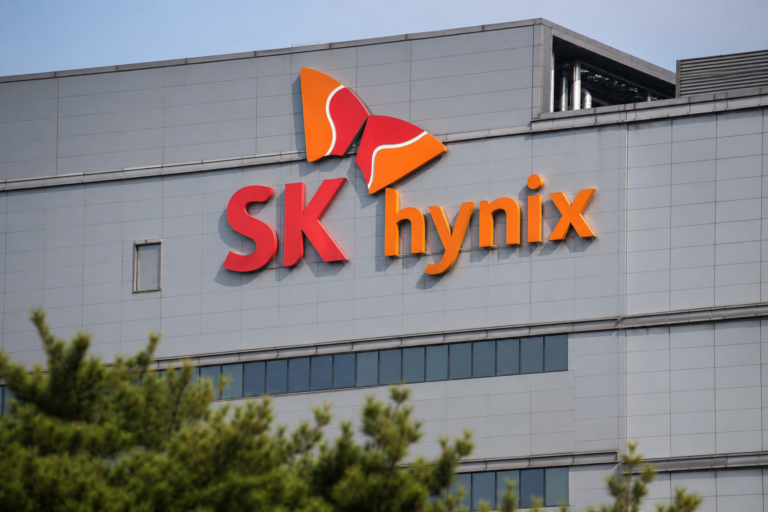
South Korean semiconductor giant SK Hynix made history on Wall Street, listing on Nasdaq today via American Depositary Receipts (ADRs) under the ticker SKHY.

The firm’s US initial public offering (IPO) priced at $149 was more than 7x oversubscribed – and raised a total of about $26.5 billion. This made it the largest-ever US listing by a foreign company.

SK Hynix stock is now better-positioned to compete for capital against its American rival, Micron. But is it really a better investment than MU for the long-term? Let’s find out!

SK Hynix stock owns the HBM market

SKHY shares may be a superior investment than Micron due to the company’s absolute dominance on the High-Bandwidth Memory (HBM) market.

The South Korean giant commands an impressive 56.4% share of the global HBM sector – which makes it the primary supplier of ultra-fast memory for artificial intelligence (AI) accelerators.

In fact, SK Hynix is already deeply integrated into Nvidia’s next-generation Vera Rubin platform with its advanced HBM4 architecture.

While Micron Technology is executing rather well and has sold out its capacity through the end of this year, it controls a much smaller 21% market share.

SK Hynix’s massive volume footprint grants it unparalleled pricing power and stronger, contracted multi-year revenue visibility with hyperscalers.

SKHY shares are more attractively priced than MU

In terms of profitability, SK Hynix shares seem to be in a whole another league.

In its latest reported quarter, the company’s operating margin stood at a staggering 72%, driven by high-value enterprise solid-state drives (eSSDs) and premium DRAM modules.

However, despite this world-class financial efficiency, a notable valuation disconnect persists. SK Hynix trades at a highly attractive forward price-to-earnings (P/E) multiple of just 8x, which makes it infinitely cheaper to own than Micron.

In other words, SKHY offers investors direct exposure to the booming artificial intelligence memory market at a much lower valuation than MU.

Here’s why it isn’t too late to invest in SK Hynix

Despite significant market debut gains, SKHY stock remains attractive as a long-term holding also because the company plans of using the IPO proceeds to future-proof its production moat.

Executives have earmarked substantial funds for extreme ultraviolet (EUV) lithography equipment and advanced packaging plants, including the Yongin semiconductor cluster.

This positions SK Hynix to significantly benefit as the global tech infrastructure shift from massive foundational model training toward real-time, continuous inference driven by agentic AI.

All in all, Icheon-headquartered SK Hynix Inc combines unrivaled HBM leadership, impressive profitability, compelling valuation, and an aggressive capacity expansion strategy all into one.

While Micron Technology remains a formidable competitor, SKHY appears better positioned to capture the next phase of AI-driven semiconductor demand, making it a more compelling long-term investment for growth-oriented investors in 2026.

The post Is SK Hynix stock a better pick to play AI memory market than Micron? appeared first on Invezz

US stocks ended higher on Friday, with the S&P 500 closing just shy of a record high as enthusiasm around artificial intelligence and semiconductor stocks offset concerns over renewed tensions in the Middle East.

Investors also turned their attention to the start of the second-quarter earnings season next week, when major US banks will begin reporting results.

The Dow Jones Industrial Average rose 148.28 points, or 0.28%, to 52,635.69. The S&P 500 gained 0.38% to close at 7,572.36, while the Nasdaq Composite added 0.25% to finish at 26,273.21.

The benchmark S&P 500 finished the week up roughly 1%, while the Nasdaq also advanced more than 1%. The Dow, however, ended the week slightly lower.

SK Hynix debut lifts AI optimism

Artificial intelligence remained a key driver of market sentiment after South Korean memory-chip maker SK Hynix made its Nasdaq debut.

The company opened at $170, about 14% above its American depositary receipt offering price of $149 after raising more than $26 billion in one of the world’s largest share sales.

The listing renewed investor optimism around memory-chip makers despite recent volatility across the semiconductor sector.

Nvidia rose more than 3% on Friday, helping lead gains in the S&P 500.

Meta Platforms jumped around 6%, marking its strongest weekly performance since early 2024 after Bank of America reiterated its Buy rating.

Investor sentiment was also supported by reports suggesting Meta could improve the cost efficiency of its artificial intelligence infrastructure.

Although chip stocks have faced profit-taking in recent weeks, they remain among the year’s strongest performers.

Micron Technology has surged more than 200% in 2026, while Lam Research, Marvell Technology and Intel have all more than doubled year to date.

Global markets also reflected mixed sentiment.

South Korea’s Kospi gained 2.5%, while Japan’s Nikkei 225 rose 1.2%. China’s CSI 300 declined 1.96%, weighed down by technology and industrial stocks. Europe’s Stoxx 600 index finished little changed.

Middle East tensions remain in focus

Investors continued to monitor developments in the Middle East after renewed military exchanges between the United States and Iran earlier this week raised concerns about higher energy prices and inflation.

Market sentiment improved after President Donald Trump said Iran had requested to continue negotiations and that the United States had agreed, although he also stated that the June ceasefire was over.

Officials from Qatar and Pakistan are also working to facilitate renewed discussions between the two sides, while an administration official told MS Now that technical talks would continue despite the latest military actions.

The easing in oil prices following those developments helped support equities after Thursday’s rally.

Attention turns to earnings and inflation

Investors are now preparing for the second-quarter earnings season, which begins next week with reports from major US banks.

According to LSEG I/B/E/S data, analysts expect S&P 500 earnings to increase 24% from a year earlier, with technology companies expected to account for much of the growth.

Despite the benchmark index trading near record highs, the S&P 500’s forward price-to-earnings ratio has eased to around 20 times expected earnings from 21 times in late May, reflecting stronger corporate earnings expectations.

Markets will also closely watch next week’s US inflation report and testimony from Federal Reserve Chair Kevin Warsh before the House Committee on Financial Services for further clues on the outlook for interest rates.

The post Dow rises as S&P 500 nears record, SK Hynix debut boosts AI chip stocks appeared first on Invezz

South Korea’s dominance in artificial intelligence memory chips is no longer just driving stock market gains.

The country’s semiconductor boom is now reshaping its economy, consumer spending, labour market and even its dating culture, creating a new generation of wealthy technology workers while raising fresh concerns over widening inequality.

Fueled by soaring demand for high-bandwidth memory (HBM) chips used alongside Nvidia’s AI processors, SK Hynix and Samsung Electronics have emerged as the biggest beneficiaries of the global AI infrastructure race.

Their success has rippled across the country’s economy, lifting exports, corporate earnings and household wealth at a pace few had anticipated.

The influence of the two companies has become so significant that together they account for more than half the value of South Korea’s benchmark Kospi index, which at its peak had surged more than 200% over the previous year.

Semiconductor exports drive economic growth

The AI-driven surge in memory chip demand has dramatically altered South Korea’s export profile.

Semiconductor exports have doubled, helping the country’s trade surplus climb to a record $36 billion in June and $87 billion during the second quarter, more than four times the surplus recorded a year earlier.

Chips now account for 44% of South Korea’s total exports, underlining the industry’s growing importance to the economy.

The export boom has translated into stronger economic growth as well.

According to the International Monetary Fund (IMF), South Korea’s economy expanded at an annualised rate of 7.5% in the first quarter, far exceeding the 1.8% growth forecast issued in April.

Strong semiconductor shipments and AI-related hardware demand offset the country’s heavy dependence on imported energy and provided an unexpected boost to economic activity.

Chip wealth spreads through the economy

The semiconductor windfall has extended well beyond factory floors and corporate balance sheets.

SK Hynix rewarded employees with bonuses worth nearly 3,000% of their monthly salaries earlier this year, with payouts expected to grow even further next year if profits continue rising.

The surge in incomes is beginning to feed into broader consumer spending.

Analysts at BNP Paribas estimate earnings across South Korea’s discretionary consumer sector have increased 18% over the past three months, marking the strongest improvement in more than four years as semiconductor wealth filters into the wider economy.

Luxury spending has already accelerated.

One Seoul department store reported jewellery sales rising 146% during the first weeks of May, while watch sales climbed 85%, according to The Guardian.

The housing market is also reflecting the boom.

In Icheon, home to SK Hynix’s main manufacturing campus, registrations of imported cars jumped 108% in February.

Apartment prices near semiconductor company shuttle bus routes are increasing at roughly four times the pace seen across the broader Seoul metropolitan area, The Guardian reported.

Silicon-collar workers become South Korea’s new elite

The wealth generated by AI chips is also reshaping South Korea’s social hierarchy.

An image of an SK Hynix company jacket recently went viral on Korean social media after becoming a symbol of wealth, success and social status.

Internet users joked that wearing the uniform was equivalent to carrying a “golden ticket” into luxury stores or improving one’s dating prospects.

According to MIT Technology Review, semiconductor employees have become some of South Korea’s most sought-after bachelors and bachelorettes.

Young South Koreans now joke that the ideal outfit for a blind date is an SK Hynix employee uniform.

The report cited Seoul-based matchmaking company Sunoo, whose algorithm assigns every client a spouse rating based on multiple factors including occupation.

Following the announcement of hefty bonuses, Samsung employees have seen their job ratings rise from 80 to 84, while SK Hynix employees improved from 78 to 82.

Traditionally, scores above 90 have largely been reserved for doctors and lawyers, long regarded as the country’s most prestigious professions.

The highest possible rating of 99 is reserved for heads of state.

The report noted that AI chip workers now earn roughly 20 times the average South Korean salary, creating what many observers describe as a new class of “silicon-collar” professionals.

Boom fuels debate over inequality

The extraordinary success of South Korea’s semiconductor industry has also sparked concerns about widening wealth disparities.

While AI chip manufacturers post record profits, many economists warn that the benefits remain concentrated among a relatively small segment of society.

“Looking solely at the numbers, it is something to cheer about. However, strangely, a corner of my heart feels heavy,” Kim Yong-beom, chief of the Presidential Policy Office and one of South Korea’s most senior economic policymakers, wrote in a social media post in June.

Kim cautioned that the current boom could prove temporary if its gains remain limited to the semiconductor sector, noting that many traditional shopping districts continue to struggle with shuttered stores and rising business failures.

Economists have similarly argued that headline economic indicators risk presenting an incomplete picture.

Although semiconductor exports have surged, shipments from many other industries have weakened considerably, raising questions about the durability and breadth of South Korea’s recovery.

Some analysts describe the country’s recent economic performance as an “illusion” created largely by the exceptional performance of SK Hynix and Samsung.

South Korea has long struggled with widening inequality despite its economic success.

The country has one of the highest rates of elderly poverty among developed nations, while soaring housing prices and rising living costs have added to the financial strain on households.

Many South Koreans say their standard of living has deteriorated rather than improved, even as wealth generated by the AI-driven semiconductor boom has accumulated in parts of the economy, The Guardian notes.

Manufacturing employment has declined year-on-year for nearly two years, while close to one million small businesses shut down in 2025, leaving many owners burdened with heavy debt.

Meanwhile, the income gap between the country’s richest and poorest households has widened to its highest level in six years.

Also, several areas of the economy remain untouched by the boom, and have in fact seen metrics worsen.

The South Korean won has fallen nearly 6% against the US dollar this year, central bank data showed Sunday, as foreign investors sold off more than 156 trillion won ($102.3 billion) worth of domestic stocks.

Government seeks to spread AI windfall

Recognising both the opportunities and risks created by the semiconductor boom, South Korea’s government plans to channel part of the additional tax revenue into long-term national investment.

The presidential office has proposed creating a dedicated “future response fund” financed by tax receipts generated from the booming chip industry.

“At this critical juncture that will determine South Korea’s future, we must not squander additional tax revenue generated by the semiconductor boom and other factors,” Kang said.

The fund is expected to support major industrial projects, develop new growth sectors, address what officials describe as “K-shaped” economic polarisation, and provide housing, employment and start-up assistance for people in their 20s and 30s.

The proposal comes shortly after President Lee unveiled three large-scale industrial initiatives focused on semiconductors, physical AI and data centres, backed by hundreds of billions of dollars in planned investments from Samsung Electronics, SK Hynix and government agencies.

The strategy aims not only to reinforce South Korea’s global leadership in semiconductors and AI infrastructure but also to promote industrial development beyond the Seoul metropolitan region.

Prime Minister Han Sung-sook described the projects as a long-term national strategy capable of becoming a new growth engine if the government, ruling party and private sector worked together “as one team,” calling it a 30-year roadmap linking semiconductors, artificial intelligence, data centres and physical AI.

The post Samsung, SK Hynix are changing fortunes of Koreans, but also widening inequality appeared first on Invezz


The US financial landscape is featuring a striking paradox in 2026.

Wall Street is sprinting, with major indices flirting with record highs and extending a “multi-year” winning streak. Yet, step outside the trading floors, and Main Street tells a far more muted story.

The broader US economy is expanding at a tepid pace, weighed down by a cooling labour market and battered consumer sentiment.

This growing “disconnect” has been confusing for many investors as the modern economic wedge shatters the broader narrative that stock market and economic health move in lockstep.

What’s behind this divergence?

According to Mark Zandi, the chief economist at Moody’s, the primary reasons for this divergence is the explosive rallies in AI stocks.

While the benchmark S&P 500 index is currently hovering around record levels, much of its YTD rally has been driven by select AI names – particularly on the hardware side (GPUs, HBM makers).

Because technology and adjacent companies now command up to half of the stock market’s overall weight, their soaring valuations tend to artificially lift the index.

Investors are buying into tomorrow’s digital revolution – transforming the US stock market into a forward-looking speculative vehicle rather than a mirror of economic reality that’s more muted at present, to say the least.

What’s weighing on Main Street?

In stark contrast to the stock market’s glitz, the actual productive economy is growing at a soft 2% pace, a visible deceleration from previous years.

“We’re growing. We’re not in recession. But we’re not going anywhere quickly,” Zandi argued.

This stagnation is mostly rooted in the structure of the US Gross Domestic Product (GDP), where technology only accounts for a fraction of the footprint.

Instead, the economy relies on a labor market currently plagued by multi-year lows in hiring and weak labor force participation.

Coupled with stubborn inflation, consumer confidence has eroded, creating an underlying economic environment that feels decidedly fragile.

The fragile K-shaped consumer spender

Because the broader populace is tightening its belt, US economic growth has become dangerously dependent on a wealthy minority.

A distinct “K-shaped” dynamic has emerged: the top 20% of earners now drive nearly 60% of all personal spending, supercharged by the “wealth effect” of their booming stock portfolios.

This creates a precarious structural vulnerability. If the artificial intelligence hype cycle cools down and the stock market suffers a prolonged slump, the wealthy will likely stop spending – leaving an already soft economy exposed to a severe downturn.

On the other hand, if AI-driven productivity eventually translates to stronger hiring, wage growth, and business investment, the gap may narrow.

All in all, how the artificial intelligence narrative unfolds in the back half of 2026 is really the key to determining whether this divergence persists.

The post US stocks and the economy seem to moving in opposite directions: here's why appeared first on Invezz

Retail investors, long considered one of the strongest pillars supporting the US stock market since the pandemic, are becoming increasingly selective as market leadership shifts rapidly and alternative investment opportunities gain traction.

Recent data suggest individual investors are rotating between themes rather than making broad-based bets on the stock market.

At the same time, a new Bank of America Private Bank survey shows younger wealthy investors are increasingly questioning whether traditional stocks and bonds can continue to generate above-average returns, with many allocating more capital to private markets, crypto and other alternatives.

Retail traders rotate between market themes

A Bloomberg report citing Vanda Research said the gap between cash flowing into and out of the stock market over the past four weeks has narrowed to $13 billion, the lowest level since the Covid-19 pandemic.

The trend suggests retail investors are buying and selling stocks more aggressively while showing less conviction toward the broader S&P 500 Index.

Instead, investors have been chasing individual themes as market leadership shifts.

Retail traders have rotated from energy and silver stocks to software companies, then to semiconductor names, before moving into space-related stocks following SpaceX’s public listing in June.

Viraj Patel, global macro strategist at Vanda Research, said the market environment has become increasingly dependent on stock selection.

“A selective retail investor is joining what is a very selective institutional investor – one where 2026 has really been a stock picker’s world,” said Patel.

Patel added that reduced exposure to US equities does not necessarily signal a bearish outlook for the broader market.

Instead, he said retail investors appear increasingly willing to pursue emerging investment themes before quickly moving on.

“The 2026 retail investor is very different to anything we’ve really seen in the post-Covid years,” Patel said.

Sentiment data also reflect growing caution.

According to the American Association of Individual Investors, bearish investors have outnumbered bullish respondents in all but four weeks since mid-February.

In the latest survey for the week ended July 8, 37% of respondents expected stocks to decline over the next six months, compared with 36% who were optimistic.

High valuations and new investment options influence behavior

Analysts say elevated technology valuations and rapid sector rotations are making investors more cautious.

Bret Kenwell, US investment analyst at Etoro, believes recent weakness in semiconductor stocks may be encouraging retail investors to wait for better entry points.

Vanda Research also pointed to the growing popularity of crypto trading, prediction markets and sports betting as alternative destinations for speculative capital.

Retail participation in US equity trading has moderated accordingly.

Individual investors accounted for 17.2% of total US equity trading volume during the first quarter of 2026, down from 20.5% a year earlier, although still above pre-pandemic levels, according to Bloomberg Intelligence.

Even so, retail investors continue to selectively deploy capital.

JPMorgan data showed they purchased a net $8.9 billion of equities this week, exceeding the 12-month average of $6.8 billion. Technology stocks attracted the largest inflows at $712 million, followed by communication services at $617 million.

“There hasn’t been a clear theme across AI and tech. Even the Mag 7 has stopped trading like a bloc,” Vanda’s Patel said.

Younger wealthy investors embrace alternatives

The trend extends beyond retail traders.

According to the 2026 Bank of America Private Bank Study of Wealthy Americans, 67% of Gen Z and Millennial investors with at least $3 million in investable assets believe traditional stocks and bonds can no longer generate above-average returns.

As a result, younger affluent investors are increasing allocations to private equity, real estate, cryptocurrency, and emerging technology investments.

The survey found that 58% already own digital assets, while nearly nine in 10 expect to increase investments in alternatives over the coming years.

Among respondents with at least $25 million in wealth, 77% believe greater opportunities exist in private markets than public markets.

The findings suggest that as wealth transfers to younger generations, investment portfolios may continue shifting beyond publicly traded stocks toward assets that offer exposure to earlier-stage growth opportunities.

The post Why retail investors are ditching broader index bets for selective trades appeared first on Invezz