Archive

July 14, 2026

Browsing

Figma stock has staged a modest comeback in the past few days, moving from a record low of $16.80 to the current $23.65.

This rebound may continue in the coming weeks after the stock formed a double-bottom pattern and as its earnings report looms. 

Figma stock technical analysis points to more gains

The daily chart shows that Figma’s tide is turning after months of falling. It formed a double-bottom pattern at $16.80, its lowest level in April and June this year. Its neckline was at $27.80, its highest point on June 1 this year.

The stock has now moved above the 50-day Exponential Moving Average (EMA), while the Relative Strength Index (RSI) has jumped to 61 from the year-to-date low of 17.83. 

Therefore, the stock will likely continue rising in the near term, potentially to the key resistance at $27.80.

A move above that level will point to more gains, potentially to the Ultimate Resistance of the Murrey Math Lines of $31.25, which is about 35% above the current level. 

Figma Inc. stock chart | Source: TradingView

Figma’s business is thriving despite the SaaSPocalypse fears

Figma is a top player in the software industry, where it offers a platform that simplifies how companies design. It is used widely by companies of all sizes, including giants like Google, Airbnb, Atlassian, Microsoft, GitHub, and Duolingo. 

Its stock initially jumped after its IPO last year and then started a strong downward trend, reaching a record low this year.

This retreat happened as investors dumped software companies in a process that has become known as the SaaSApocalypse. Other top software companies like Atlassian, Adobe, Autodesk, and ServiceNow have plunged.

In reality, however, Figma’s business has continued to grow as more companies have embraced its solution.

Its last financial results showed that its revenue jumped by 46% in Q1 to $333.4 million, higher than its previous guidance.

The company’s results showed that its business continued to attract clients despite the AI disruption. The number of companies paying over $10,000 jumped to 15,218 from 11,107 in the same period last year.

Those paying $100,000 and above jumped to 1,525 from 1,031. Notably, the company received an order from one hyperscaler that added 35,000 paid seats during the quarter.

Instead of being disrupted by AI, the company is using this technology to improve and monetize its solution. For example, it started to implement AI credit limits for all its customers in March, without experiencing any significant churn.

The management team expects that the upcoming earnings report will show that its business continued growing in Q2.

Its guidance is that its revenue will be between $348 million and $350 million, up by 40% YoY. 

It expects its annual revenue to be between $1.422 billion and $1.428 billion, representing a 35% YoY growth. The real figure will likely be higher than that, as the management tends to be highly conservative.

Most analysts have a price target that is higher than the current one. Bank of America analysts have a target of $30, while Wells Fargo’s Michael Turrin has a target of $36.

Piper Sandler, Citigroup, and JPMorgan analysts have targets of above $30.

Figma does have some challenges. For example, competition continues to rise, with companies like Sketch and Adobe being major ones.

Also, it is still losing money, with its loss from operations rising to $137 million in the first quarter. Its valuation is still high, with its forward price-to-sales ratio rising to 7.7. 

The post Figma stock forms a rare double-bottom pattern: is a rebound coming? appeared first on Invezz
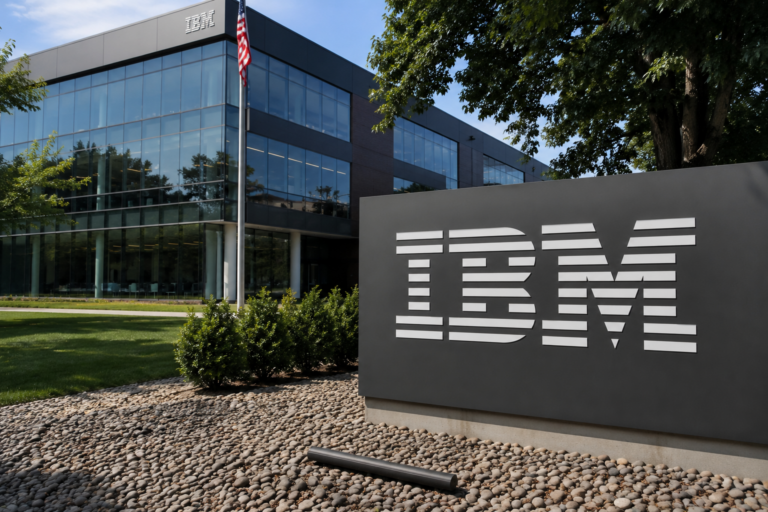
International Business Machines shares plunged more than 23% on Tuesday, marking their steepest single-day decline in decades after the technology company released preliminary second-quarter results that fell short of Wall Street expectations.

The hardware, software, and consulting company reported adjusted earnings of $2.93 per share on revenue of $17.2 billion, missing analysts’ expectations of earnings of $3.01 per share and revenue of $17.86 billion, according to FactSet.

The sharp sell-off reflected investor disappointment over weaker-than-expected performance across several business segments, particularly software and infrastructure.

IBM said software revenue increased 5% during the quarter, consulting revenue was broadly flat, rising 1% at constant currency, while infrastructure revenue declined 7%.

The company said it would provide additional details and discuss its full-year outlook during its scheduled earnings conference call on July 22.

Customers shifted spending to AI hardware

Chief Executive Arvind Krishna attributed the disappointing quarter to an unexpected shift in customer spending toward AI-related hardware purchases.

“In the last few weeks of June, we saw clients shift their quarterly capex spend toward servers, storage, and memory purchases to secure supply-constrained infrastructure ahead of expected price increases,” Krishna said in a letter to investors.

“While we anticipated some supply chain-related impact in our expectations, we did not anticipate the magnitude of the capex reprioritization.”

Krishna acknowledged that execution issues also contributed to the weaker performance.

The comments underscore how the ongoing AI infrastructure boom is redirecting enterprise technology budgets toward high-performance computing equipment and memory hardware, leaving some traditional software vendors under pressure.

IBM continues to trail larger technology rivals

IBM has struggled to match the growth rates posted by many of its large-cap technology peers.

While companies such as Microsoft and Amazon continue to deliver double-digit revenue growth, IBM’s business has largely remained in the single-digit growth range despite its push into hybrid cloud and artificial intelligence.

The latest decline also follows another sharp setback earlier this year.

In February, IBM shares dropped more than 20% after AI startup Anthropic introduced a tool designed to modernize COBOL, the programming language that powers many IBM mainframe systems.

The announcement raised concerns that generative AI could accelerate software modernization without relying as heavily on IBM’s traditional consulting and services business.

Company highlights AI and quantum initiatives

Despite the disappointing quarter, Krishna highlighted several strategic initiatives aimed at strengthening IBM’s long-term growth.

He said IBM and Red Hat had rapidly developed Lightwell following the introduction of Mythos.

Lightwell represents a $5 billion commitment supported by frontier AI capabilities and a global workforce of more than 20,000 engineers focused on helping enterprises identify and address open-source software vulnerabilities.

Krishna said early adopters include Bank of America, BNY, Citi, Goldman Sachs, JPMorganChase, Mastercard, Morgan Stanley, Royal Bank of Canada, State Street, Visa, and Wells Fargo.

General availability of the platform was announced on July 8.

Krishna also reiterated IBM’s commitment to quantum computing.

“Finally, quantum computing is no longer decades away; it is upon us, and we are investing aggressively,” he said.

IBM recently announced a letter of intent with the US Department of Commerce to build Anderon, which it described as the world’s first pure-play quantum wafer foundry.

The project will be backed by $1 billion in CHIPS Act incentives and an additional $1 billion cash contribution from IBM.

The company also plans to invest more than $10 billion in quantum computing over the next five years across research and development, manufacturing expansion, acquisitions, and ecosystem development.

Krishna said IBM remains on track to deliver its first large-scale fault-tolerant quantum computer by 2029.

The post IBM shares fall 23%: CEO says Q2 earnings fell short as customers spent more on AI appeared first on Invezz

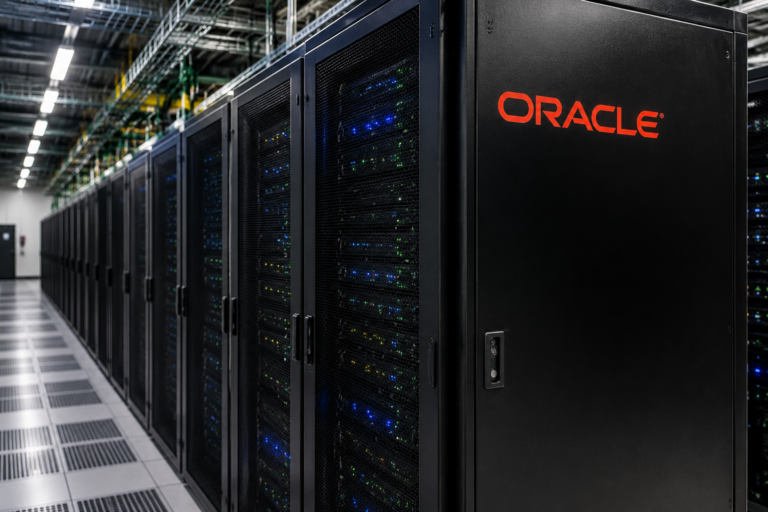
Oracle stock continued its strong freefall this week, reaching its lowest level since April last year. ORCL has slumped by over 62% from its all-time high, with Larry Ellison’s net worth plunging by $60 billion this year to $187 billion. It has become one of the top laggards in the AI space.

Oracle stock has plunged despite strong revenue and backlog growth

ORCL stock has been in a steep decline despite being one of the top beneficiaries of the artificial intelligence boom. Its most recent financial results showed that its revenue and backlog continued rising.

Its revenue jumped by 21% to $19.2 billion in the fiscal fourth quarter, with its cloud infrastructure figure rising by 93% to $5.8 billion. Its cloud apps revenue jumped by 10% to $4.1 billion.

For the year, its revenue jumped by 17% to $67 billion, with its operating cash flow rising by 54% to $32 billion.

Most importantly, the company’s RPO or backlog, jumped by $85 billion in Q4 to $638 billion, with its top clients including companies like Applied Intuition, SoundHound (SOUN), Admiral, and Kobalt. 

Wall Street analysts are bullish on the company, with the revenue estimate for the first fiscal quarter being $19.12 billion, up by 28% YoY. Its annual revenue is expected to jump 32% this year to $90 billion, followed by $130 billion next year.

Soaring debt and OpenAI deal are key risks

Despite this growth, analysts are still concerned about Oracle’s huge debt load and its overreliance on OpenAI. Of its huge RPO, $300 billion of it comes from OpenAI, a company whose growth has started slowing amid rising competition from Anthropic. The contract will start in 2027, with OpenAI buying massive amounts of AI compute.

Most importantly, there are concerns about its massive debt load and soaring capital expenditure. Its capex jumped by 162% in the last fiscal year, with its free cash flow coming in at negative $24 billion.

The company’s debt has also jumped, and this trend will continue. It ended the last year with $130 billion in debt, with the company planning to raise $40 billion through debt and equity. It raised $43 billion in debt sales and $5 billion in equity.

Investors are concerned about its soaring debt, which has pushed its yields higher. TradingView data shows that the yield of its 2034 bonds jumped to 6.518% from the year-to-date low of 5.34%. Its 2038 bonds are yielding 6.70%, while its 2027 ones are yielding 4.56%.

Still, on the positive side, the ongoing Oracle stock crash has made it a bargain, with most analysts having a favorable rating. Keycorp recently reiterated its overweight rating, while Wedbush’s Dan Ives placed a target of $240.

Bernstein has a target of $325, while Wolfe Research placed a target of $225. MarketBeat data shows that the average target for the stock is $268. 

ORCL stock technical analysis

Oracle stock chart | Source: TradingView

The daily chart shows that the ORCL stock has slumped in the past few months, moving from a high of $346.23 on September 10 last year to the current $131.5.

It recently crossed the crucial support level of $134.95, its lowest level in February and April this year.

The stock has dropped below all moving averages and the oversold level of the Murrey Math Lines tool. It also remains below the Supertrend indicator.

Therefore, the waning sentiment will likely push it lower, potentially to $120 or even $100. However, in the long term, the stock will bounce back as investors rotate from semiconductor names to hyperscalers.

The post Oracle stock drops below crucial support as its bond yields jump: now what? appeared first on Invezz

The New York Times’ stock has pulled back into a local correction, retreating from its year-to-date high of $87.18 to $75. The decline follows profit-taking after Berkshire Hathaway disclosed its stake in the company back in February. Even so, the underlying business remains strong, and that strength points to a likely rebound heading into earnings.

New York Times is not failing

President Donald Trump has always claimed that the New York Times business was failing. However, in reality, its business is booming, helped by its digital business, and its large market share in the media industry.

Unlike the Washington Post and LA Times, its business continues growing, with visitors on its website continuing to rise. Its total visits rose by 1% to 605 million in June, while The Washington Post and LA Times had 64 million and 25 million in the same period.

The most recent results showed that its business did well in the first quarter. Its digital-only subscription jumped by 16.1%, near the upper side of its range. Total subscription revenue rose by 11.3%, also higher than the guided range of between 9% and 11%.

NYT’s digital advertising revenue rose by 31%, while its advertising and affiliate, licensing and other revenues rose by 17% and 7.8%, respectively. These numbers are strong for a media company that has been in business in the last 175 years. 

Wall Street analysts suggest that its growth will continue, seeing modest growth, helped by Donald Trump’s news, upcoming midterm elections, and the resuming US-Iran war. 

The paper will also do well after the upcoming election, especially if Democrats win the House of Representatives and the Senate. They will intensify their investigations against Trump, including a potential impeachment. Polymarket data shows that there is a 66% chance that he will be impeached before his term ends.

NYT’s market share in the US and the potential revenue growth explains why it continues trading at a premium. Data shows that it has a forward price-to-earnings ratio of 28, higher than the communication sector average of 15. Its forward PEG ratio of 1.58 is also higher than the expected 1.23.

Analysts see some modest growth in the near term. UBS and Bank of America have a target of $80, while JPMorgan has a target of $82. The most optimistic analyst is Deutsche Bank, which noted that the stock may jump to $95. 

NYT stock price technical analysis

New York Times stock chart | Source: TradingView

The daily chart shows that the NYT stock has pulled back in the past few months, moving from the year-to-date high of $87 in April to $75 today. On the positive side, the stock has found support at the 200-day moving average.

The stock has slowly formed a bullish flag pattern, a common continuation sign in technical analysis. It is attempting to flip the red Supertrend indicator from red to green.

Therefore, the most likely scenario is where the stock continues rising as bulls target the year-to-date high of $87. Such a move would signal a 16% increase from the current level. The other potential target is $84, the 38.2% Fibonacci extension level. 

The post New York Times is not "failing": Here's why its stock may surge soon appeared first on Invezz

US stocks opened higher on Tuesday after softer-than-expected June inflation data reduced expectations of an immediate Federal Reserve rate hike. 

Investors also assessed second-quarter earnings from major US banks and corporate results, while keeping an eye on rising oil prices following renewed tensions in the Middle East.

The S&P 500 rose about 0.12%, while the Nasdaq Composite gained around 0.44%. 

The Dow Jones Industrial Average slipped roughly 0.29%, pressured by IBM.

The Labor Department reported that the consumer price index (CPI) rose 3.5% year over year in June, below economists’ expectations of 3.8%. 

On a monthly basis, CPI fell 0.4%, compared with forecasts for a smaller decline.

Following the report, traders significantly lowered expectations for a near-term interest rate increase. 

Market pricing showed the probability of a rate hike at the Federal Reserve’s upcoming meeting falling sharply, although expectations for a September increase remained elevated.

Investors are also awaiting Federal Reserve Chair Kevin Warsh’s semiannual monetary policy testimony before Congress later in the day for further clues on the central bank’s policy outlook.

IBM sinks as earnings season begins

Corporate earnings remained a key focus as Wall Street’s second-quarter reporting season gathered pace.

IBM shares plunged more than 25% in trading after the technology company forecast preliminary second-quarter revenue below analysts’ expectations and warned that profits would fall short because of weaker demand across its software and infrastructure businesses.

The weakness spilled over to other software companies. 

Oracle declined 0.79%, while ServiceNow and Accenture each fell more than 5% in trading.

Meanwhile, major US banks were trading up after reporting better-than-expected quarterly profits.

Goldman Sachs rose 4.2% after stronger dealmaking activity and increased market volatility helped drive record performance in its equities trading business.

Shares of JPMorgan Chase, Citigroup, Bank of America and Wells Fargo all traded higher after posting second-quarter earnings that exceeded analyst expectations.

Investors are closely watching earnings reports for signs of corporate resilience after the S&P 500’s strong rally this year, with analysts expecting second-quarter earnings growth of nearly 24% for the index.

Chip stocks rebound as oil prices remain elevated

Semiconductor stocks recovered after Monday’s sharp sell-off, helping lift the technology-heavy Nasdaq index.

The iShares Semiconductor ETF climbed about 3.6% in trading. 

The VanEck Semiconductor ETF also advanced more than 2.7%.

Among individual chipmakers, Applied Materials gained more than 4.11%, while Teradyne rose about 5.8%. 

Lam Research and Micron Technology each climbed more than 4%, and STMicroelectronics added over 2.9%.

Despite the rebound in technology shares, gains across the broader market remained limited as oil prices stayed elevated.

US crude traded above $80 a barrel, while Brent crude rose more than 4% to above $86 a barrel after President Donald Trump announced plans to reinstate a blockade on Iranian shipping through the Strait of Hormuz. 

The announcement followed renewed military exchanges between the United States and Iran and renewed concerns about global energy supplies.

The post Nasdaq rises as soft CPI eases Fed fears, IBM plunges over weak outlook appeared first on Invezz

Gold prices recovered strongly on Tuesday, reversing losses from a sharp sell-off as cooler-than-expected US inflation data reinforced expectations.

The precious metal had come under pressure in the previous session, briefly touching a two-week low as investors refrained from placing large bets ahead of the release of the US CPI data and Federal Reserve Chair Kevin Warsh’s congressional testimony.

However, sentiment shifted dramatically after inflation figures came in well below market expectations, triggering a sharp rally in bullion.

Gold recovers after sharp sell-off

In the previous session, spot gold rose 0.3% to $4,013.93 an ounce by 0300 GMT after falling to its weakest level since July 1.

US gold futures for August delivery gained 0.4% to $4,020.80.

The modest recovery came after bullion had fallen nearly 3% on Monday, marking its steepest one-day decline in more than a month.

Investors largely stayed on the sidelines ahead of key US economic data and congressional testimony from Federal Reserve Chair Kevin Warsh.

Softer inflation changes market sentiment

Investor sentiment shifted significantly after the US Bureau of Labor Statistics released its June inflation report on Tuesday.

According to the agency, the Consumer Price Index (CPI) fell 0.4% in June after increasing 0.5% in May.

The reading was considerably cooler than economists’ expectations, which had called for a decline of 0.1%.

“This decline in the all-items index was the largest 1-month decrease since April 2020, when it fell 0.8%,” the report said.

On an annual basis, headline inflation rose 3.5% over the past 12 months, easing from 4.2% recorded in the previous month.

The reading also came in below economists’ expectations of 3.8%.

Meanwhile, core CPI, which excludes volatile food and energy prices, remained unchanged in June after rising 0.2% in May.

Economists had expected another 0.2% monthly increase.

Annual core inflation slowed to 2.6% from 2.9% reported in May.

Gold jumps toward $4,100

The softer inflation data provided a significant boost to the gold market, as investors viewed the figures as giving the Federal Reserve greater flexibility to leave interest rates unchanged during the remainder of the year.

Gold prices surged nearly $60 immediately after the inflation report was released.

Although bullion remained just below the $4,100-an-ounce mark, the rally marked a sharp reversal from the weakness seen in the previous session.

Spot gold was last trading at $4,087.40 an ounce, up more than 2% on the day.

The rebound effectively erased much of the previous session’s weakness, when prices had slipped to a two-week low amid cautious positioning ahead of the inflation release.

The stronger-than-expected recovery underscored how sensitive the gold market remains to US inflation data and expectations surrounding future Federal Reserve monetary policy.

With inflation cooling more sharply than anticipated and both headline and core price pressures easing, bullion found renewed buying interest after a volatile start to the week, pushing prices back toward the key $4,100-an-ounce level.

The post Gold recovers after two-week low as softer US CPI boosts Fed outlook appeared first on Invezz

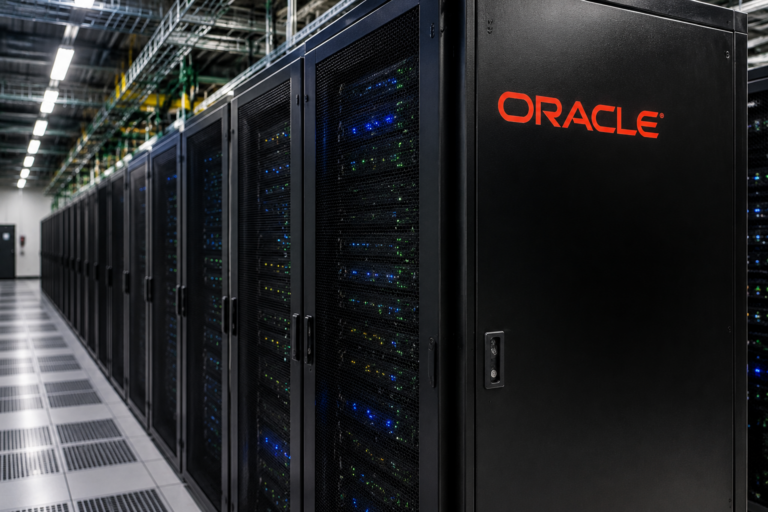
Oracle stock continued its strong freefall this week, reaching its lowest level since April last year. ORCL has slumped by over 62% from its all-time high, with Larry Ellison’s net worth plunging by $60 billion this year to $187 billion. It has become one of the top laggards in the AI space.

Oracle stock has plunged despite strong revenue and backlog growth

ORCL stock has been in a steep decline despite being one of the top beneficiaries of the artificial intelligence boom. Its most recent financial results showed that its revenue and backlog continued rising.

Its revenue jumped by 21% to $19.2 billion in the fiscal fourth quarter, with its cloud infrastructure figure rising by 93% to $5.8 billion. Its cloud apps revenue jumped by 10% to $4.1 billion.

For the year, its revenue jumped by 17% to $67 billion, with its operating cash flow rising by 54% to $32 billion.

Most importantly, the company’s RPO or backlog, jumped by $85 billion in Q4 to $638 billion, with its top clients including companies like Applied Intuition, SoundHound (SOUN), Admiral, and Kobalt. 

Wall Street analysts are bullish on the company, with the revenue estimate for the first fiscal quarter being $19.12 billion, up by 28% YoY. Its annual revenue is expected to jump 32% this year to $90 billion, followed by $130 billion next year.

Soaring debt and OpenAI deal are key risks

Despite this growth, analysts are still concerned about Oracle’s huge debt load and its overreliance on OpenAI. Of its huge RPO, $300 billion of it comes from OpenAI, a company whose growth has started slowing amid rising competition from Anthropic. The contract will start in 2027, with OpenAI buying massive amounts of AI compute.

Most importantly, there are concerns about its massive debt load and soaring capital expenditure. Its capex jumped by 162% in the last fiscal year, with its free cash flow coming in at negative $24 billion.

The company’s debt has also jumped, and this trend will continue. It ended the last year with $130 billion in debt, with the company planning to raise $40 billion through debt and equity. It raised $43 billion in debt sales and $5 billion in equity.

Investors are concerned about its soaring debt, which has pushed its yields higher. TradingView data shows that the yield of its 2034 bonds jumped to 6.518% from the year-to-date low of 5.34%. Its 2038 bonds are yielding 6.70%, while its 2027 ones are yielding 4.56%.

Still, on the positive side, the ongoing Oracle stock crash has made it a bargain, with most analysts having a favorable rating. Keycorp recently reiterated its overweight rating, while Wedbush’s Dan Ives placed a target of $240.

Bernstein has a target of $325, while Wolfe Research placed a target of $225. MarketBeat data shows that the average target for the stock is $268. 

ORCL stock technical analysis

Oracle stock chart | Source: TradingView

The daily chart shows that the ORCL stock has slumped in the past few months, moving from a high of $346.23 on September 10 last year to the current $131.5.

It recently crossed the crucial support level of $134.95, its lowest level in February and April this year.

The stock has dropped below all moving averages and the oversold level of the Murrey Math Lines tool. It also remains below the Supertrend indicator.

Therefore, the waning sentiment will likely push it lower, potentially to $120 or even $100. However, in the long term, the stock will bounce back as investors rotate from semiconductor names to hyperscalers.

The post Oracle stock drops below crucial support as its bond yields jump: now what? appeared first on Invezz

US consumer prices recorded their biggest monthly decline in more than six years in June as a sharp drop in energy prices provided temporary relief from this year’s inflation pressures.

The Consumer Price Index for All Urban Consumers (CPI-U) fell 0.4% on a seasonally adjusted basis in June after rising 0.5% in May, the Bureau of Labor Statistics (BLS) said on Tuesday.

Economists had forecast a monthly decline of 0.2%.

The decline was the largest one-month drop since April 2020, when prices fell 0.8% during the early stages of the pandemic.

On an annual basis, consumer prices increased 3.5%, down from economists’ expectations of 3.8%, according to a Dow Jones survey.

Despite the softer-than-expected reading, the report is unlikely to provide lasting relief for households or eliminate the possibility of another Federal Reserve interest rate increase later this year as tensions in the Middle East resurface and oil prices rise again.

However, the S&P futures rose on the news by 0.2%. Nasdaq 100 futures rose by 1%.

Gasoline prices provide temporary relief

The decline in headline inflation was driven largely by lower fuel costs after gasoline prices retreated from multi-year highs following a fragile ceasefire between the United States and Iran last month.

The energy index fell 5.7% in June after rising 3.9% in May, 3.8% in April, and 10.9% in March.

According to the BLS, the drop in energy prices was the single largest contributor to the decline in overall consumer prices, more than offsetting increases in food and shelter costs.

However, energy prices remain significantly higher than a year ago, with the index still up 15.7% over the past 12 months.

Food prices continued to edge higher, with the food index rising 0.2% during June, matching the increase recorded in May.

Grocery prices also climbed 0.2% over the month, while food inflation stood at 3% on an annual basis.

Core inflation remains subdued

Core inflation, which excludes the more volatile food and energy categories, was unchanged in June, bringing the annual core inflation rate to 2.6%.

Economists had expected core prices to rise 0.2% during the month and 2.9% from a year earlier.

The softer core reading suggests underlying price pressures eased during the quarter, although the outlook remains uncertain.

Middle East conflict clouds outlook

The improvement in inflation may prove short-lived.

The ceasefire between the US and Iran collapsed last week after commercial vessels came under attack in the Strait of Hormuz, triggering renewed military strikes between the two countries.

Fuel prices have already begun moving higher again.

According to motorist advocacy group AAA, the national average gasoline price rose to $3.86 a gallon on Tuesday from $3.79 a week earlier.

Oil prices also climbed to a four-week high after President Donald Trump announced that the United States would reinstate a naval blockade around Iran, targeting the Strait of Hormuz, one of the world’s most critical oil shipping routes.

Further increases in energy prices could quickly feed back into consumer inflation over the coming months.

The Federal Reserve left its benchmark interest rate unchanged at 3.50%-3.75% during its June meeting, although updated projections showed policymakers increasingly leaning toward another rate increase in 2026.

Before Tuesday’s inflation report, futures markets tracked by CME FedWatch indicated investors were assigning roughly a 51.9% probability that the Fed would raise interest rates at its September 15-16 policy meeting.

The latest inflation data may temper those expectations somewhat, but renewed pressure on oil prices could keep policymakers cautious.

The post US CPI falls sharply in June as energy prices tumble, but relief may be shortlived appeared first on Invezz

The New York Times’ stock has pulled back into a local correction, retreating from its year-to-date high of $87.18 to $75. The decline follows profit-taking after Berkshire Hathaway disclosed its stake in the company back in February. Even so, the underlying business remains strong, and that strength points to a likely rebound heading into earnings.

New York Times is not failing

President Donald Trump has always claimed that the New York Times business was failing. However, in reality, its business is booming, helped by its digital business, and its large market share in the media industry.

Unlike the Washington Post and LA Times, its business continues growing, with visitors on its website continuing to rise. Its total visits rose by 1% to 605 million in June, while The Washington Post and LA Times had 64 million and 25 million in the same period.

The most recent results showed that its business did well in the first quarter. Its digital-only subscription jumped by 16.1%, near the upper side of its range. Total subscription revenue rose by 11.3%, also higher than the guided range of between 9% and 11%.

NYT’s digital advertising revenue rose by 31%, while its advertising and affiliate, licensing and other revenues rose by 17% and 7.8%, respectively. These numbers are strong for a media company that has been in business in the last 175 years. 

Wall Street analysts suggest that its growth will continue, seeing modest growth, helped by Donald Trump’s news, upcoming midterm elections, and the resuming US-Iran war. 

The paper will also do well after the upcoming election, especially if Democrats win the House of Representatives and the Senate. They will intensify their investigations against Trump, including a potential impeachment. Polymarket data shows that there is a 66% chance that he will be impeached before his term ends.

NYT’s market share in the US and the potential revenue growth explains why it continues trading at a premium. Data shows that it has a forward price-to-earnings ratio of 28, higher than the communication sector average of 15. Its forward PEG ratio of 1.58 is also higher than the expected 1.23.

Analysts see some modest growth in the near term. UBS and Bank of America have a target of $80, while JPMorgan has a target of $82. The most optimistic analyst is Deutsche Bank, which noted that the stock may jump to $95. 

NYT stock price technical analysis

New York Times stock chart | Source: TradingView

The daily chart shows that the NYT stock has pulled back in the past few months, moving from the year-to-date high of $87 in April to $75 today. On the positive side, the stock has found support at the 200-day moving average.

The stock has slowly formed a bullish flag pattern, a common continuation sign in technical analysis. It is attempting to flip the red Supertrend indicator from red to green.

Therefore, the most likely scenario is where the stock continues rising as bulls target the year-to-date high of $87. Such a move would signal a 16% increase from the current level. The other potential target is $84, the 38.2% Fibonacci extension level. 

The post New York Times is not "failing": Here's why its stock may surge soon appeared first on Invezz

US stocks opened higher on Tuesday after softer-than-expected June inflation data reduced expectations of an immediate Federal Reserve rate hike. 

Investors also assessed second-quarter earnings from major US banks and corporate results, while keeping an eye on rising oil prices following renewed tensions in the Middle East.

The S&P 500 rose about 0.12%, while the Nasdaq Composite gained around 0.44%. 

The Dow Jones Industrial Average slipped roughly 0.29%, pressured by IBM.

The Labor Department reported that the consumer price index (CPI) rose 3.5% year over year in June, below economists’ expectations of 3.8%. 

On a monthly basis, CPI fell 0.4%, compared with forecasts for a smaller decline.

Following the report, traders significantly lowered expectations for a near-term interest rate increase. 

Market pricing showed the probability of a rate hike at the Federal Reserve’s upcoming meeting falling sharply, although expectations for a September increase remained elevated.

Investors are also awaiting Federal Reserve Chair Kevin Warsh’s semiannual monetary policy testimony before Congress later in the day for further clues on the central bank’s policy outlook.

IBM sinks as earnings season begins

Corporate earnings remained a key focus as Wall Street’s second-quarter reporting season gathered pace.

IBM shares plunged more than 25% in trading after the technology company forecast preliminary second-quarter revenue below analysts’ expectations and warned that profits would fall short because of weaker demand across its software and infrastructure businesses.

The weakness spilled over to other software companies. 

Oracle declined 0.79%, while ServiceNow and Accenture each fell more than 5% in trading.

Meanwhile, major US banks were trading up after reporting better-than-expected quarterly profits.

Goldman Sachs rose 4.2% after stronger dealmaking activity and increased market volatility helped drive record performance in its equities trading business.

Shares of JPMorgan Chase, Citigroup, Bank of America and Wells Fargo all traded higher after posting second-quarter earnings that exceeded analyst expectations.

Investors are closely watching earnings reports for signs of corporate resilience after the S&P 500’s strong rally this year, with analysts expecting second-quarter earnings growth of nearly 24% for the index.

Chip stocks rebound as oil prices remain elevated

Semiconductor stocks recovered after Monday’s sharp sell-off, helping lift the technology-heavy Nasdaq index.

The iShares Semiconductor ETF climbed about 3.6% in trading. 

The VanEck Semiconductor ETF also advanced more than 2.7%.

Among individual chipmakers, Applied Materials gained more than 4.11%, while Teradyne rose about 5.8%. 

Lam Research and Micron Technology each climbed more than 4%, and STMicroelectronics added over 2.9%.

Despite the rebound in technology shares, gains across the broader market remained limited as oil prices stayed elevated.

US crude traded above $80 a barrel, while Brent crude rose more than 4% to above $86 a barrel after President Donald Trump announced plans to reinstate a blockade on Iranian shipping through the Strait of Hormuz. 

The announcement followed renewed military exchanges between the United States and Iran and renewed concerns about global energy supplies.

The post Nasdaq rises as soft CPI eases Fed fears, IBM plunges over weak outlook appeared first on Invezz