Archive

July 15, 2026

Browsing

Derive (DRV) has emerged as one of the strongest-performing cryptocurrencies over the past 24 hours, posting a 52% gain while much of the broader digital asset market traded with little direction.

The sharp price surge has pushed the token close to its all-time high and drawn renewed attention to the decentralized derivatives protocol.

The rally comes after a series of major exchange listings, with South Korea’s leading crypto exchanges, Upbit and Bithumb, adding support for DRV trading.

The listings have expanded access to one of the world’s most active cryptocurrency markets and triggered a surge in trading activity, giving investors a clear catalyst behind the latest price move.

Upbit and Bithumb listings spark strong buying interest

The biggest driver behind DRV’s rally is its simultaneous listing on Upbit and Bithumb on July 14.

Upbit launched trading for DRV against KRW, BTC and USDT, giving South Korean traders multiple ways to access the token.

https://twitter.com/DeriveXYZ/status/2076905813915074792?s=20

Bithumb also added DRV trading, further increasing its exposure in a market known for high retail participation and strong liquidity.

https://twitter.com/BithumbOfficial/status/2076908264701440110?s=20

Exchange listings often create fresh demand because they make a token available to a much larger pool of investors. And in DRV’s case, the impact was immediate.

The token climbed to $0.1802, representing a 52% gain in 24 hours, while the day’s trading range stretched from $0.1148 to $0.1914.

The move also brought DRV within roughly 21% of its all-time high of $0.2283.

Notably, earlier this year, DRV secured a listing on Coinbase, giving the token broader exposure in the United States.

The token also recently secured a listing on Hyperliquid.

Trading volume confirms the strength of the breakout

Price gains supported by strong trading activity generally attract closer attention than moves that occur on thin volume.

In DRV’s case, trading activity accelerated dramatically after the exchange listings.

Daily trading volume surged by more than 10,000%, reaching approximately $50.9 million, according to market data shared following the listings.

That sharp increase suggests the rally was accompanied by significant market participation rather than isolated buying.

Key DRV price levels traders should watch

Following the sharp rally, attention has shifted to whether DRV can maintain its gains.

The $0.15 area has emerged as an important support level after the breakout.

Holding above $0.15 would indicate that buyers continue to defend the gains made after the Upbit and Bithumb listings.

On the upside, the recent high near $0.18 to $0.1914 represents the first area of resistance.

A sustained move above that range would leave DRV trading even closer to its record high of $0.2283.

Derive price chart

But if momentum weakens and the token falls below $0.15, traders will likely focus on the region around $0.12, which marked the approximate trading range before the listing-driven rally began.

Another development investors should monitor is a governance proposal that would increase DRV’s total token supply by 50%.

Although the proposal has not overshadowed the recent rally, it remains a factor that market participants are watching alongside future protocol updates and adoption.

The post Why is Derive (DRV) price going up? Upbit and Bithumb listings fuel 52% rally appeared first on Invezz

London’s FTSE 100 slipped on Wednesday as investors remained cautious over escalating tensions in the Middle East.

Losses in precious metals miners outweighed gains in energy stocks, which benefited from a rise in oil prices.

The blue-chip FTSE 100 index had fallen 0.1% to 10,515.73 points.

The midcap FTSE 250 index also edged lower, declining 0.09%.

Precious metal miners lead sector losses

Precious metals miners emerged as the weakest-performing sector during the session, falling 2.3%.

Fresnillo dropped 2.8%, while Endeavour Mining declined 2%, placing both companies among the biggest losers on the benchmark index.

The sector’s decline weighed on the broader market and offset strength seen elsewhere.

Energy stocks advance as oil prices climb

Energy shares rose 0.3% after oil prices climbed around 2%.

The increase followed renewed geopolitical tensions after US President Donald Trump reimposed a naval blockade on all Iranian ports.

Higher oil prices provided support for energy companies, making the sector one of the day’s strongest performers.

Personal goods sector posts strongest gains

The personal goods index led sectoral advances, rising 2.4%.

Watches of Switzerland Group climbed 4.8% after Barclays and UBS both raised their target prices for the stock.

The brokerage upgrades helped lift sentiment across the sector.

OECD highlights UK’s economic challenges

The OECD said Britain must maintain fiscal discipline, address rising pension costs, and tackle high energy prices to strengthen economic growth.

The organisation’s comments underscored the economic challenges facing Andy Burnham, who is set to become prime minister next week.

On Tuesday, the FTSE 100 closed higher as banking stocks led gains following strong earnings from major US lenders, marking the start of the corporate reporting season.

Investor sentiment also improved after softer-than-expected US inflation data fuelled expectations of a delay in interest rate cuts.

Individual stocks in focus

Rio Tinto gained 1.1% after the mining company reported better-than-expected second-quarter iron ore sales.

The company attributed the performance to strong operational execution.

Discount retailer B&M was among the biggest fallers, with its shares dropping 6.9%.

The company reported a 2.3% decline in first-quarter like-for-like sales in its core UK market.

It said a slow start to the gardening season weighed on trading, although growth in France helped increase overall group revenue.

Meanwhile, housebuilder Barratt Redrow advanced 3.3% after announcing plans to return £400 million ($536 million) to shareholders through share buybacks instead of dividends.

The market remains cautious

Overall, London’s equity market traded slightly lower as investors balanced the impact of escalating geopolitical tensions against company-specific developments and sector performance.

While higher oil prices lifted energy stocks, declines in precious metals miners limited gains across the broader market.

Investors also continued to monitor corporate earnings and economic developments, with attention remaining on fiscal policy and growth prospects in the UK.

The post FTSE 100 edges lower as Middle East tensions weigh on sentiment appeared first on Invezz

Morgan Stanley has identified three stocks that could outperform as the second-quarter earnings season gets underway. The Wall Street bank highlighted GE Vernova (NYSE: GEV), Lam Research (NASDAQ: LRCX), and United Airlines (NASDAQ: UAL) among its top picks, citing expectations that they will deliver strong quarterly earnings. 

GE Vernova 

GE Vernova stock has done well this year, helped by the rising demand for power equipment amid the artificial intelligence boom. It has soared by 61% this year and by nearly 100% in the last 12 months.

Recently, however, the stock has wavered and now sits a few points below its all-time high. Even so, Morgan Stanley analysts believe that the company will bounce back after its earnings on July 22. It expects it to publish stronger-than-expected numbers, helped by its new gas turbine contracts.

The management has already hinted that it will sell out its gas turbines reservations through 2030. Morgan Stanley’s Michael Wilson said:

“Capex is broadening beyond data centers and reshoring progress suggests the U.S. industrial economy may be entering a sustained growth cycle as international production becomes more expensive than domestic.”

MarketBeat data shows that the average target for GEV stock among analysts is $1,089, slightly above the current $1,067. Bernstein has a target of $1,206, while Jefferies recently lowered the target to $1,210 from the previous $1,350.

United Airlines

Morgan Stanley is also bullish on United Airlines as it expects the giant to issue a positive forward guidance for the rest of the year. Its stock has jumped by 7% this year and by 43% from its lowest point this year. This rebound happened as the US and Iran started their ceasefire, which brought jet fuel prices lower.

The risk, however, is that the two countries have resumed their fighting, pushing oil prices higher. Brent and WTI have all jumped to over $80 this week, which will translate into higher jet fuel prices. Morgan Stanley wrote:

“Airline demand and booking intent remain healthy, with seven consecutive price increases absorbed without demand destruction. With oil prices moving lower, airlines are unlikely to roll back pricing, though sustained demand will remain the key test.”

Analysts are largely bullish on the stock, with those from Susquehanna, Cowen, Goldman Sachs, BMO, and Bernstein boosting their targets this month. 

READ MORE: Top reasons a United Airlines and American merger is unlikely to happen

Lam Research

Morgan Stanley analysts are also bullish on Lam Research, a company whose stock has more than doubled this year. After hitting a record high of $437 in June, Lam shares have dropped by 20% to the current $346.

Morgan Stanley believes that the company will release better-than-estimated revenue and earnings. It will then boost its earnings per share as it has done in the past. The statement said:

“AI demand remains robust with rising token prices and continued strength across the ecosystem despite recent market pullbacks. New equipment orders are improving.” 

Analysts are also bullish on Lam Research even as its valuation concerns remain. The company has a forward price-to-earnings ratio of 62, much higher than other top companies like Nvidia, Micron, and SanDisk. 

Stifel raised its target from $325 to $425, while Needham boosted the target from $300 to $390. Other analysts who boosted their target for the shares are from Mizuho, Susquehanna, and Cantor Fitzgerald.

READ MORE: Applied Materials stock jumps as Meta AI chip plan lifts semiconductor names

The post Buy GE Vernova, Lam Research, United Airlines stocks: Morgan Stanley appeared first on Invezz

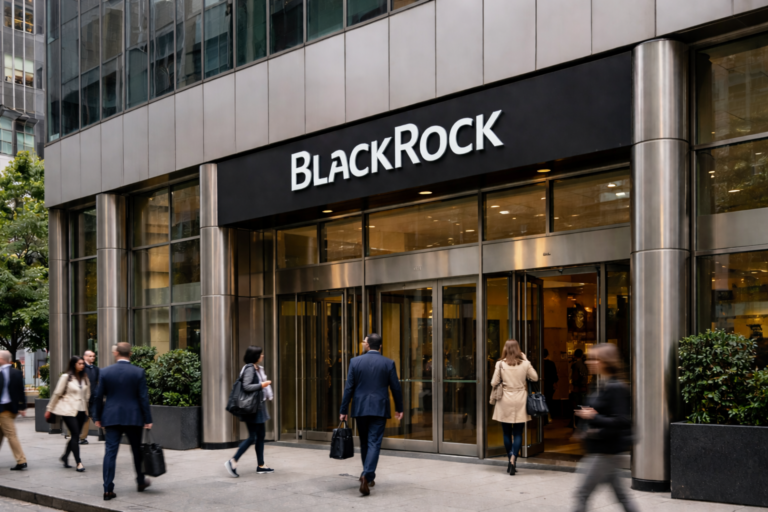
BlackRock (BLK) shares climbed in premarket trading on Wednesday after the world’s largest asset manager reported second-quarter earnings, revenue and assets under management that exceeded Wall Street expectations.

The company reported adjusted net income of $2.3 billion for the quarter, up 22% from a year earlier, while assets under management (AUM) rose 22% year over year to a record $15.3 trillion, marking the first time the firm has crossed the $15 trillion milestone.

Adjusted earnings per share came in at $13.91, well above analysts’ estimates of about $12.65

Revenue increased 31% from the prior year to $7.1 billion, beating consensus expectations of roughly $6.7 billion.

BlackRock shares rose 5% in premarket trading following the results.

Earnings and revenue beat Wall Street expectations

BlackRock delivered stronger-than-expected financial results across its key metrics, extending the momentum seen earlier this year.

Revenue growth was supported by growth across the firm’s investment businesses and contributions from its private markets platform. 

The company also reported adjusted net income of $2.3 billion, reflecting continued growth in profitability.

Chief Executive Officer Larry Fink said the firm’s operating environment remains favorable.

“Market fundamentals are strong and well supported, with higher margins and earnings momentum catalyzed by new technology,” Fink said in a statement. “Flows in the first six months of 2026 more than doubled year-over-year.”

He added: Our momentum is accelerating, and I’ve never been more optimistic about the growth ahead.”

Record inflows push assets above $15 trillion

Client inflows remained a major driver of BlackRock’s growth during the quarter.

The firm attracted $192 billion of net client inflows during the second quarter, while total long-term net inflows reached $199 billion, exceeding the $170 billion average estimate compiled by Bloomberg.

BlackRock’s exchange-traded fund business accounted for the majority of new client money, bringing in $178 billion of net inflows.

Actively managed investment strategies also attracted strong demand, with investors adding $53 billion on a net basis.

For the first half of 2026, BlackRock reported record net inflows of $321 billion.

The growth lifted total assets under management to $15.3 trillion, up from $13.9 trillion at the end of the first quarter and $12.5 trillion a year earlier.

Private markets continue driving growth

BlackRock also continued expanding its higher-margin private markets and alternatives businesses.

The company reported 8% growth in organic base fees, marking the eighth consecutive quarter in which organic base fee growth exceeded 5%. 

Performance fees increased by $211 million compared with the prior-year period, primarily due to stronger revenue from alternative investment products.

Alternative and liquid private assets generated $22 billion of inflows during the quarter, compared with $14.6 billion in the previous quarter.

Private markets accounted for $15.4 billion of those inflows.

BlackRock said revenue also benefited from fees associated with its acquisition of HPS Investment Partners, the private credit firm it agreed to acquire for $12 billion in 2025.

Reflecting confidence in its growth outlook, the company increased its planned share repurchases for 2026 to $2 billion.

The post BlackRock stock jumps 5% as Q2 earnings, AUM and inflows top estimates appeared first on Invezz

Lucid Group stock is attempting to rebound today, July 15, after plunging more than 40% in the previous session. LCID rose by about 2% in premarket trading to $4.73, recovering modestly from its lowest level of the week.

Lucid Group stock rises after denying it’s going bankrupt or private

LCID stock crawled back after a report by an electric vehicle blog said that it had hired restructuring advisors. It added that the company was considering either going private or filing for bankruptcy protections. In a separate report, Bloomberg said that it had hired AlixPartners, a popular restructuring specialist.

In a statement, Lucid denied these allegations and maintained that it had adequate liquidity to carry out its operations well into next year. The statement added that:

“The company has sufficient liquidity to carry its operations well into next year, as recently published in its last quarterly filings, and it has not formed any special Board committee to explore the scenarios reported today.”

Instead, the company plans to use AlixPartners for advice on execution, strengthening its operations, and positioning itself to realize the full potential. The statement added that:

“AlixPartners is assisting us in that and nothing else and has not recommended bankruptcy to management or the Board.”

Lucid Group’s business remains in trouble

Still, despite the assurance, the company’s business remains under pressure, with profitability remaining elusive. The most recent results showed that its loss from operations soared to over $989 million in Q1 from $691 million in the same period last year. 

Its net loss soared to over $1.02 billion from $366 million in Q1’25. This surge happened as its operational costs, including research and development, selling, general and administrative (SG&A) costs, jumped. 

Lucid has never made a profit, and analysts expect that its path to profitability remains elusive. Its total loss last year was over $2.7 billion and is burning about $1 billion a quarter. 

Analysts do not expect the company to become profitable over the next few years. According to Yahoo Finance estimates, it is projected to post a loss of $7.97 per share this year, an improvement from the $10.00 per share loss reported last year. 

Losses are expected to narrow further to $4.75 per share next year, signaling progress toward profitability despite the company remaining in the red.

Lucid ended the last quarter with $700 million in cash and cash equivalents and $1.46 billion worth of inventories. As a result, with the company burning at least $1 billion a quarter, it will need to raise additional capital. 

Lucid has always raised cash from Saudi Arabia’s PIF, which owns a 45.38% stake in the company. It has also raised cash through equity issuances, which has pushed its outstanding shares to 390 million from 164 million in 2021. 

This dilution will likely continue as it continues to boost its balance sheet and turnaround efforts. These efforts have included layoffs, and AlixPartners has recommended more measures, including slowing its European expansion and accelerating its relationship with Uber. Uber holds a 3.51% stake in the company.

What next for LCID stock?

Looking ahead, Lucid Group’s stock is likely to remain highly volatile. Historically, sharp sell-offs are often followed by dip-buying as investors look to capitalize on the decline. 

However, these initial rebounds can sometimes turn out to be a dead-cat bounce—a temporary recovery in the price of a stock that is otherwise in a sustained downtrend.

The alternative scenario is where the stock continues falling as investors dump the stock as bankruptcy fears rise.

The post Lucid Group stock has crashed amid bankruptcy fears: Is it safe to buy the dip? appeared first on Invezz

US stocks opened higher on Wednesday after investors responded to another softer-than-expected inflation report and a fresh round of corporate earnings.

Chip stocks fell even after upbeat guidance from ASML.

The Dow Jones Industrial Average added roughly 148 points, or 0.28%.

The S&P 500 rose 0.47%, while the Nasdaq Composite gained about 0.67%.

The gains came after data showed that the Producer Price Index (PPI) unexpectedly declined 0.3% in June, compared with expectations for no monthly change.

The report followed Tuesday’s weaker-than-expected Consumer Price Index reading, reinforcing expectations that inflationary pressures may be easing.

Market participants reduced expectations for an immediate Federal Reserve interest rate increase following the latest inflation data.

According to CME’s FedWatch Tool, the probability of a rate hike at the Fed’s July meeting fell to around 16%-17%, down sharply from more than 40% before Tuesday’s CPI report.

However, traders continued to expect at least one rate increase later this year, with markets assigning a high probability of a September hike.

Investors were also awaiting the second day of Federal Reserve Chair Kevin Warsh’s testimony before Congress after he cautioned on Tuesday that a single inflation reading was not sufficient to declare victory over rising prices.

Corporate earnings remain in focus

Second-quarter earnings continued to shape market sentiment, with another round of financial companies reporting results.

BlackRock shares climbed more than 7% in trading after the asset manager reported quarterly earnings that exceeded analyst expectations, supported by higher client asset values during the market rally.

Morgan Stanley also topped Wall Street profit estimates for the second quarter, benefiting from stronger mergers and acquisitions activity. Its shares traded modestly higher before the opening bell.

The strong bank results helped reinforce optimism surrounding the early stages of the earnings season.

Investors are closely monitoring corporate earnings after the S&P 500 has gained more than 10% this year and closed Tuesday less than 1% below its June record high.

Elsewhere, PayPal surged nearly 15% in trading after Reuters reported that payments company Stripe and private equity firm Advent International had jointly offered to acquire the company for $60.50 per share, representing a significant premium to its previous closing price.

Not all earnings reactions were positive.

Elevance Health fell 11% despite raising its annual profit forecast, as investors viewed the revised outlook as falling short of expectations.

Chip stocks falls even as ASML raises outlook

Semiconductor reversed premarket gains after ASML raised its financial outlook for 2026 for the second time this year, reinforcing confidence in continued artificial intelligence-driven demand.

The VanEck Semiconductor ETF was in red. ASML rose around 1%, while Intel and Lam Research fell more than 0.5%.

Despite the improved inflation outlook, geopolitical developments continued to limit broader market enthusiasm.

Oil prices remained elevated after the US military launched another round of strikes against Iran.

West Texas Intermediate crude futures rose about 0.6% to trade above $79 per barrel, while Brent crude futures gained roughly 0.7% to trade above $85 per barrel.

The post Dow rises 140 points as softer inflation, BlackRock, PayPal lift US stocks appeared first on Invezz

US stock futures edged higher on Wednesday as investors weighed a blockbuster takeover approach for PayPal against fresh inflation data and another test of corporate earnings.

Dow futures were up 15 points, S&P 500 futures gained 0.1%, while Nasdaq-100 futures advanced 0.4%.

The gains followed a strong start to bank earnings and a softer-than-expected consumer-price report, which reduced fears of an immediate Federal Reserve rate rise.

Still, with the S&P 500 less than 1% below its June record, the bar for earnings remains high. PayPal and ASML led premarket gainers, while oil remained a key risk.

5 things to know before Wall Street opens

1. PayPal becomes the morning’s biggest mover

PayPal surged as much as 18.5% in premarket trading after Stripe and Advent International reportedly offered $60.50 a share for the payments company.

The proposal values PayPal at more than $53 billion and represents a roughly 28% premium to Tuesday’s close.

The approach is backed by about $50 billion of committed financing, although PayPal has not engaged and there is no certainty a transaction will follow.

2. Futures extend the post-CPI advance

The softer June inflation report encouraged investors to add risk before the opening bell. However, the market’s proximity to record levels leaves little room for weak guidance.

The S&P 500 has gained more than 10% this year, making earnings delivery increasingly important to the next stage of the rally.

3. Producer prices provide the next inflation test

June producer-price data are due at 8:30 am ET and will show whether pipeline pressures are easing alongside consumer inflation.

Traders now see about a 17% chance of a quarter-point increase at the Fed’s July 28-29 meeting, down from roughly 41% before Tuesday’s CPI report.

Fed Chair Kevin Warsh will also begin the second day of his semi-annual testimony at 10 am.

His message on Tuesday was cautious, with policymakers still seeking more evidence that the improvement in inflation can be sustained.

4. Financial earnings remain in focus

BlackRock reported a 20% increase in second-quarter profit to $1.91 billion as rising markets lifted assets under management to $15.34 trillion.

Its shares gained in premarket trading.

Morgan Stanley reports at about 7:30 am, with investors watching trading revenue, wealth-management flows and the rebound in investment banking.

5. ASML lifts chips, but Iran remains an overhang

US-listed ASML shares rose 3.8% after the company increased its 2026 sales outlook to €43 billion to €45 billion.

Second-quarter revenue reached €9.33 billion, strengthening confidence that AI-related chip spending remains robust.

That optimism is being tempered by fresh Middle East threats.

Iran’s Revolutionary Guard warned that it could target other export corridors benefiting the US and its allies after Washington restored a blockade on Iranian ports.

Any broader disruption could push oil higher and revive the inflation concerns that Tuesday’s CPI report had briefly eased.

The post Nasdaq futures soar 150 points: 5 things to know before Wall Street opens appeared first on Invezz

Netflix will report its second-quarter earnings on Thursday, with investors looking for signs that the streaming giant can reignite growth after its shares fell about 20% this year.

While Netflix has consistently outperformed expectations over the past few years, concerns over slowing engagement, moderating subscriber growth, and increasing competition have weighed on investor sentiment.

The company’s outlook for the second half of the year is expected to be the biggest catalyst for the stock, but some analysts are also saying that with a lack of hit programs, more investors are expecting Netflix to lower its full-year numbers.

Wall Street expects NFLX to report revenue of $12.57 billion for the quarter, representing year-over-year growth of about 13%, while earnings are projected at $0.79 per share, nearly 10% higher than the corresponding period last year.

The company beat analyst estimates in the previous quarter with revenue of $12.25 billion, up 16.2% year over year.

However, weaker earnings guidance and revenue forecasts that merely matched consensus disappointed investors.

Revenue growth in international markets will be under scrutiny

The biggest question heading into the earnings release is whether Netflix can return to faster revenue growth.

The market currently expects revenue growth of 13.5% year over year, slower than the 15.9% recorded in the same quarter last year.

Morningstar analyst Matthew Dolgin said investors would closely watch whether sales growth begins accelerating again or whether management raises its guidance for 2026.

“We believe total sales growth will likely need to return to about 15% to ease market fears that organic growth is slowing and prompt reacceleration,” Dolgin said.

He added that investors would also pay close attention to the contribution from domestic and international markets.

Price increases introduced in the United States are expected to support revenue this year, but any slowdown overseas could become a larger concern.

“We believe that if international growth slows, that’s a bad sign for future growth,” Dolgin said.

Strategy and acquisitions in focus

Beyond the headline numbers, analysts expect management commentary on long-term strategy to drive investor reaction.

Netflix has increasingly diversified beyond traditional streaming, expanding into live sports, entertainment events, and advertising.

Morningstar believes investors will be looking for updates on potential acquisitions and sports rights.

“We will look for any commentary on interest in NBCUniversal being spun out from Comcast or in going after bigger sports rights (like the NFL). Netflix seems to be on the hunt for acquisitions, shifting away from how they’ve historically run their business in an effort to reaccelerate growth,” Dolgin said.

Analysts believe such moves could help Netflix broaden its content offering while improving engagement and monetisation over the longer term.

Options market signals optimism ahead of earnings

The options market is signalling cautious optimism ahead of Netflix’s earnings announcement, with traders positioning for a potential upside surprise despite the stock’s 20% decline this year.

According to data from ThinkOrSwim as reported by CNBC, call option volumes outpaced puts by two-to-one during both Friday and Monday’s trading sessions.

By midday on Monday, traders were buying nearly three times as many call options as puts, while one of the most actively traded strategies involved selling at-the-money puts, a position that generally reflects confidence that the stock will hold above current levels.

Technical indicators are also attracting attention.

Netflix shares, trading around $75, are hovering near the level where the company abandoned its pursuit of Warner Bros. Discovery in February.

The stock is also testing key long-term support levels that some market participants believe could provide a floor.

“Netflix is now testing a rising 200-week moving average as well as the $70 prior resistance-turned-breakout level from late 2021,” Todd Gordon, founder and chief investment officer at Inside Edge Capital, said.

“Should this $70 technical support hold, it may be time to consider changing the channel back to NFLX.”

Options markets are currently pricing in a post-earnings move of about 7.6%, according to Cboe LiveVol data, broadly in line with the stock’s average realised move of 7.4% following earnings announcements over the past year.

Netflix shares have declined after each of its last four quarterly earnings reports, following gains after the preceding three announcements, suggesting investors remain cautious despite the recent increase in bullish positioning in the options market.

BofA reiterates Buy rating ahead of earnings

Bank of America remains among the most bullish brokerages on Netflix despite the recent correction.

The firm reiterated its Buy rating and maintained a $125 price target, implying roughly 70% upside from current levels.

According to Bank of America, much of this year’s decline reflects concerns over engagement trends, artificial intelligence’s impact on content creation, and heightened competition following recent consolidation in the media industry.

However, the brokerage argued that Netflix has repeatedly overcome similar periods of investor pessimism.

It noted that slowing subscriber growth in 2022 pushed the stock down more than 50%, before initiatives including paid sharing and the advertising-supported tier helped restore growth.

The analysts said management has “consistently demonstrated an ability to adapt to changing market conditions, execute effectively and create long-term shareholder value.”

Bank of America expects largely in-line quarterly results but believes stronger guidance or encouraging commentary on engagement and acquisitions could improve sentiment.

Engagement concerns remain

Morgan Stanley has taken a more cautious stance, lowering its price target to $90 from $115 while maintaining an Overweight rating.

The brokerage expects second-quarter results and third-quarter guidance to broadly match expectations, with the company likely reaffirming its full-year outlook.

Morgan Stanley also said it hopes to see a more aggressive share buyback programme.

While credit card data suggests subscriber churn increased after recent price hikes, the firm believes Netflix retains significant long-term pricing power.

It also expects the company’s growing portfolio of live events and sports programming to support engagement during the second half of the year.

Meanwhile, KeyBanc Capital Markets warned that investor expectations have become increasingly cautious.

“Given currency movement and a lack of hit programs, we believe more investors are expecting Netflix to lower full-year numbers,” analyst Justin Patterson said.

“The narrative around Netflix reminds us of 2022, as concerns around engagement have evoked concerns around long-term growth and driven P/E multiple compression,” he said.

“2022’s challenges were addressed with an ad-tier and paid sharing. This time around, we believe levers will likely center around content and product diversification (both through TF1-type partnerships and live events) that aid perceived content quality and support better monetization per hour.”

KeyBanc also reduced its price target to $92, maintaining an Overweight rating.

With expectations relatively subdued after the stock’s decline this year, analysts say Thursday’s earnings may matter less than management’s outlook on growth, engagement and strategic priorities for the remainder of 2026.

The post Netflix stock is down 20% in 2026: can Thursday's earnings reverse the slide? appeared first on Invezz


London’s FTSE 100 slipped on Wednesday as investors remained cautious over escalating tensions in the Middle East.

Losses in precious metals miners outweighed gains in energy stocks, which benefited from a rise in oil prices.

The blue-chip FTSE 100 index had fallen 0.1% to 10,515.73 points.

The midcap FTSE 250 index also edged lower, declining 0.09%.

Precious metal miners lead sector losses

Precious metals miners emerged as the weakest-performing sector during the session, falling 2.3%.

Fresnillo dropped 2.8%, while Endeavour Mining declined 2%, placing both companies among the biggest losers on the benchmark index.

The sector’s decline weighed on the broader market and offset strength seen elsewhere.

Energy stocks advance as oil prices climb

Energy shares rose 0.3% after oil prices climbed around 2%.

The increase followed renewed geopolitical tensions after US President Donald Trump reimposed a naval blockade on all Iranian ports.

Higher oil prices provided support for energy companies, making the sector one of the day’s strongest performers.

Personal goods sector posts strongest gains

The personal goods index led sectoral advances, rising 2.4%.

Watches of Switzerland Group climbed 4.8% after Barclays and UBS both raised their target prices for the stock.

The brokerage upgrades helped lift sentiment across the sector.

OECD highlights UK’s economic challenges

The OECD said Britain must maintain fiscal discipline, address rising pension costs, and tackle high energy prices to strengthen economic growth.

The organisation’s comments underscored the economic challenges facing Andy Burnham, who is set to become prime minister next week.

On Tuesday, the FTSE 100 closed higher as banking stocks led gains following strong earnings from major US lenders, marking the start of the corporate reporting season.

Investor sentiment also improved after softer-than-expected US inflation data fuelled expectations of a delay in interest rate cuts.

Individual stocks in focus

Rio Tinto gained 1.1% after the mining company reported better-than-expected second-quarter iron ore sales.

The company attributed the performance to strong operational execution.

Discount retailer B&M was among the biggest fallers, with its shares dropping 6.9%.

The company reported a 2.3% decline in first-quarter like-for-like sales in its core UK market.

It said a slow start to the gardening season weighed on trading, although growth in France helped increase overall group revenue.

Meanwhile, housebuilder Barratt Redrow advanced 3.3% after announcing plans to return £400 million ($536 million) to shareholders through share buybacks instead of dividends.

The market remains cautious

Overall, London’s equity market traded slightly lower as investors balanced the impact of escalating geopolitical tensions against company-specific developments and sector performance.

While higher oil prices lifted energy stocks, declines in precious metals miners limited gains across the broader market.

Investors also continued to monitor corporate earnings and economic developments, with attention remaining on fiscal policy and growth prospects in the UK.

The post FTSE 100 edges lower as Middle East tensions weigh on sentiment appeared first on Invezz

Pepperstone, a leading CFD broker, today announced the expansion of its Perpetual CFD offering as financial markets increasingly move toward continuous trading.

The rollout extends perpetual market access beyond digital assets, reflecting a broader shift underway across global finance, where investors are demanding markets that operate around the clock rather than within traditional exchange hours.

Perpetual futures have become one of the fastest-growing product categories in global markets, with annual trading volumes estimated to have exceeded $90 trillion in 2025.

At the same time, industry estimates suggest tokenised financial assets could grow from around $35 billion today to approximately $2 trillion by 2030, reinforcing the shift towards always-on, blockchain-based markets.

Together, these developments point to a future where ownership becomes increasingly digital, liquidity becomes continuous, and market access extends well beyond traditional exchange hours.

Perpetual markets first emerged in digital assets, predominantly in the crypto space.

Pepperstone is helping bring that innovation into the regulated world, extending perpetual access across traditional asset classes as global financial markets continue their evolution toward continuous trading.

Having launched SPCX.US-PERP, a synthetic perpetual CFD referencing SpaceX, Pepperstone is now accelerating the next phase of its rollout.

Gold, Silver, Nasdaq, S&P 500, WTI, and Brent Crude perpetual CFDs are among the instruments planned for launch, extending 24/7 market access across metals, indices, and energy markets.

All products will be available through Pepperstone’s regulated CFD framework, utilizing its global regulatory licenses, which provide traders with access to perpetual market mechanics via familiar platforms and account structures.

Tamas Szabo, Group CEO of Pepperstone, stated that the expansion reflects a broader transformation occurring across global financial markets.

“The concept of markets opening and closing at fixed hours is becoming increasingly outdated. Capital, information, and risk now move continuously, and we believe 24-hour markets will become a standard feature of modern finance. Our focus is on bringing that future into a regulated environment that traders already know and trust.”

Chris Weston, Head of Research at Pepperstone, said the shift toward 24/7 markets is being driven by the changing nature of information flow and global capital markets.

“Major market-moving developments no longer wait for opening bells. Information is global, instantaneous, and continuous, and traders increasingly want access to markets when opportunities emerge. We see that demand for continuous access is becoming a defining feature of the next generation of financial markets.”

Unlike perpetual futures offered on many crypto exchanges, Pepperstone’s Perpetual CFDs operate entirely within its existing CFD infrastructure.

Traders can access perpetual market exposure through a trading account without the need for crypto wallets, exchange collateral arrangements, or separate venue onboarding.

The expansion forms part of Pepperstone’s broader strategy to build products that reflect how markets are evolving and how clients increasingly want to access them.

The post Pepperstone expands Perpetual CFDs as markets move toward a 24/7 future appeared first on Invezz